Prepare familiar food without handling sticky ingredients
Sticky ingredients can stay in the meal without being held in your hands. Choose a spoon, tongs or a direct transfer that fits the task and the washing-up.
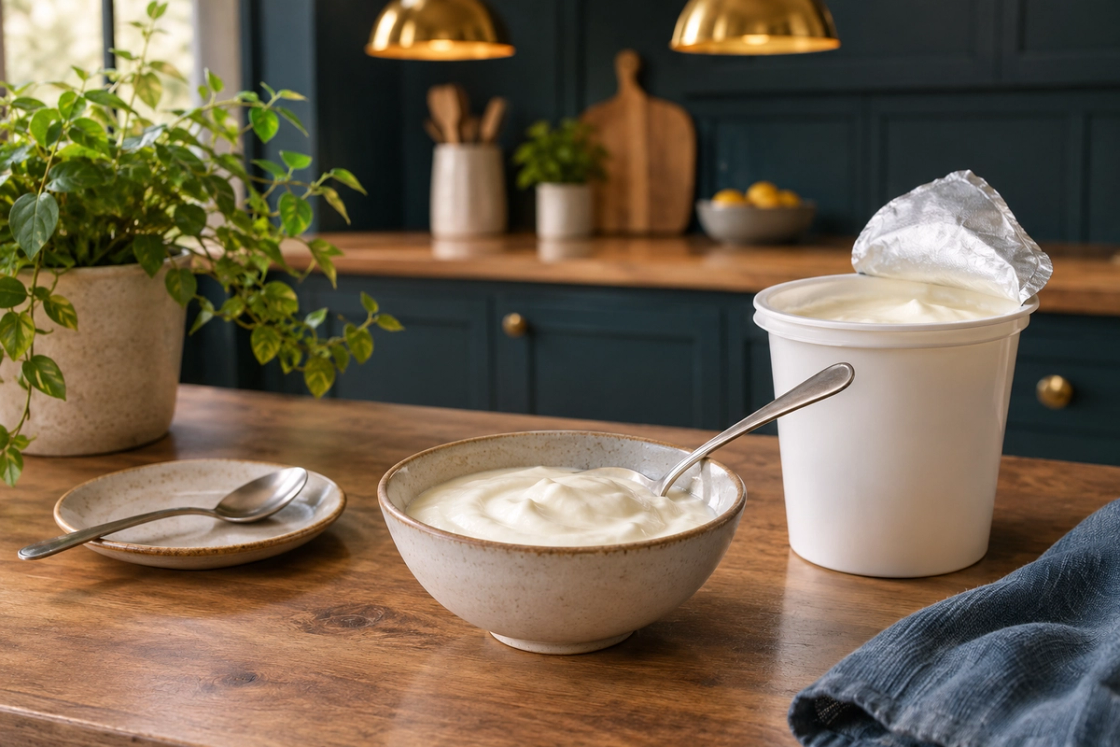
If you want the food but not the sticky feeling on your fingers, change how it reaches the bowl. A spoon can scoop a thick ingredient, tongs can lift a suitable piece, and some foods can move straight from their packet. You can keep the familiar meal without making unwanted touch part of preparing it.
Start with one transfer you would otherwise do by hand. This is an equipment choice, not an exercise in getting used to a texture. There is no need to touch the ingredient first to establish that you would rather not.
Match the tool to what needs moving
Picture the movement: scooping, lifting or tipping. Then look among the clean utensils you already own. The useful tool needs to fit both the food and the container; the longest handle in the drawer is not automatically the easiest one.
- Scoop with a spoon: for a familiar thick yoghurt or spread, choose a spoon that fits through the opening and has a handle you can hold comfortably. Smaller scoops are an option if a full spoon feels awkward.
- Lift with tongs: for a ready-to-eat piece that the tips can hold, consider tongs rather than reaching in. Check whether opening and closing them takes more effort than you want. Tongs are not a useful substitute for scooping a soft spread.
- Tip from the packet: if the food moves freely and the opening allows a controlled pour, place the bowl on the bench and tip towards it. Skip this route if the contents need pulling apart or the packet is difficult to hold.
These are options, not a new shopping list. If your existing spoon does the job, there is no requirement to buy a specialist tool. If none works comfortably, asking someone to handle that transfer is another option when help is available.
Check the grip before the food
Hold the clean, empty tool first. Notice its weight, handle surface and reach. With tongs, check the squeeze and release too. A tool that keeps food away from your fingers may still ask too much of your hand.
Put the receiving bowl close to the container, on a stable surface. Leave space to set the utensil down without balancing it on a narrow rim. For a spoonful that will not release, a second clean spoon can help move it off without using a finger, if that extra utensil feels worthwhile.
Opening comes before transferring. If the tab or seal is the sticking point, when opening the packet is the hardest step deals with that separate job. A comfortable pouring method cannot solve a packet you cannot get into.
Count the washing-up as part of the choice
One spoon is another item to clean; tongs may have joins or tips that take more attention. A direct transfer may avoid a utensil but be harder to control. Choose the trade-off you prefer today rather than declaring the smallest dish pile the winner.
You do not need to decant everything into extra bowls. Move the amount you need using a suitable method, then follow the food's preparation and storage instructions. Keeping the meal familiar also means keeping any required cooking steps intact.
If cleaning the sticky utensil creates the next barrier, when washing-up textures are the barrier explores handled brushes and a specific handover. Avoiding food contact during preparation does not mean the cleaning has disappeared.
Keep handwashing and clean utensils
A tool changes the contact, not the hygiene routine. Wash your hands with soap and water and dry them thoroughly before preparing food, even when you plan to use utensils. The Food Safety Information Council includes handwashing before food preparation in its home guidance.
Start with clean utensils and a clean work surface. Keep utensils used for raw food separate from those handling ready-to-eat food until they have been thoroughly washed, rinsed and dried. Do not treat an absence of sticky fingers as evidence that everything is clean.
Let one workable transfer be enough
For this meal, choose the route that suits the ingredient, your grip and the clean-up you can manage. Keep it if it helps; leave it if it adds difficulty. The finish line is the familiar food prepared without making an unwanted texture your compulsory first step.