When opening the packet is the hardest step
Ready-to-eat food can still be hard to get into. Match the closure to the action you find difficult, and keep a useful opener within reach.
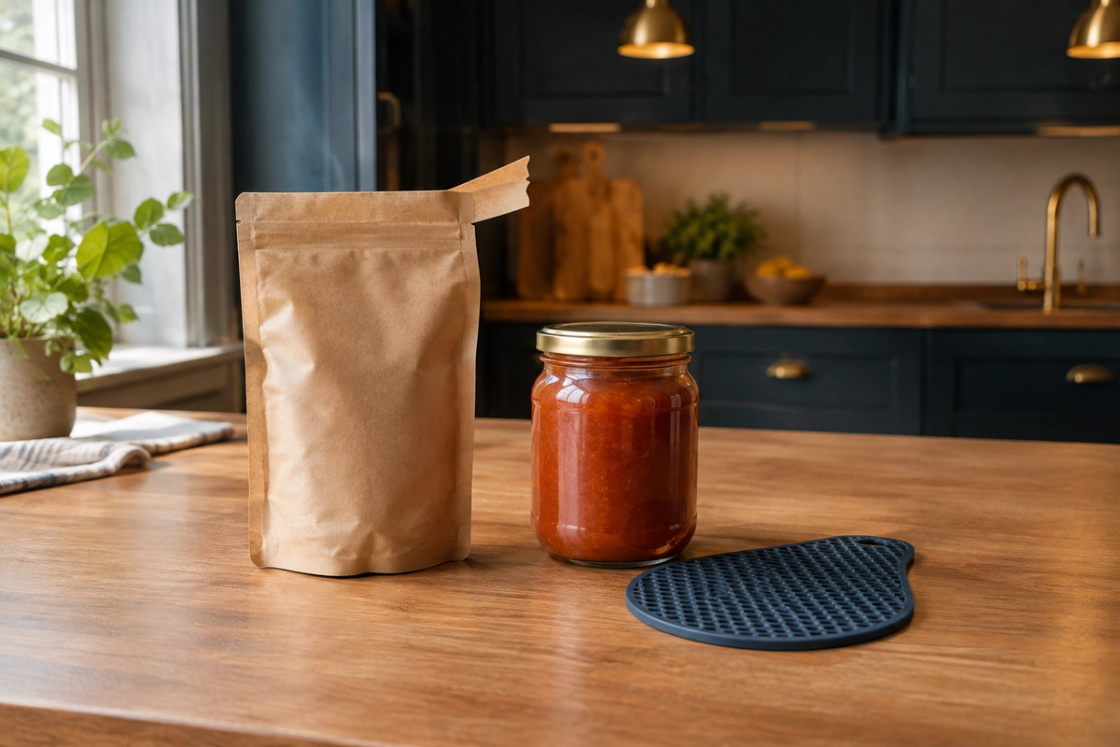
If opening the packet is what stops you eating, start with the closure, not a new recipe. Pick one familiar food, name the movement that is difficult, and look for a format that avoids it. Give any opening tool you already use a reliable home nearby.
A ready-to-eat label describes the food, not every action between the cupboard and your plate. Finding a tab, holding the tub still and peeling away a seal are separate jobs. You can like the contents and still need a different way in.
Find the exact point where opening stalls
Think about the last awkward packet rather than auditing the whole kitchen. Was the problem finding the opening, getting a grip, pulling firmly, or managing what happened when it released? One answer is enough to guide the next choice.
- Tiny tab: look for a larger area to hold, not merely a different colour on the label.
- Twisting: consider a familiar food with a peel-back closure, if pulling is more comfortable for you.
- Several layers: check whether the outer box hides individually wrapped portions or another sealed bag.
- Sudden release: consider whether the container is easy for you to hold steady and whether splashes or loose pieces are part of the difficulty.
Noise and touch count too. A crinkly wrapper or sticky lid may be the part you want to avoid, even when your hands can open it. These are prompts for your own preference check, not a ranking of universally easier packages.
Compare the first opening and the next one
Look at the closed package while shopping; leave its seal intact. Can you see where opening starts? Is there an inner film beneath the lid? A zip may help close a bag later without helping you get through its first sealed edge.
For yoghurt, for example, compare the tab and the shape of the tub rather than assuming a screw-top or a peel-off lid wins. A larger tub might mean fewer first openings but more serving and storage work. Smaller pots mean more individual seals. Choose the trade-off that suits your usual amount and budget.
Arthritis Australia runs an Easy to Open certification programme for packaging tested with arthritis consumers. Its endorsement concerns the packaging, not the food inside. That is different from a general easy-open claim, and your own opening preferences still matter.
You do not need to buy a collection of replacements. If a familiar food comes in another suitable format, consider one pack when it fits the shop. Keep flavour and texture preferences in the decision; an easier lid is little help if you dislike the food.
Make an opening station small enough to keep
Choose a reachable drawer or a spot beside your usual food preparation area. The station can be an existing space, not a purchase. Put the familiar packet or jar opener you already use there, with room to put the food down and a nearby place for discarded wrapping.
Choose tools you can use comfortably and follow their instructions. This is not a reason to push through a difficult opening or improvise a new cutting technique. If the tool is awkward too, changing the package or asking for help remains an option.
If finding room is the obstacle, the note on clearing a small working space offers a next step without making a whole-kitchen clean the entry requirement. For this job, aim for enough space to handle the package comfortably.
Keep food storage separate from tool storage
Set up the opener in advance, not a row of opened foods. The food can stay in its usual storage place until you want it. Follow the pack's storage and use directions, including any instructions after opening. Food Standards Australia New Zealand advises following suppliers' storage conditions and directions for use.
There is no need to decant everything or remove labels to make this setup work. Keep the information available rather than turning easier access into another remembering task.
Save one useful detail for next time
A shopping note such as “the tub with the larger tab” gives you, or someone shopping for you, something concrete to look for. A photo can remind you of the packaging you preferred; it is not a substitute for the current pack's instructions.
For today, asking “Could you open this while I get a bowl?” is enough if help is available. Otherwise, choose another food you can access. You do not have to solve the packaging problem before you eat.