When washing-up textures are the barrier
Fewer dishes may not help when touching wet scraps is the hard part. Compare a handled brush, tolerable gloves or a specific handover while keeping the cleaning thorough.
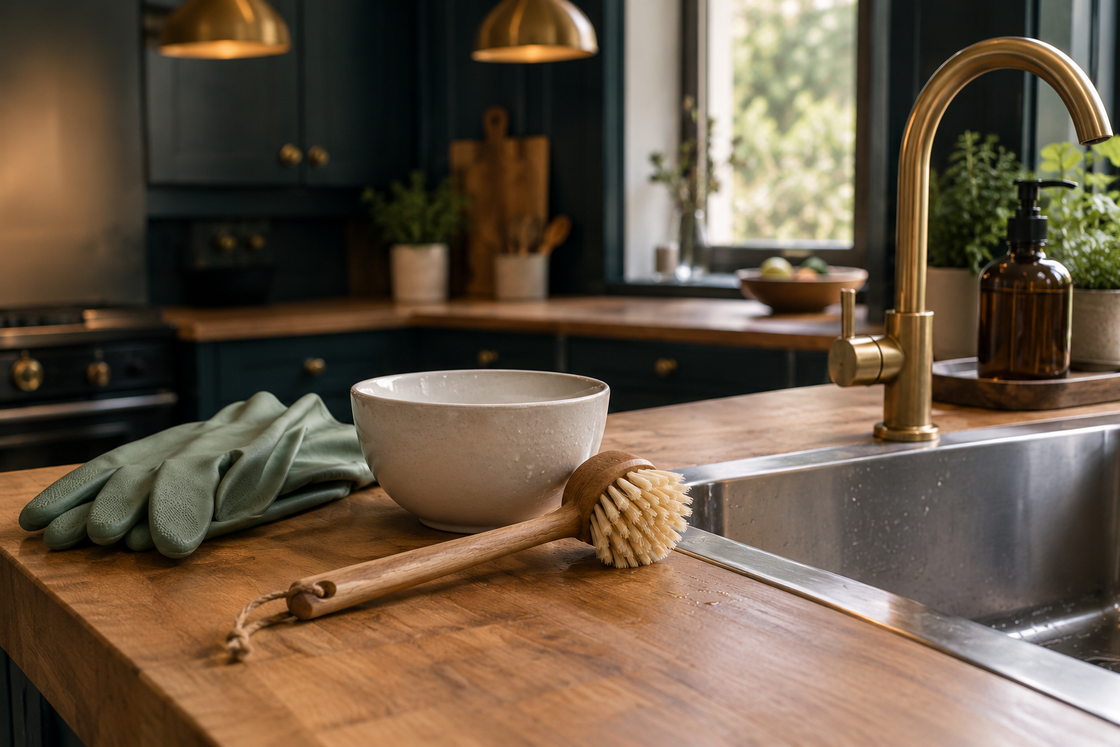
If touching a wet sponge or food scraps is what stops the washing-up, start with that contact rather than the size of the pile. A handled brush, gloves you can tolerate or handing over one specific part may fit better than another plan to use fewer plates.
The aim is to change how the cleaning gets done, not what counts as clean. One bowl can still be difficult when its last spoonful has become a texture you do not want on your hands.
Name the contact you want to avoid
Think about where you tend to stop. You do not need to touch something unpleasant to confirm it. Knowing which part you dread is enough to choose a starting point.
- Wet scraps: is clearing the plate or emptying the sink strainer the sticking point?
- The sponge: is it squeezing it, holding it or picking it up after someone else has used it?
- Gloves: is the inside, the tightness or taking them off another unpleasant contact?
These can need different answers. Gloves may suit someone who wants a barrier from water but be the wrong choice for someone who dislikes wearing them. You do not have to solve every part today.
Try an existing handled brush
If holding a sponge is the barrier, look for a dish brush you already own. The handle gives you somewhere to hold that is separate from the cleaning head. That does not promise dry hands or no splashes, but it changes what you need to grip.
Check the practical fit before committing to a sinkful. Can you hold the handle comfortably? Does the head reach inside the bowl or mug? Is it suitable for the surface you are cleaning, according to the item's care instructions? A comfortable handle is not useful if the brush cannot reach the food residue.
Keep the comparison small: use it for one ordinary item, with your usual thorough cleaning routine. If you dislike the grip or bristles, that is useful information, not a reason to push through. There is no need to buy a collection of brushes to rank.
Let gloves be optional
If you already have washing-up gloves you can use, consider their feel away from the dirty dishes first. You might like the separation they provide, or find the lining, seams and enclosed feeling more distracting than the water.
Only use gloves suitable for you and the task, following their care instructions. This is not a recommendation for a particular material or an allergy-safe product. If gloves are already a known barrier, skip this option rather than making tolerating them another job.
A brush and gloves are alternatives to compare, not a required pair. Start with what is available and acceptable. If neither suits, consider whether someone can take the part you cannot manage.
Hand over the difficult part, clearly
If someone shares the kitchen or has offered help, name the action rather than asking vaguely for help with the mess. For example: “Could you clear the wet scraps and wash these bowls tonight? I can put the dry dishes away.”
Or ask for the smaller handover: “Could you empty and clean the strainer when you finish? That is the part I cannot manage.” Agree who will finish the remaining cleaning and when. A task left between two people has not become easier for either of them.
You do not need to offer an equal task immediately to make a request. If finding the words is difficult, the note on making a usable request for food help offers a way to describe the help, timing and handover. The other person can say what they can manage.
Keep the cleaning standard; change the route
Changing tools does not turn scraping or a quick rinse into completed washing-up. The Food Safety Information Council advises washing utensils and cutting boards with soap and warm water, then drying thoroughly before handling different foods. Keep following the cleaning instructions for your dishes, tools and products.
For today, choose one contact to change and one way to change it. You might use the brush for the bowl, leave the gloves aside or agree that someone else handles the wet scraps. The useful result is a thoroughly cleaned item without making the most unpleasant contact your compulsory starting point.