Cooking for one without making four portions
Dinner for one does not need to become tomorrow's dinner too. Choose food you can count or scoop, then buy quantities that fit the meals you want.
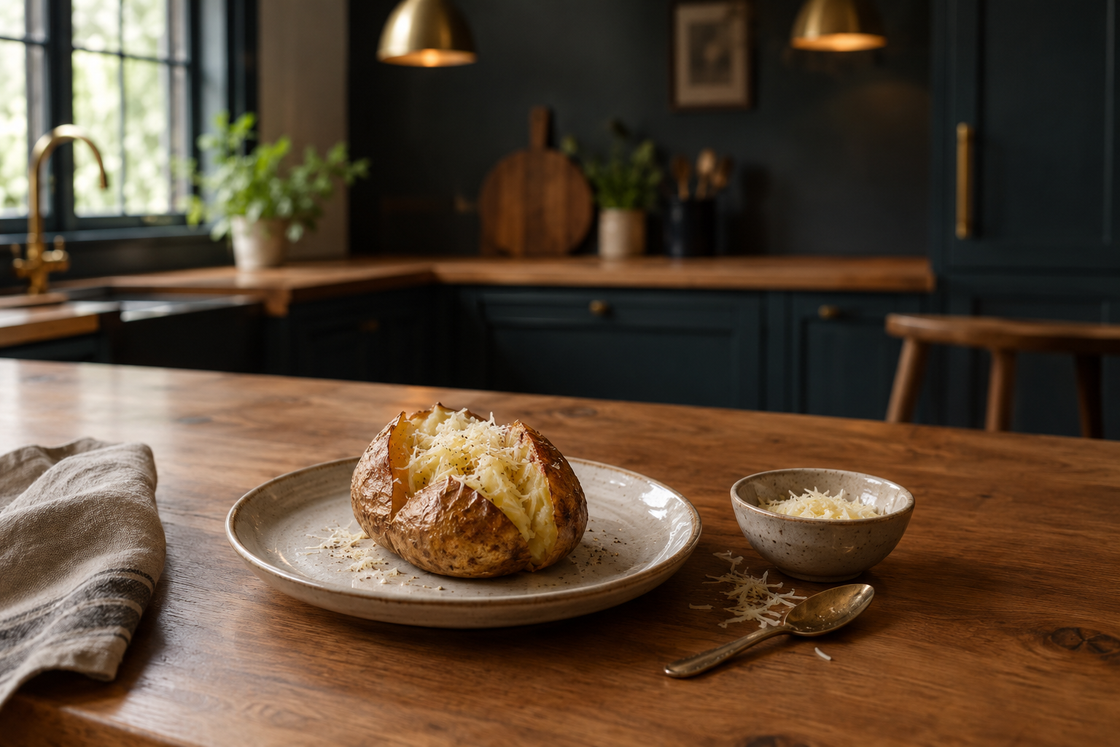
Cooking for one can start with a different question: what can I make in the amount I want tonight? Look for meals built from individual pieces or spoonfuls, rather than starting with a family recipe and finding homes for the extra portions.
You might enjoy cooking but dislike reheated textures. You might have a small fridge, no freezer space, or no wish to eat the same dinner tomorrow. None of those needs requires a batch-cooking solution. The aim is enough food for you, without automatically making food for several future meals.
Choose a meal you can count or scoop
Some meals let you choose the amount before anything goes in the pan. Bread comes in slices, potatoes can be bought individually, and dry pasta can be measured out without cooking the whole packet. Pick a familiar base whose quantity is easy for you to see.
- Toast or a sandwich: choose the bread you want, then add familiar fillings. You do not need to use up a whole pack to complete the meal.
- A topped potato: buy the size you want and choose a topping available in an amount you expect to use. Use your usual cooking method rather than treating a smaller potato as a timing rule.
- A pasta bowl: measure your usual amount of dry pasta first, then choose additions you can take by the spoonful. Follow the separate products' preparation directions.
These are meal formats, not tested recipes or recommended serving sizes. One person does not always want the same quantity. Make more for tonight if you want more; cooking for one is not a rule to eat less.
Check the pack behind the spoonful
A spoonful sounds convenient until it leaves most of a tub waiting in the fridge. Before buying a topping or sauce, ask what opening that pack commits you to. Is the rest something you already use, or would it need a new meal plan?
You could choose a smaller pack, use a topping already at home, or leave the optional topping out. If a familiar ingredient fits a different meal you genuinely want, that can work too. Using cheese in a sandwich and later on pasta is different from committing to several identical cooked dinners.
Keep that choice within the label's storage and use directions, including any after-opening instructions. Food Standards Australia New Zealand advises following label directions and not eating food after its use-by date. A plan to finish the pack does not extend those instructions.
Buy the quantity, not the imagined week
Where your shop offers loose produce, you can buy a potato or carrot rather than a bag. For packaged food, compare the amount you expect to use as well as the checkout price. A larger pack is not automatically the better purchase for your kitchen.
There is a trade-off: smaller packs may mean more packaging or a higher price for the same amount of food. Larger packs may ask for storage space and future meals you do not want. Choose what fits your actual budget and use, not a perfect waste-free scenario.
If the choice also involves paying for less preparation, spending your shortcut budget on the hardest prep step offers a fuller cost-per-used-portion comparison. You do not need to do that calculation for every item.
Keep small cooking small in effort too
A single portion can still involve chopping, a sauce and several things to wash. Choose familiar equipment you already have. There is no need to buy a miniature cookware set to make a smaller dinner.
If a recipe needs awkward fractions or several half-used ingredients, look for another meal format instead. The guide to reading a recipe for effort, not minutes can help you spot the work before starting.
Keep sensory preferences in the decision. Leave a topping beside the base if you prefer the textures separate. Choose a cold sandwich over a hot meal if cooking smells are unwelcome today. Neither option needs to become your permanent routine.
For your next shop, choose one familiar dinner and check its quantities from shelf to plate. What can you count? What can you scoop? What pack would leave an unwanted job behind? Change that part, rather than planning four dinners to solve one.
Related reading: “A supermarket markdown is not a meal plan” and “Read a recipe for effort, not minutes”.