Spend your shortcut budget on the hardest prep step
Spend on the prep task that holds up your meal, not every convenience option. Compare the extra cost per portion you expect to use, then check the pack price.
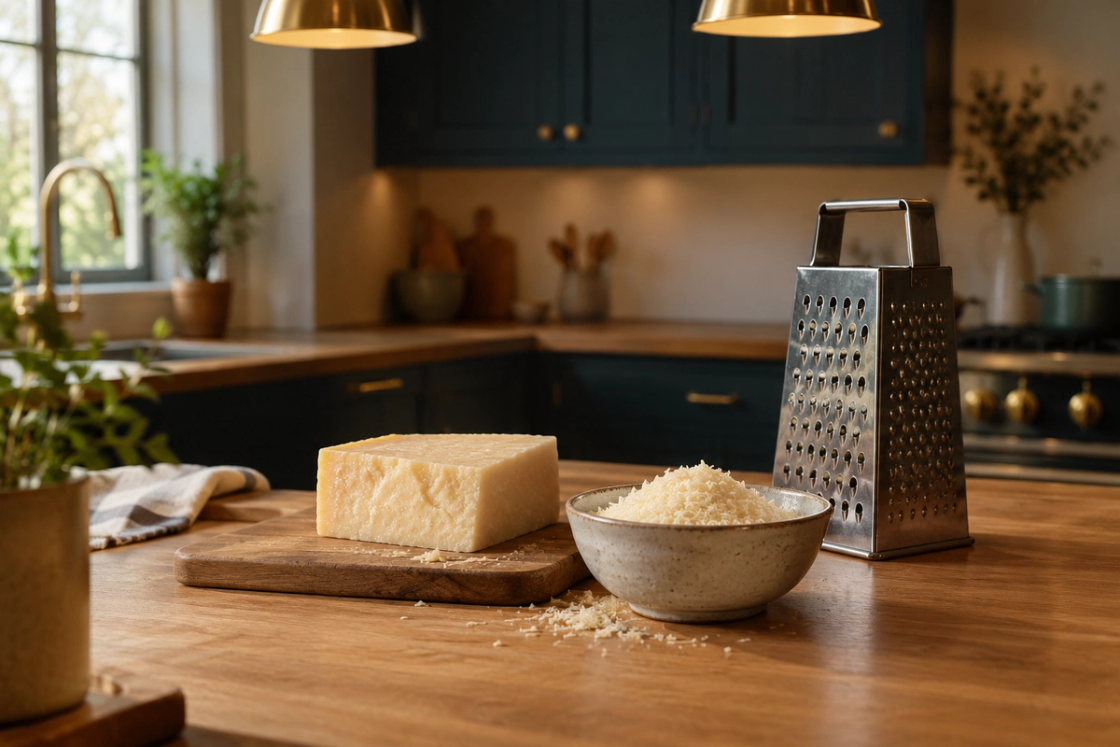
Choose the task before choosing the shortcut. If chopping vegetables is where dinner stops, prepared vegetables may be more useful to you than a ready-made sauce. Keep the parts you are comfortable doing, and spend only where a prepared ingredient removes a difficult job.
Then compare the extra cost per portion you realistically expect to use, alongside the whole pack price. This is a way to make one purchase more deliberate, not a requirement to cost every mouthful or cook everything else from scratch.
Name one job you want to hand over
Start with a meal you already eat. Finish the sentence: “I would make this more often if I did not have to…” Be specific: peel the pumpkin, grate the cheese, chop the onion, or wash the processor afterwards.
If several steps feel difficult, pick the one that most often stops you starting. The shortest task on paper might still be the hardest for you. There is no need to prove it takes a particular number of minutes.
- Peeling and cutting: compare whole vegetables with a prepared version in a shape you would actually use.
- Grating and cleaning the grater: compare a block with ready-grated cheese, if its texture suits you.
- Making a sauce: consider a familiar prepared sauce rather than buying shortcuts for unrelated parts of the meal.
These are options to consider, not tested recommendations. If none removes the task that matters, leave them out. A convenience label does not tell you whether this is your useful shortcut.
Check that the job really disappears
Look at what happens between opening the pack and using the food. Large prepared chunks still need cutting if you want small pieces. A mixed vegetable pack may add sorting if you dislike one ingredient. A sauce may bring a flavour you do not want.
Include the remaining equipment, packaging and clean-up. Frozen diced vegetables might avoid a chopping board but still need cooking. Follow the product's preparation directions; prepared does not automatically mean ready to eat. Choose the version that suits the meal and the equipment you have.
You can keep the rest of dinner familiar. Buying grated cheese does not commit you to a meal kit, a new recipe or a larger grocery shop.
Use a small cost-per-portion comparison
For each option, divide the pack price by the number of portions you expect to use. Compare similar amounts of the ingredient in the same role. Here, a portion means your usual amount for that meal, not a recommended serving size.
Here is a hypothetical example in AUD, not current supermarket pricing. Suppose a whole ingredient costs $3 and gives you four usable portions. That is $0.75 per portion. A prepared version costs $4 for four comparable portions: $1 per portion. The shortcut costs an extra $0.25 each time, with an extra $1 needed at the checkout.
Now change the assumption. If you realistically use only two portions from the whole ingredient, its cost is $1.50 per used portion. If you use all four prepared portions, those still cost $1 each. That does not prove prepared food is cheaper; it shows why the amount you use changes the comparison.
Count what you reasonably expect, not what an ambitious version of the week could use. If both packs are uncertain, keep the figures as estimates rather than awarding either one a guaranteed saving.
Do not make the portion count depend on unsafe storage
Check the label's storage directions and use-by date before counting future portions. Follow any after-opening instructions too. Food Standards Australia New Zealand advises following storage and use directions, and not eating food after its use-by date. Do not extend a pack's use to make the calculation look better.
A smaller pack may fit your actual use better, even if a larger one looks attractive. Extra portions only belong in the comparison when you have a realistic way to use them within the product's instructions.
Make the final decision at the checkout price
A useful cost per portion cannot create money for the upfront purchase. Check the whole pack against this shop's available budget. If it does not fit, a familiar meal without that prep task is a valid alternative. You do not owe the shopping basket a convenience upgrade.
If the bigger problem is choosing the rest of the basket, budget groceries without a meal plan explores flexible staples. Use it for combination ideas, and check today's prices rather than treating older price examples as current quotes.
On a low-energy shopping day, skip detailed arithmetic if it becomes another barrier. Choose one candidate within a spending limit. Afterwards, ask whether it removed the intended job and whether you wanted the result. Let the next purchase follow that answer, not a rule that convenience is always worth it.