Read a recipe for effort, not minutes
A short cooking time can hide a busy method. Check the chopping, overlapping tasks and equipment changes before deciding whether a recipe fits today.
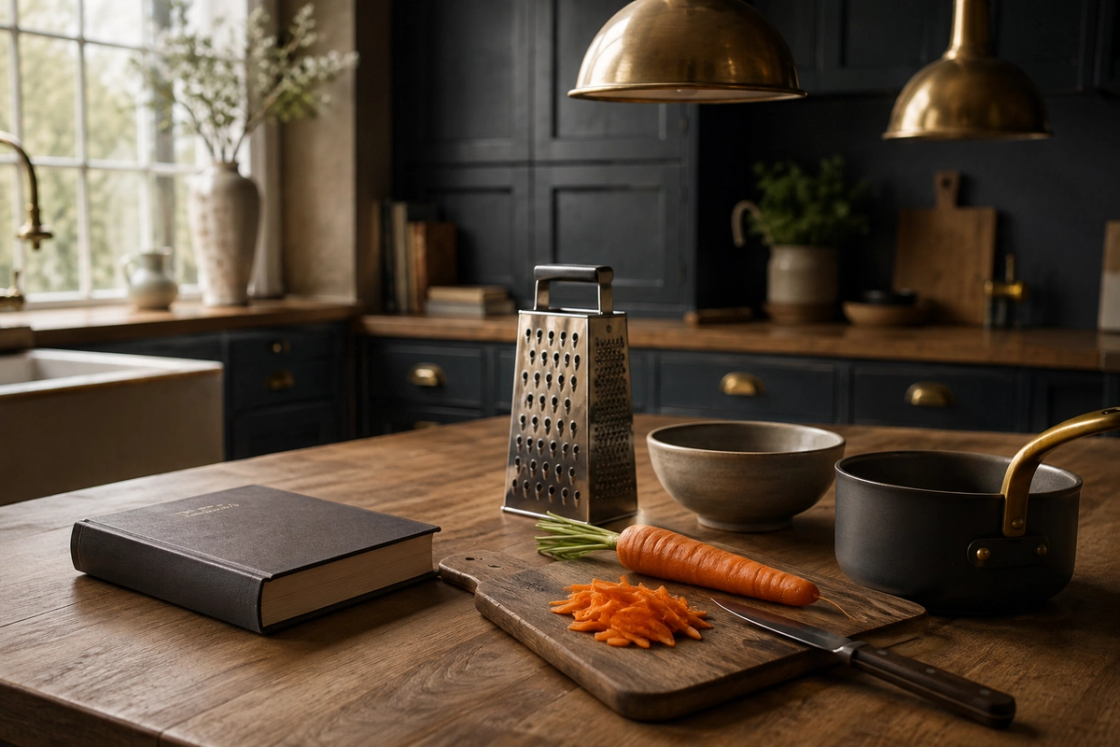
Before choosing a recipe, look for three things: preparation tucked into the ingredients, jobs happening at the same time, and changes of equipment. Those details tell you what you will be doing, not only when dinner might be ready.
The advertised minutes still matter if you need to eat soon. They are not the whole decision, though. A short recipe can ask for continuous chopping, stirring and checking. A longer one may spread its work differently. Neither is automatically easier for you.
Start with today's difficult bit
Name what you would prefer not to do before opening another recipe. It might be detailed knife work, keeping two things moving, or getting the blender out. You do not need an energy score or a complete account of your day.
Try a concrete limit: “I can chop, but I do not want to chop while something cooks.” Or: “I can use the saucepan, but I cannot face washing blender parts.” This gives the recipe scan a question to answer rather than another list to finish.
Look for work hiding beside the ingredients
Read the words after each ingredient as well as its name. “Carrot, grated” includes grating. “Onion, finely diced” includes cutting it into small pieces. That work belongs in your decision even when the first numbered instruction starts at the stove.
- Notice preparation words such as peeled, sliced, grated, drained or chopped.
- Check whether a sauce or topping sends you to another recipe with its own ingredients and method.
- Ask whether the ingredient you have is already in the form the recipe expects.
Several easy actions can still be more work than you want. You are checking the whole set, not deciding whether each individual action ought to be manageable.
If one prepared ingredient would remove the obstacle, the note on spending your shortcut budget on the hardest prep step helps you weigh that purchase. Buying a shortcut is optional; choosing another recipe is an equally useful outcome.
Find the busiest moment
Read the method through and notice “meanwhile”, “while that cooks” and “at the same time”. Look for one instruction that contains several jobs too: stir the sauce, prepare the topping and watch the pan.
Picture that particular moment. Are you comfortable with what it asks? If your hands are occupied stirring, does the next sentence expect them to be chopping? The issue may be overlap rather than the total amount of work.
Some preparation may be possible before cooking begins, but count that as work rather than free time. If making the method workable requires a whole new plan, you can leave this recipe for another day. This scan is for choosing, not for rewriting cooking instructions on the fly.
Follow the equipment changes
Trace where the food goes: board to bowl, bowl to pan, pan to blender, then back again. Check the method as well as any equipment list. A one-pan title does not answer whether you also need a grater, mixing bowl or processor.
Think about getting those items out and cleaning them afterwards. Are the tools you need available now? Would using an appliance bring noise you do not want today? Fewer items may suit you, but a familiar appliance can also be preferable to a long stretch of hand preparation.
Compare the work, not the labels
Imagine two recipe descriptions. One promises a quick noodle bowl but calls for shredded vegetables, a separate dressing and a topping prepared while the noodles cook. Another has a longer total time but lists preparation first and uses equipment already within reach.
These are invented examples of recipe structure, not tested meals or timing promises. If overlapping jobs are today's barrier, the second description is worth reading more closely. If you need food sooner, neither may fit. A familiar meal can be the better choice.
Give the scan an ending
Choose one outcome: this fits today; save it for another day; or use something familiar instead. You do not have to keep browsing until you find the easiest recipe on the internet.
If you save it, add a practical note such as “lots of grating” or “sauce and topping happen together”. Next time, you have more useful information than the headline minutes. Finding out that a recipe does not fit before you start is a successful decision too.