The 10-Minute Reset: Cooking When Your Kitchen Feels Like a Mess
A full sink shouldn't cost you dinner. Here's a ten-minute reset that clears enough space to cook, without cleaning the whole kitchen first.
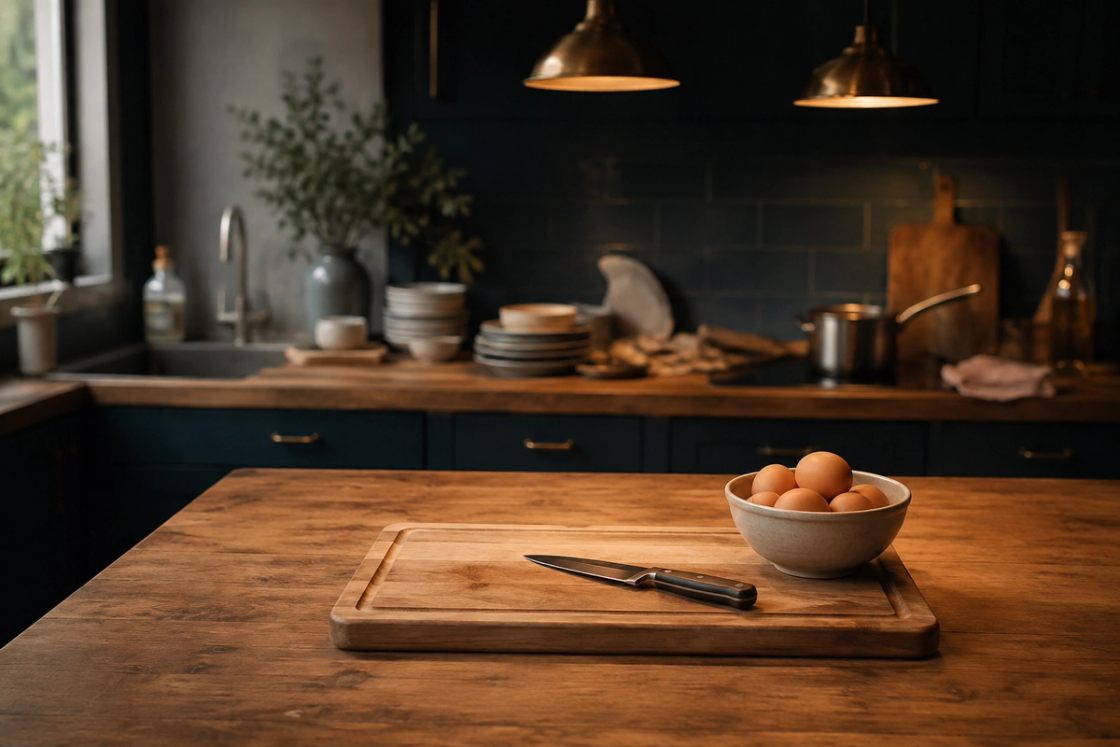
There's a particular kind of stuck where you're hungry, you know what you'd eat, and the kitchen is the reason it doesn't happen. Not because the food is hard. Because the bench is covered, the sink is full, and starting seems to require cleaning first.
That "clean first" rule is the trap. It turns a fifteen-minute dinner into an hour-long job, and hour-long jobs get skipped. So here is a smaller rule.
Clear a patch, not the kitchen
You don't need a clean kitchen. You need somewhere to put a chopping board and somewhere to put a hot pan. That's roughly 60cm of bench and one free burner.
Everything else can wait. Dishes in the sink don't affect how dinner tastes. Neither does a stack of containers at the other end of the bench.
You don't need a clean kitchen. You need a clean patch.
The ten-minute reset, in order
Set a timer if timers help you. Ten minutes, in this order:
- Bin sweep. Obvious rubbish and empty packets go straight in the bin. Fast, and it needs no decisions.
- Clear one patch. Move everything off one stretch of bench. It can go in the sink, on a tray, or on the table. Moving is allowed. Sorting is not.
- Free up one heat source. One burner, or the microwave, or the oven shelf. One is enough.
- Wash only what you're about to use. A pan, a board, a knife, a plate. Four items, not forty.
- Run water over the worst dish so it soaks while you cook. Soaking is work happening without you.
When the timer goes, the kitchen will still look messy. That's the intended outcome. You were making room to cook, not cleaning.
Cook something that doesn't spread
A small work area rewards food that stays contained. Look for meals with one hot surface and few components:
- One pan, one protein, one frozen vegetable. Sausages or tofu, with frozen peas tipped in near the end.
- Toast-based dinners: baked beans, tinned fish, scrambled eggs, mushrooms.
- A tray bake, where the tray is both the mixing bowl and the cooking surface.
- Anything tinned, heated in one pot: soup, dahl, chilli beans, with a microwave rice pouch alongside.
Roasting trays and pots are also useful because they hold their own mess. A tray bake contains its own spills in a way that chopping five vegetables on an open bench does not.
Let cleaning be a byproduct
While something simmers or bakes, you get pockets of standing-around time. Those pockets are worth more than a scheduled clean-up, because they cost no extra starting energy:
- Ten minutes in the oven: empty the soaking dishes out of the sink.
- Water coming to the boil: wipe the patch you cleared.
- Waiting on toast: put away the three things closest to your hand.
Sometimes you finish with a tidier kitchen than you started with. Sometimes you don't. Dinner happened either way, and that was the point.
If ten minutes is still too many
Some days the reset itself is the wall. Shrink it again:
- Work on a clean tray or a clean plate set on top of the mess. A tray is a portable clean patch.
- Use the microwave. It needs no bench space at all.
- Eat something cold, assembled straight from the fridge onto a plate.
- Wash one bowl and one fork, and eat something that fits in them.
The mess is not a verdict
A full sink usually means you've been busy, low on energy, unwell, or all three. It's a pile of objects, not evidence about your character. Treating it as evidence is what makes it heavy, and heavy things are harder to start.
So the aim isn't a spotless kitchen before you eat. It's a clear patch, one hot pan, and food on a plate: less deciding, more eating.
Related reading: "Cold, No-Cook Dinners That Still Feel Like a Meal" is a good backup for the nights when even the reset is more than you have.