Budget Groceries That Don't Ask You to Meal Plan
Meal planning is a skill that costs energy many of us don't have spare. This is a different way to shop cheaply: buy a small set of flexible staples that combine into dinner without a plan.
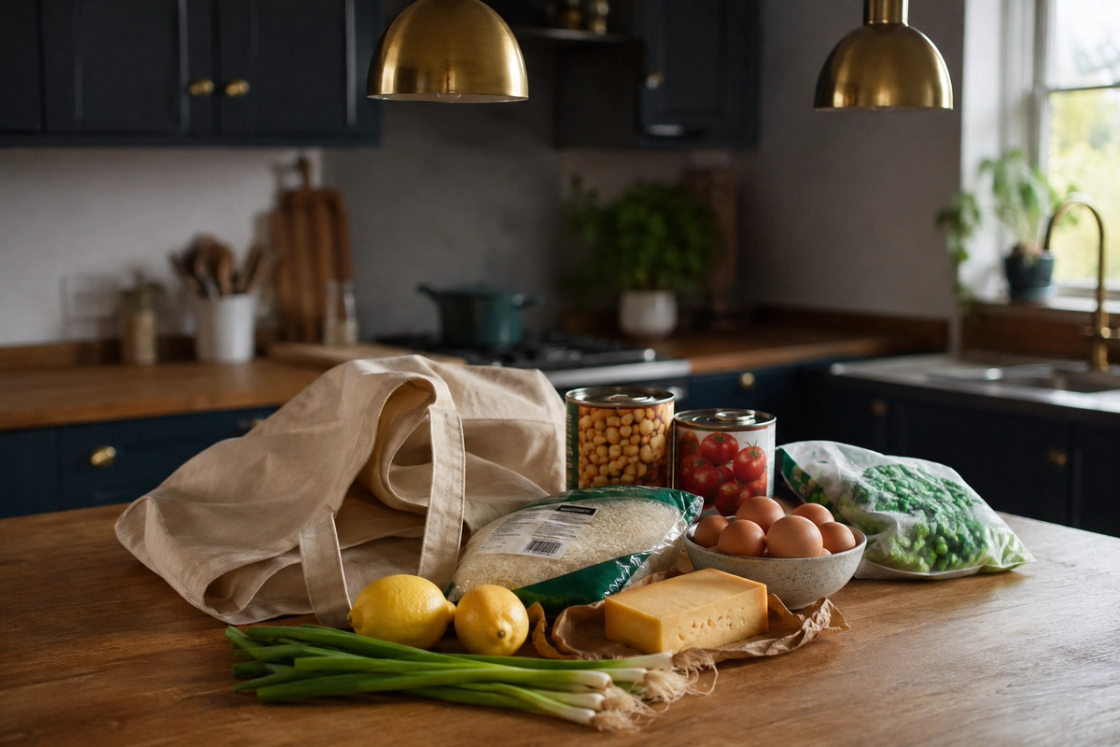
Most budget grocery advice starts with a plan. Write your seven dinners, list the ingredients, shop once, cook to the schedule. It works beautifully for people whose planning energy is reliable.
If yours isn't, that advice quietly asks you to pay upfront in the currency you have least of. And when the plan collapses on Wednesday, the food you bought for Thursday's recipe often has nowhere else to go. That's where the money actually leaks.
There's another way to shop cheaply. Instead of buying ingredients for specific meals, buy a small set of things that combine with each other in many directions. The plan happens at the last minute, in the kitchen, with the fridge open.
Why no-plan shopping is often cheaper
Waste is the expensive part of groceries, not price per item. A $2 bunch of coriander bought for one recipe and thrown out is worse value than a $6 bag of rice that lasts a month.
Flexible staples don't punish you for changing your mind. If tonight turns out to be a toast night, nothing is wasted — the tin, the rice and the frozen peas all keep. Shopping this way builds slack into the week instead of assuming you'll have none.
The shortlist
These are cheap, widely stocked in Australian supermarkets, and each one works in more than one direction. You don't need all of them.
- Tinned legumes — chickpeas, cannellini, lentils. Around $1–$1.50 a tin. Dinner protein with no cooking required.
- Eggs. Six minutes to boil, three to fry, and they turn almost anything into a meal.
- Rice, pasta or couscous. Pick the one you actually like the texture of. Couscous needs boiling water and five minutes, nothing else.
- Frozen vegetables — peas, corn, beans, spinach. No washing, no chopping, no rotting in the crisper.
- Tinned tomatoes. The base of a sauce when you have the energy to make one.
- A block of cheddar or a tub of feta. Salt and fat make plain food taste finished.
- Lemons, or a bottle of lemon juice. Acid does what a recipe usually does.
- Bread that lives in the freezer. Toast is a legitimate dinner base.
That's roughly $25–$35 depending on the week and the shop, and it covers several dinners without committing you to any of them.
How they combine
The pattern is: something starchy, something with protein, something green, something salty or sharp. Two out of four is still dinner.
- Rice + chickpeas + frozen peas + feta and lemon.
- Pasta + tinned tomatoes + grated cheddar.
- Toast + fried egg + spinach wilted in the same pan.
- Couscous + tinned lentils + corn + a lot of lemon.
None of these need a recipe held in your head. You're recognising a combination in front of you, which is a much cheaper mental operation than recalling a plan.
Buy for your sensory needs, not the theory
Cheap food you won't eat is the most expensive food there is. If tinned legumes have a texture you dislike, they aren't a bargain — they're a tin that sits in the cupboard for a year.
Swap freely. Frozen chips instead of rice. Tinned tuna instead of chickpeas. Plain crackers instead of bread. The point is a small set of things you'll reliably eat, not a virtuous list.
It's also worth buying the same brand each time when a texture or flavour works for you. Consistency is a sensory feature, and it removes a decision at the shelf.
Shopping with less decision load
- Keep the same short list in your notes app and re-order from it. Don't rewrite it weekly.
- Buy doubles of the tins and frozen items. They keep, and running out is its own small crisis.
- Skip the fresh herbs and the single-recipe spice. Those are plan-dependent purchases.
- If the supermarket is a hard environment, online delivery or click-and-collect from a saved list costs a delivery fee and saves a lot else.
A saved order you can repeat with two taps is worth more than an optimised one you have to rebuild every week.
Less deciding, more eating. A grocery shop should reduce the number of decisions waiting for you at home, not add to them.
If your shop currently ends in food you meant to cook and didn't, try one week of staples instead of a plan. You can always plan later, on a day when planning is cheap.
Related reading: "Same Meal, Different Day: Why Repeating Dinners Is a Feature, Not a Failure" and "Cold, No-Cook Dinners That Still Feel Like a Meal" — both pair well with a staples-only shop.