Pack lunch so the crunchy part stays separate
Keep familiar lunch foods, but give wet and crunchy parts their own space. Check the lids and the place you will eat before adding more containers.
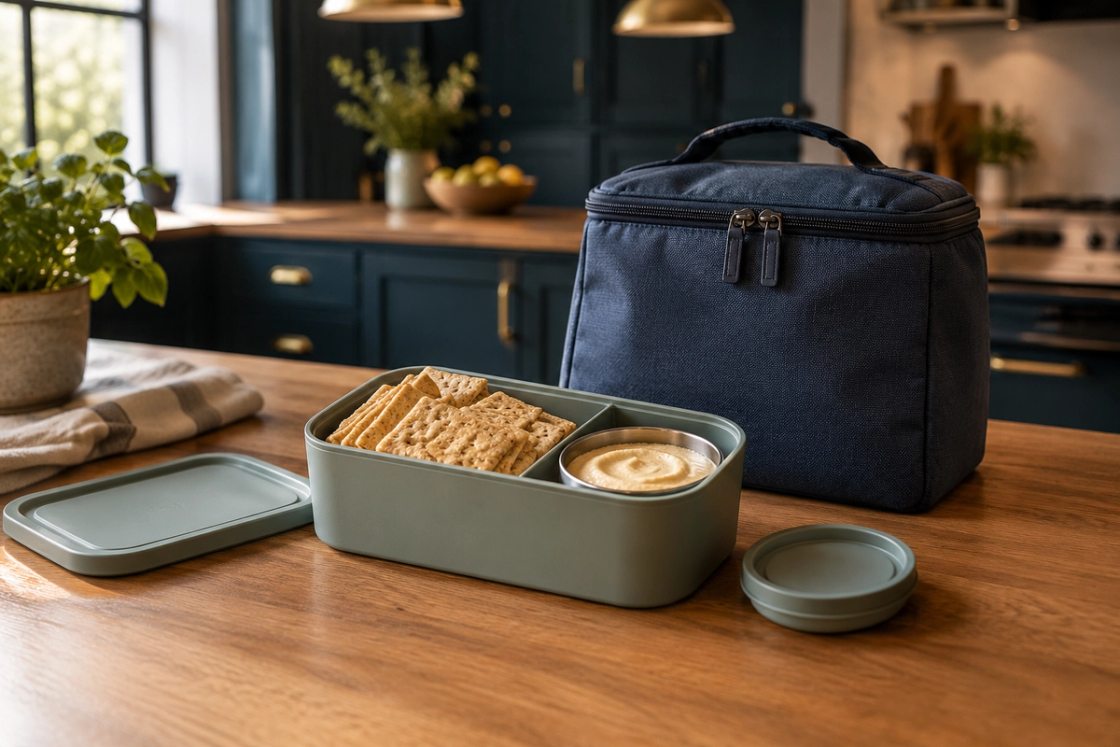
If you like your crackers crisp and your dip separate, pack them separately and decide whether they meet when you eat. You do not need a different lunch. Start with the foods you already enjoy, then check what happens between packing them and opening the bag.
A lunch that looks manageable on the kitchen bench may be awkward on a small desk or a park bench. The useful question is not how many compartments you can fit in. It is whether you can get to the food, keep the parts how you like them, and eat without a small construction project.
Choose the one separation that matters
Picture your usual lunch. Which contact would make it less appealing: crackers against dip, a crunchy topping stirred into yoghurt, or bread sitting against a wet filling? Pick that boundary first. Other foods can share space if you are comfortable with them touching.
For crackers and dip, put the crackers in a dry container and the dip in its own closed pot. For yoghurt with a crunchy topping, keep the topping apart until you want it. These are packing examples for foods you already choose, not a suggestion to add unfamiliar ingredients.
You can also eat the parts separately throughout lunch. There is no requirement to assemble the sandwich, scatter the topping or take a mixed mouthful. Keeping a familiar texture available is the point, not making lunch look finished.
Check the container, not its compartment count
Start with containers you own. Look at how each section closes: a divider and a separate sealed pot are different arrangements. Check the manufacturer's instructions rather than assuming a divided box keeps liquids in their own section when carried sideways.
- Give the wet part its own suitable closure rather than relying on distance inside a box.
- Check that the crunchy part has a clean, dry space, not the damp corner left after washing.
- Close the packed containers and see whether they fit in the bag without forcing a lid or zip.
A small pot you already use may do the job. More pots also mean more lids to find, open and wash. Keep the number tied to the separations you need, rather than giving every food its own container.
Try the opening while you have a bench
Before relying on a container away from home, try opening and closing it at home. Notice whether you need two hands, a firm surface or room to put the lid down. A secure closure still needs to be one you can manage.
If the lid or wrapper is the main barrier, the note on when opening the packet is the hardest step offers a closer look at tabs, grip and closure types. For this lunch, keep the check small: can you open the actual container in the place you expect to eat?
Make the eating space part of packing
At a table, you might have room for an open box, a dip pot and its lid. On your lap, the same arrangement may ask for more balancing than you want. Imagine opening the bag and taking the first bite, including where each loose lid will go.
If space is tight, choose a layout that lets you open one part at a time. Pack the utensil you already use if the food needs one. When spreading or sprinkling would be awkward, leave the parts separate and eat them that way instead.
Keep storage needs in the plan
Texture separation does not replace food-safe storage. Follow the food's storage instructions. Queensland Government lunchbox guidance recommends an insulated lunch box or cooler bag with a frozen drink or freezer brick, and keeping prepared lunches refrigerated until leaving. Keep lunch boxes and utensils clean and dry.
Before packing, check what cold storage is available where you are going. Do not leave out the cooling arrangement to make room for an extra pot. If the setup cannot meet the food's storage needs, choose a familiar lunch whose storage requirements you can meet.
Keep the useful version
After lunch, notice one thing: did the separation help without making opening and eating harder? Keep what worked. Change the troublesome lid or layout next time, rather than redesigning the whole meal. A repeatable packed lunch can be familiar food in a more usable arrangement.