Keep your place in a recipe without rewriting it
Keep the recipe intact and give your place a visible marker. A movable tab or completion tick can show where to look without creating another preparation job.
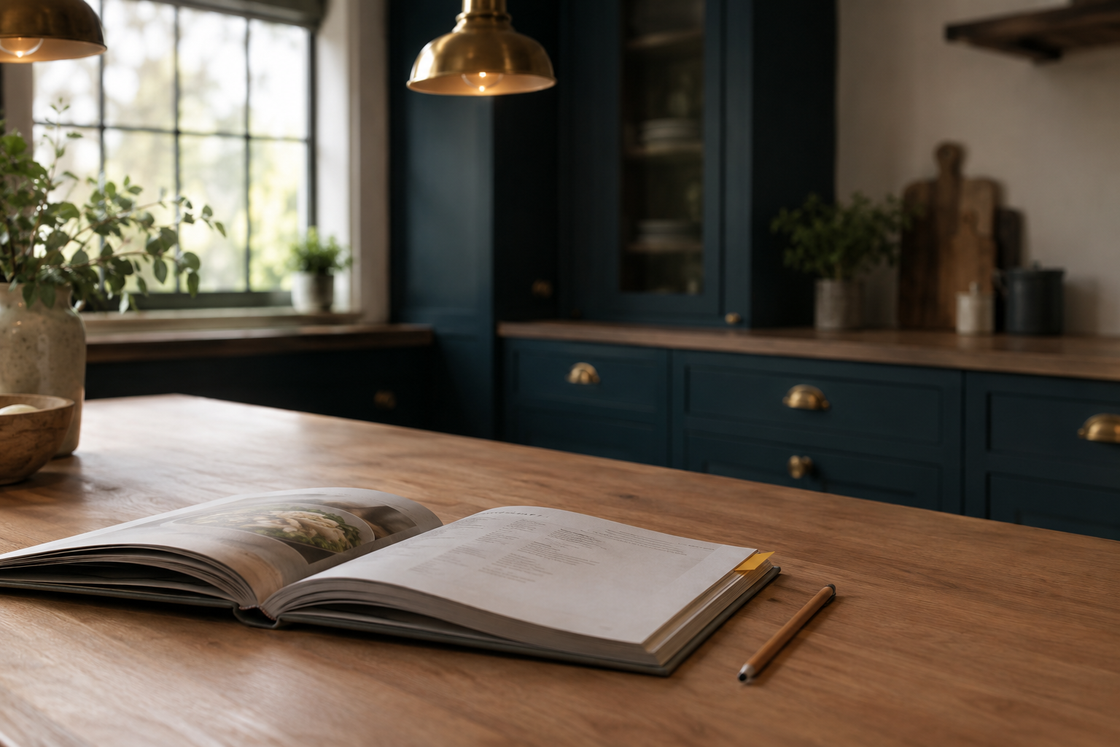
To keep track of recipe steps, try a small marker beside the instruction you are doing, or a tick beside each step you have finished. Leave the method intact. You do not need to copy it into a new notebook before making dinner.
This is for the moment when you look from the bowl back to the recipe and cannot find your place. It is a reading aid, not a way to shorten the cooking or decide whether food is ready. Choose one approach to begin with, rather than building a whole system.
Give the marker one meaning
Decide what your mark means before starting. A movable tab can mean ‘this is the instruction I am working on’. A tick can mean ‘everything in this step is finished’. Keeping those meanings separate avoids a new question: did I mark that because I started it or completed it?
If you often lose the line you were reading, try the movable marker. If you can find the line but wonder whether you already did it, completion ticks may suit you better. You can add the other method later if there is a clear reason.
On paper, mark beside the words
Place a small sticky tab in the margin beside the current instruction. Move it down as you progress, keeping quantities, timings and the rest of the method visible. A contrasting tab may be easier to spot; a plain one may feel less busy. Use what you already have.
For a printout you can write on, a pencil tick in the margin is another option. In a borrowed cookbook, use a removable slip alongside the page instead of writing on it. Avoid adhesive on delicate pages. Keep the page and any loose paper away from the stove and other heat sources.
The mark belongs beside the instruction, not through it. Being able to reread the full sentence matters when a step includes a condition such as ‘until combined’ or sends you back to an earlier detail.
On a screen, keep the original method available
If your existing recipe view has completion boxes, use them after finishing each whole step. You do not need a new app for this. If there are no boxes, a saved copy with a simple annotation tool can let you add a small tick beside the text, provided the complete recipe remains available.
Check any saved copy before cooking: does it include every instruction, ingredient quantity and note you need? A cropped screenshot of the middle of the method is not the whole recipe. If making a copy becomes another project, stay with the original page and place the current instruction near the top of the screen.
One numbered step may contain several actions
Imagine a preparation step that says to measure two ingredients into a bowl, then mix them. Measuring the first ingredient does not finish that step. Leave the completion tick off until all its actions are done. If you use a movable tab, position it beside the unfinished part of the sentence.
This example is about tracking instructions, not a tested recipe. Keep the original order and details rather than turning each numbered paragraph into a shorter instruction from memory.
After an interruption, look at the marker and reread the instruction alongside it. If the mark does not match what you know you have done, pause and check; do not repeat an addition or skip an action on the strength of the mark alone.
Keep place and time separate
Moving a tab does not start a timer. Starting a timer does not mean a cooking step is finished. Follow the recipe's timings and checks, using a timer separately where needed. Neither a tick nor an alarm replaces supervising the cooking.
Stay in the kitchen while cooking and turn off the stove before leaving. A place marker is not permission to walk away from heat.
Stop at the smallest useful change
A marker cannot make an unsuitable recipe fit your energy. If overlapping jobs are the difficulty, read a recipe for effort, not minutes before choosing what to cook. That is a separate decision from keeping your place once you begin.
For your next familiar recipe, try one tab or a pencil beside the page. Afterwards, notice whether it made finding your place easier or added more fiddling. Keep the useful part; you do not owe the method a second trial if it gets in your way.