Find your usual groceries after the aisles move
A changed supermarket layout does not need a whole new shopping plan. Use your existing list, ask for one location and let a smaller shop count.
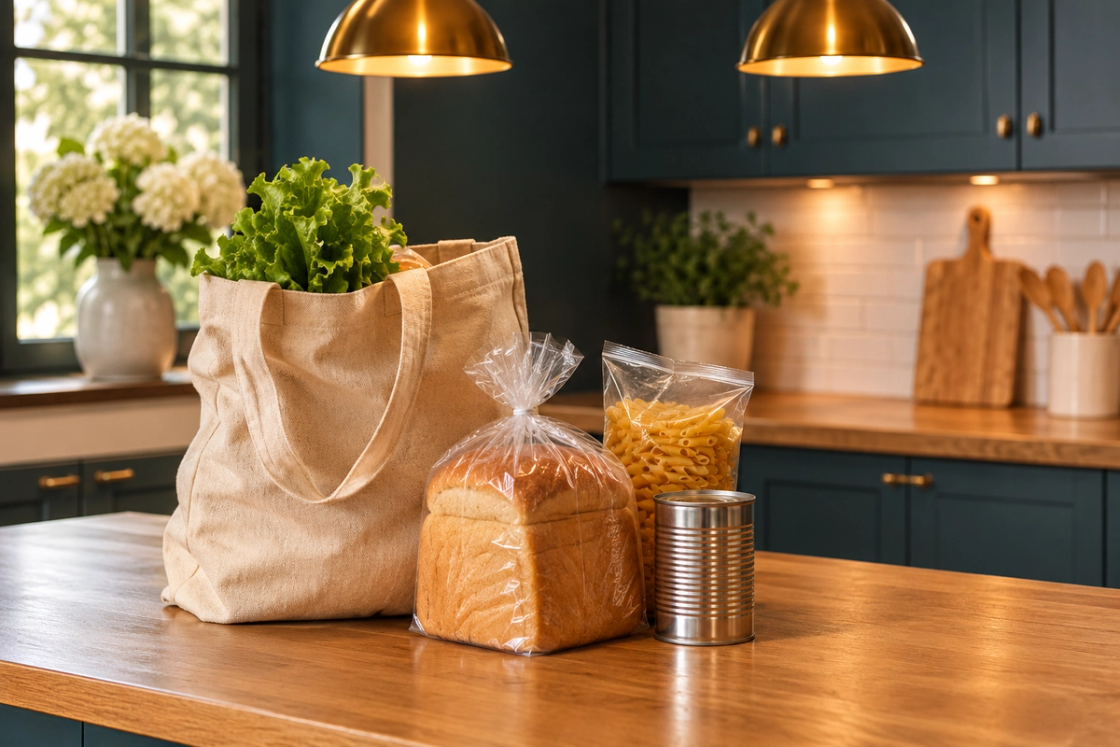
If your supermarket layout has changed, keep the shopping list you brought. Choose one familiar item, look for its category on the aisle signs, and ask for its location if the signs do not help. You do not need to learn the whole store before buying something useful.
The food you want may be the same while the route to it is different. If the lights, noise or crowd already make shopping demanding, another circuit of the aisles may be more than you want to do. A smaller shop is an option, not a failed attempt at the original list.
Keep the list; loosen the route
Your list may follow the old layout: bread first, crackers next, then the tins near the back. That order can stop being useful without making the items wrong. Leave the list as it is and cross off what you find. You do not have to rewrite it while standing beside a trolley.
Pick out the food that matters most for your next familiar meal or breakfast. Those items become today's priority; the others can remain on the list. This is choosing where to spend your searching effort, not starting a new meal plan.
If the list itself is missing, making a shopping list where the food runs out covers that earlier step. Here, the task is finding what you have already decided to buy.
Use one sign to choose the next aisle
Look for the broad category of one priority item rather than trying to take in every overhead sign. For your usual pasta, start with a sign that names pasta. Read from a place where you can pause without blocking the walkway, if one is available.
A category sign is a starting point, not a promise about every product beneath it. If the expected section does not have what you need, you can stop searching there. Repeating the same aisle is not the only next move.
Choose whichever cue is easier for you: a readable sign, a staff member's direction or a companion looking for the section. There is no requirement to use a phone map, install an app or remember the new aisle numbers.
Ask for the location, not a replacement
A short request can keep the conversation about finding the exact food. Try: ‘Where is this pasta now? I am looking for this brand and shape.’ You can show the item on your list or a product photo instead of describing the packet from memory.
- For a clear direction: ‘Which aisle is it in now?’
- If pointing is not enough: ‘Could you show me where that section is?’
- If another product is offered: ‘Thanks, I am looking for this exact one today.’
Staff may not know immediately, and help may involve waiting. You can decide whether that wait fits today. If you are shopping with someone, give them one specific finding task while you keep the list, rather than both searching separately for everything.
A gap in the old spot does not tell you whether the product has moved or is unavailable. Ask that question before treating it as a replacement-food decision. You can leave an unresolved item on the list without choosing an unfamiliar version in the aisle.
Give this shop a smaller finish
Look at what you have found and what is already at home. Would those foods cover the familiar meal you were prioritising? If so, you can head to the checkout and leave the optional items for another shop. Keep your spending limit in place; a rearrangement does not require extra purchases.
If an essential item is still missing, name that remaining task plainly: ‘I still need my usual bread.’ That is more useful than treating the whole shop as unfinished. You can ask someone for that item or decide separately when and how to get it, according to the help and options you actually have.
If useful, note one new location beside the item for next time. Skip making a complete store map. Today's aim was to bring home familiar food, not pass a test on where every shelf has gone.