Make a shopping list where the food runs out
Notice a familiar food running low? Capture it in one reachable list, then check the few details you need before shopping without taking stock of the whole kitchen.
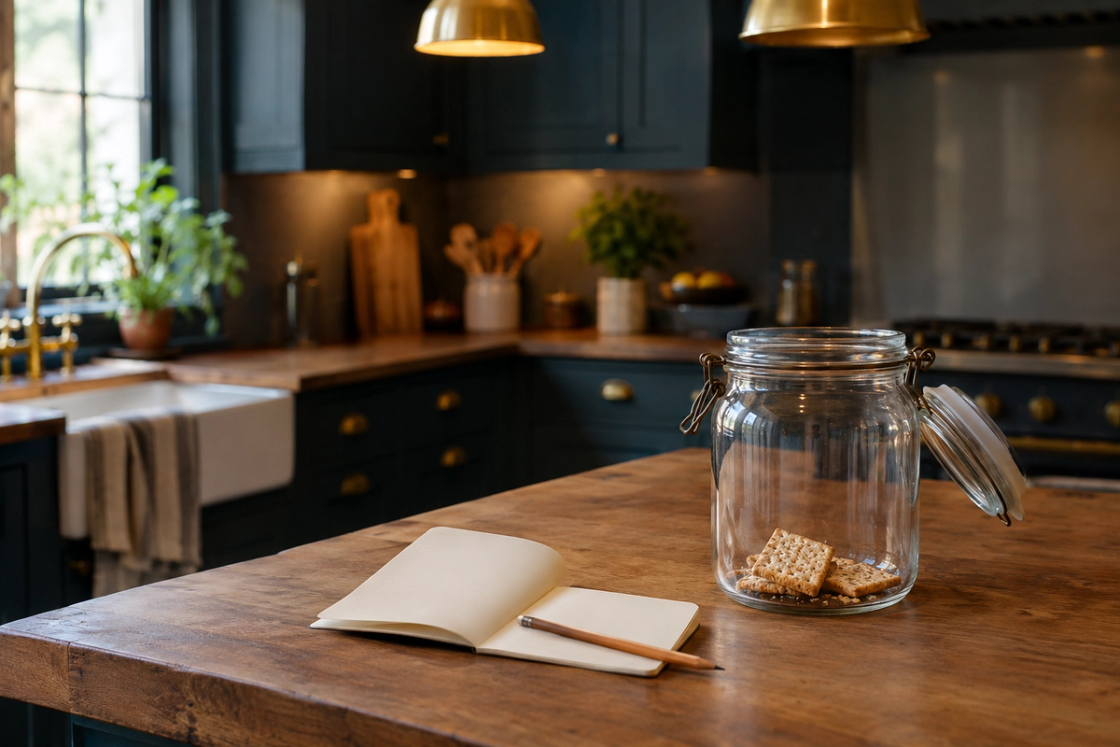
Put your shopping list where you notice the food running low: beside the cupboard, near the fridge or in a phone note you can reach easily. Add the familiar item at that moment. Before shopping, check what is still needed rather than trying to remember the whole week from an empty page.
A running grocery list does not have to be a pantry inventory or a meal plan. It can be a short record of gaps you have already spotted. Start with the food you want to keep buying, not everything a kitchen is supposed to contain.
Choose one place you can reach
Think about where you usually notice the gap. Perhaps it is while putting the cereal away or reaching for the last cracker packet. Keep the list within an easy reach or glance of that spot, away from spills and cooking surfaces.
Use something you already have. Paper avoids unlocking a phone; a phone note travels with you. If handwriting is tiring, a photo list may fit better. There is no need to buy a planner or set up a new app before recording the first item.
- Paper: keep a working pen beside the note, at a height you can comfortably use.
- Phone: choose one existing note or list that is easy to reopen.
- Photos: use one findable album for the products you need, rather than searching through the whole camera roll.
Pick one main list, not all three. A board on the fridge may be useful for one person and unwelcome visual clutter for another. If you prefer a quieter view, a small note inside the cupboard door could suit you better.
Record the item before the detail disappears
Write enough to recognise the food later. “Crackers” may be enough if you buy any of several kinds. If the thin, plain version matters, record that version. Add the brand or pack size when it helps you or another shopper find the intended item.
A photo can capture the product name without copying it. Check that the name and variety are readable before putting the packet away. This is a shopping reminder, not a replacement for checking the product when buying it.
For example, after using the usual crackers for lunch, you notice one packet remains. Add “usual thin crackers, one box” or a clear product photo. You have recorded a possible purchase; you have not committed to buying it today or calculated every portion left.
Let running low be an ordinary observation
You do not need a fixed refill level for every food. Start with a cue you already encounter, such as opening the last packet or noticing that the bread you want for tomorrow is nearly gone. Add it when you notice, even if that happens after it has run out.
If you miss an item, add it next time. There is no backlog to reconstruct. Leave foods off the replacement list when you no longer want them; finishing a packet does not oblige you to buy it again.
Do a small check before the shop
Read the list before leaving or placing an order. Check the listed items in their usual spots: has someone already bought more, is the quantity still useful, and does it fit this shop's budget? This is a check of the list, not a stocktake of every shelf.
If the list is on paper, take it with you or photograph it before heading out. If someone else is shopping, send the current version and confirm who is buying what. Cross off or remove purchased items so the next shop starts with the remaining gaps.
For an online order, the next decision may be what happens if an item is unavailable. Use choosing grocery substitutions before the order arrives to make that separate choice; the running list only needs to capture what you intended to buy.
Start with the next item
No kitchen reset is required. Put one note where it is useful, record the next familiar food you notice running low, and take that information to your next shop. A list with one useful entry is already doing its job.