When Your Safe Food Gets Discontinued
A safe food disappearing from the shelf is a real loss, not a fussy one. Here is how to find a stand-in without re-auditioning the whole supermarket.
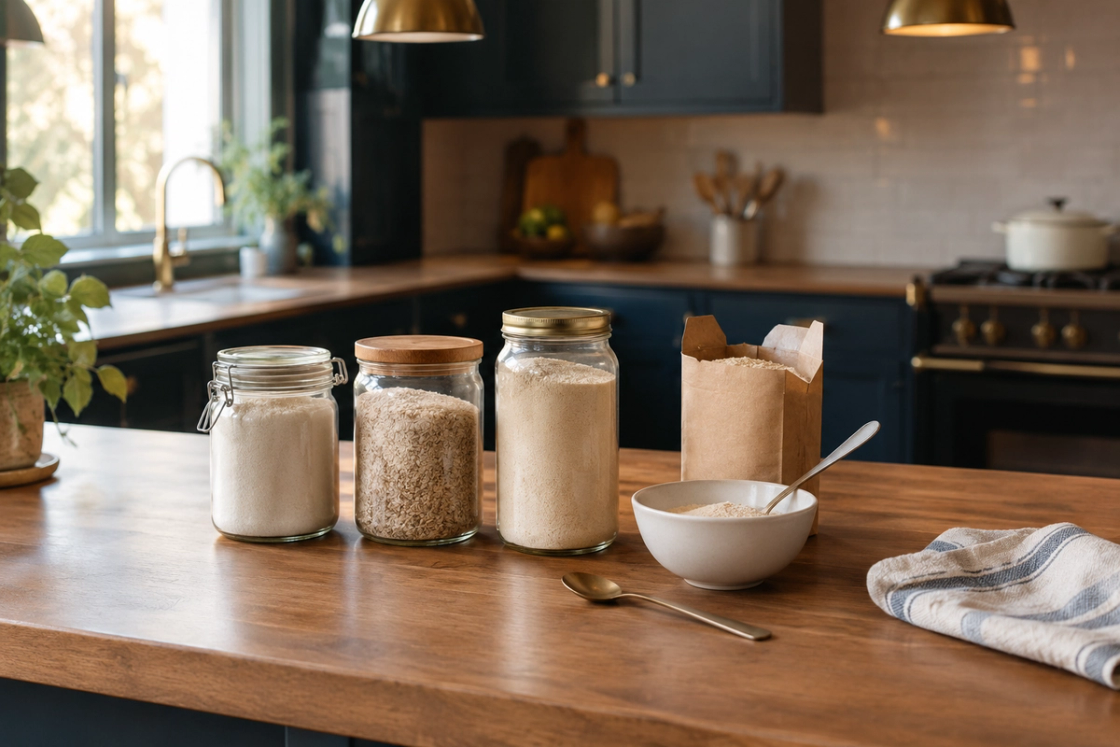
You reach for the same packet you always reach for, and it is not there. Or it is there, in a new wrapper, and the first mouthful is wrong. Somewhere between last month's shop and this one, a product was reformulated, delisted, or quietly replaced by the supermarket's own version.
If that food was doing real work for you — the reliable breakfast, the thing you can eat when nothing else is edible, the lunch you never have to think about — losing it is not a small inconvenience. It removes a decision you had already made, permanently. The tiring part is rarely the shopping. It is that something you had stopped thinking about is back on the list.
Work out what the food was actually doing
Before hunting for a replacement, name the job. Most replacements fail because we match the product instead of the property that mattered.
- Texture — the snap, the softness, whether it stays separate or goes claggy
- Flavour intensity — often it is the mildness that was doing the work, not the flavour
- Effort — straight from the packet, or one step away from the microwave
- Predictability — every unit identical, so there is never a bad one
- Role in the day — breakfast you can face at 6am, or the safe thing you take to someone else's house
Usually one or two of those are load-bearing and the rest are incidental. A plain oat biscuit might be doing "dry, mild, identical every time", and the brand on the packet is beside the point. Once you know which property matters, the search gets much smaller.
Search by property, not by brand
- If you still have the old packet, read the ingredients list, then look for a product with a similar short list rather than a similar label.
- Try the same food in a different format — the frozen version, the tinned version, the larger pack from the same maker.
- Look outside the usual aisle. The health-food, baby-food and international sections often carry plainer versions of ordinary things.
- If the product was reformulated rather than dropped, the older recipe sometimes survives in a different size or under a different brand from the same factory.
Test one at a time, on a decent day
A taste test on a low-energy evening, with nothing else in the house, is a bad experiment and a worse dinner.
- Buy two or three candidates, not eight. More options is more deciding.
- Try a new one when you have some capacity spare, and keep a familiar food alongside it so a miss is not a missed meal.
- Give each one a fair go, but treat a clear no as a no. Retesting something your body already rejected costs more than it returns.
- Write down what you tried and what was wrong with it, so you do not buy it again by accident in six weeks.
When nothing matches
Sometimes there is no replacement on the shelf. It is worth finding out whether the loss is permanent before you rebuild around it.
- Ask at the service desk whether it is a supply gap or a delisting. Staff can usually see which one it is.
- Email the manufacturer. They will often say whether a recipe changed, and which product in their range is now closest.
- If a reformulation has been announced but not shipped, buying a few extra of the old stock buys you time. It does not solve it, and that is fine.
- If the food is genuinely gone, look for a different food that does the same job rather than a copy of the old one. Something honestly different is often easier than something almost right.
It is also fine for this to take a few weeks, and to lean harder on your other safe foods in the meantime. None of it has to be settled in one shop.
Make the next one cheaper
- When a food starts doing important work, note the exact brand and product name in your phone. Recognising a packet is not the same as being able to name it.
- Keep a second acceptable option in rotation even if you prefer the first. A backup you have already tested is worth a great deal on the day you need it.
- Buy an extra when you see it on special, if it keeps and you have the room.
Safe foods are load-bearing, and losing one is allowed to be annoying. The aim is not to be less attached to them. It is to make the rebuild shorter the next time a shelf changes without warning.
Less deciding, more eating.
Related reading: "Reading Labels Without the Rabbit Hole".