When cutlery makes a meal harder to eat
The food can stay the same while you reconsider the cutlery. Start with utensils at home and notice their weight, shape and contact with the bowl.
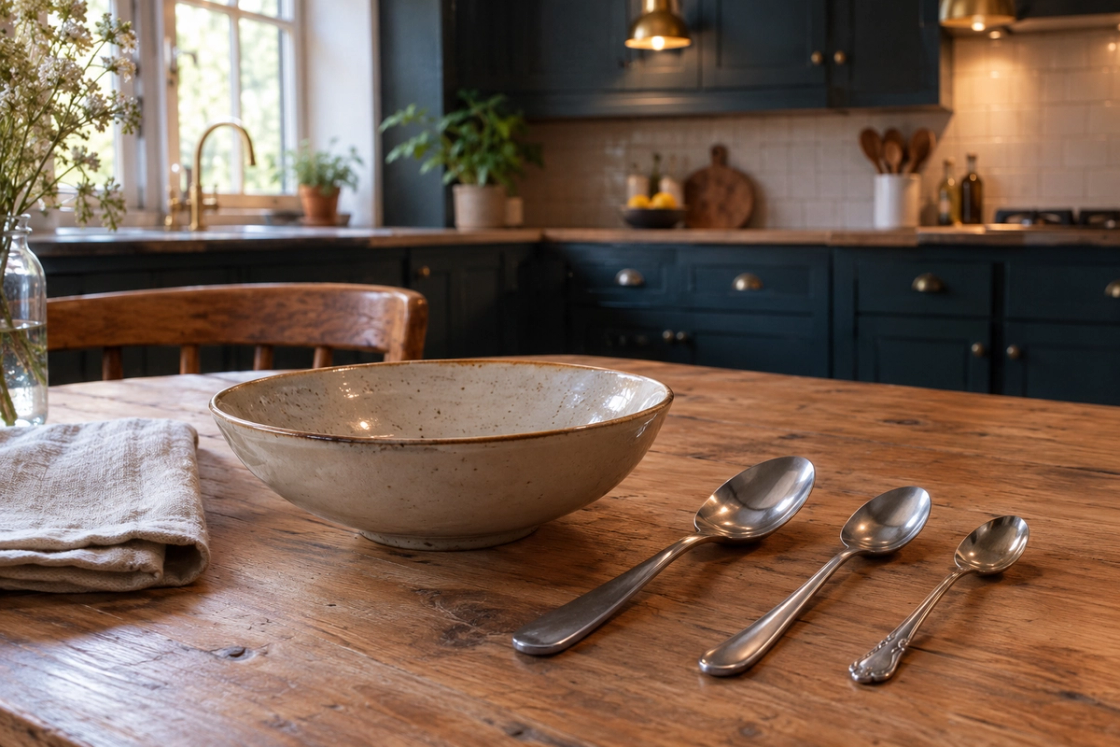
The meal is familiar, but the spoon isn't the one you wanted. Its handle feels bulky, its edge catches your attention, or it makes a scraping sound against the bowl.
If that sounds familiar, you don't have to start by changing the meal. The utensil and the bowl are part of the eating setup too. Looking at them separately gives you something specific to consider, without replacing food you already want to eat.
There's no single sensory-friendly cutlery choice for everyone. You can start with what's in your drawer, and you can stop looking when you find something you prefer.
Notice which part has your attention
“Wrong spoon” can describe several different things. If you want to narrow it down, notice where the difficulty shows up. You don't need to inspect every mouthful or complete a checklist while eating.
- Weight: is the utensil heavier or lighter than you want to hold?
- Handle: does its thickness or shape suit the way you hold it?
- Eating end: do you prefer a narrower spoon, a shallower spoon bowl or a differently shaped fork?
- Contact: is it the utensil itself, or its touch and sound against the dish?
These are prompts, not a list of faults to find. If you already know which spoon you want, that's enough information. You don't need an explanation precise enough to persuade someone else.
A preference for more weight is as valid as a preference for less. A smaller utensil isn't automatically better, and something sold as specialist cutlery isn't automatically the right choice for you.
Let the drawer be the starting point
Look for an alternative among things you already own. A teaspoon, dessert spoon and soup spoon offer different shapes without requiring a shopping trip. You may also have a favourite fork from a mismatched set or a handle you reach for without thinking.
Choose one alternative that differs in the detail you noticed. If the handle is the problem, another handle gives you a more relevant comparison than changing everything on the table. There's no need to lay out the whole drawer or rank every piece.
You can look at the utensils away from a meal if that suits you better. Hold them, put them down, and leave the decision there. Choosing equipment doesn't have to become an eating exercise.
If nothing you own appeals, you haven't done this incorrectly. Knowing “I want a shallower spoon” gives you a clearer question if you later decide to look elsewhere. It doesn't create a requirement to buy anything now.
Keep the food familiar
At a meal you were already going to eat, you could use the alternative utensil while leaving the food unchanged. That keeps the question small: do you prefer eating this familiar food with this utensil?
You don't need to alternate bites, finish a comparison or persist with something unpleasant to collect a fair result. Put the other utensil aside if you want to. A meal isn't a test you have to complete.
Nor does a choice need to apply to every food. The spoon you like for soup may not be the one you choose for yoghurt. You can have a preference for a particular meal without finding one universal favourite.
Leave room for a different answer another day. You are choosing how to eat this meal, not setting a permanent rule for your kitchen.
Consider the utensil and bowl together
If contact with the bowl is what bothers you, keep that pairing in view. A utensil can feel fine in your hand while its contact with a particular dish is unwelcome. Changing the food wouldn't address that part of the experience.
You could first keep the bowl and try a different familiar utensil. Or keep the utensil you prefer and choose another bowl you already use. Treat these as separate options, not instructions to replace both.
Don't assume a material will feel or sound right because someone else recommends it. Pay attention to your own response to the particular combination. A softer-sounding pairing might appeal to you; another person might prefer a more distinct sound or feel.
Make room for an ordinary preference
If you find a pairing you want to use again, keep it available with your everyday things. It needn't be reserved for a difficult day. In a shared kitchen, “I prefer this spoon with that bowl” can be the whole explanation.
Keep other options too, if you want them. The aim is to have cutlery you can choose comfortably, not to make every meal use the same set.