Unpack the groceries without reorganising the kitchen
Getting groceries home does not have to start a kitchen overhaul. Put cold food away promptly, then separate the remaining unpacking from optional sorting.
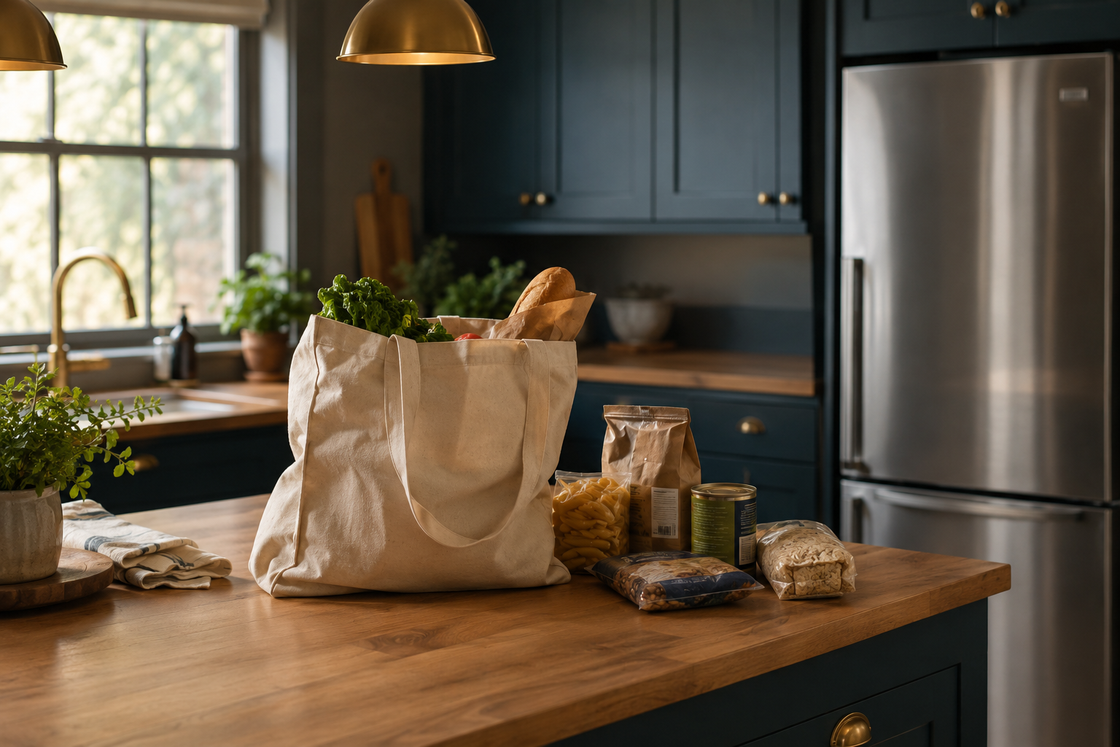
The groceries are home, but your energy stayed at the supermarket. Before opening every cupboard, give this job a small ending: chilled food into the fridge, frozen food into the freezer, and the remaining groceries into suitable storage. Matching jars and rearranged shelves are not part of that finish line.
Start with the cold food, not the receipts or the cupboard that looks untidy. Better Health Channel advises putting chilled and frozen foods into the fridge or freezer immediately when you arrive home. A kitchen reset can wait; getting those foods into appropriate storage cannot.
Choose a landing space, not a sorting station
If you can, choose a small landing spot before leaving for the shop or before a delivery arrives. Use an existing bench or sturdy table within comfortable reach. Move enough unrelated items to make room for a bag, without starting to file papers or empty drawers.
The space is there to let you reach the groceries, not to display the entire shop. You can work from one bag at a time, checking the others for chilled and frozen items first. There is no need to lay everything out in matching groups before putting anything away.
If lifting a full bag is difficult, ask someone available to bring it to the landing spot or pass you individual items. Keep the request about moving the groceries, rather than taking on a wider cleaning task.
Put cold food away before deciding anything else
Read the storage instructions on unfamiliar packs rather than guessing from the type of food. CSIRO's grocery guidance recommends checking those instructions as soon as you arrive home. Follow the pack's directions, including any conditions that apply after opening.
- Move chilled groceries to the fridge and frozen groceries to the freezer promptly, before tackling pantry items.
- Use their usual suitable storage places where possible. You do not need a new shelf arrangement for each shop.
- Keep the fridge from becoming crowded; CSIRO advises leaving room for air to circulate around stored food.
For example, a bag containing yoghurt, frozen peas and crackers has different destinations. Put the yoghurt and peas into their appropriate cold storage, then return to the crackers. Do not make emptying the whole bag neatly a prerequisite for putting its cold contents away.
Leave sealed pantry food in its packaging
Once the cold groceries are stored, put shelf-stable items where their storage directions allow. A sealed packet can stay a packet. Decanting pasta, combining half-full containers and replacing labels are separate choices, not compulsory steps in bringing food home.
If you need a pause, keep the remaining shelf-stable groceries together in a suitable place, out of walkways and away from heat or spills. Check the bags for overlooked cold items before stopping. This pause is for food that does not require refrigeration or freezing, not a reason to leave a mixed delivery waiting.
You might leave the sealed crackers and tins together while you rest, then put them into their usual cupboard later. There is no requirement to photograph the shelves, build an inventory or buy containers to finish.
Keep extra decisions out of the unpacking job
An unfamiliar substitute or an awkwardly large box can pull you towards another task. Deal with any storage requirement first. Deciding whether you want that product again can wait until the food is put away.
If substitutions regularly make arrival harder, choosing grocery substitutions before the order arrives is a separate step for your next order. You do not have to redesign the shopping list while unpacking this one.
If someone is helping, name a complete small task: ‘Please put the chilled and frozen items into their usual storage places now. Leave the cupboard sorting for another day.’ That makes the immediate priority clear without asking them to guess what a finished kitchen looks like.
Let stored be finished
Once the food is appropriately stored and the bags are out of the way, unpacking is finished. A shelf can look uneven. Different packets can sit beside each other. Shopping has already asked something of you; it does not need to end with a second project.