The Washing Up Is the Real Reason You Didn't Cook
Cooking and cleaning up are two separate jobs, and the second one is often what stops the first. Choosing meals by their washing-up cost changes what feels possible on a low night.
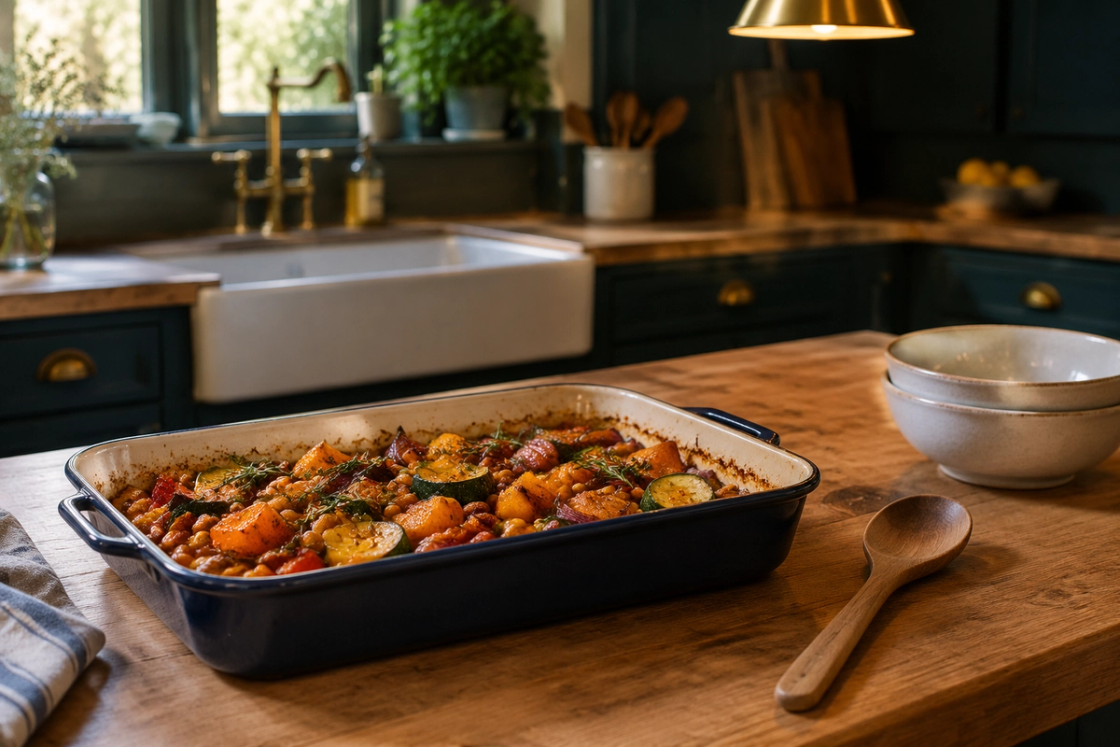
There is a version of tonight where you cook. The food is not the problem. You know what you would make, the ingredients are in the fridge, and none of it is hard.
What stops you is standing at the bench and picturing the end of it. The pan. The board. Two bowls and the thing that has to soak. The meal costs twenty minutes; the clean-up costs another fifteen, and it lands at the hour when you have the least left.
Cooking and cleaning are two different jobs
Recipes price only the first one. They tell you prep time and cook time. They never tell you that the method quietly uses three pans, a colander and a stick blender.
If you have ever eaten toast standing up while a perfectly good dinner sat uncooked in the fridge, this is usually why. It was not laziness and it was not a missing bit of willpower. The full price of the meal was more than you had, and the clean-up was most of that price.
Count the washing up before you start
Before you commit to a meal, run a ten-second count. Three questions:
- How many things will need washing? Pans, boards, bowls, utensils, the lot.
- Does anything need soaking, scrubbing, or washing by hand?
- Will the mess be visible from where I sit afterwards?
More than about four items makes it a high-cost meal. That is fine on a good day. On a low day it is the difference between eating and not eating.
Meals that cost one thing to clean
- One tray. Vegetables, a protein, oil, oven. Line the tray with baking paper and the tray itself never gets washed.
- One pot. Soup, dahl, or pasta where the sauce finishes in with the pasta rather than in a second pan.
- No pot at all. Tinned fish, crackers, cheese, cut fruit, a tub of hummus. One plate, one fork.
- The sandwich press or the microwave. One surface, wiped rather than washed.
None of these are lesser meals. They are meals with an honest price tag.
Cheap ways to lower the cost
- Baking paper. A roll is about $3 and it removes the worst job in the kitchen. Foil does the same for anything sticky.
- Eat from the tray or the pan. No rule requires a serving dish.
- Fill the pot with hot water the moment it comes off the heat. Soaking is free and it happens while you eat.
- Use one board in a sensible order — vegetables first, raw meat last — instead of a clean board per ingredient.
- Own two of the one tool you always reach for. A dirty pair of tongs in the sink should not be able to block tomorrow's dinner.
When the sink is already full
A full sink is its own barrier, because now cooking requires washing up first, and that is a second task with its own start cost. Two things work here.
Clear only what tonight needs — one pot and one bowl, not the whole sink. Or skip the sink entirely and choose something that needs nothing from it. Neither is giving up. Both end with you fed, which was the actual goal.
The meal you will actually cook is worth more than the meal that looks better on paper.
One thing to try this week
Pick your two or three usual dinners and give each one a washing-up number. Write the numbers somewhere you will see them — inside a cupboard door is fine. Next low night, the decision is already made: you pick the low number and you eat. Less deciding, more eating.
Related reading: "One Pot, One Knife: Cooking With Almost No Equipment" and "The Day After a Big Day".