The Right Bowl, the Wrong Fork: When the Utensils Are the Barrier
Sometimes the meal is fine and the fork is the problem. Cutlery and crockery are an under-discussed sensory barrier — and one of the cheapest to fix for good.
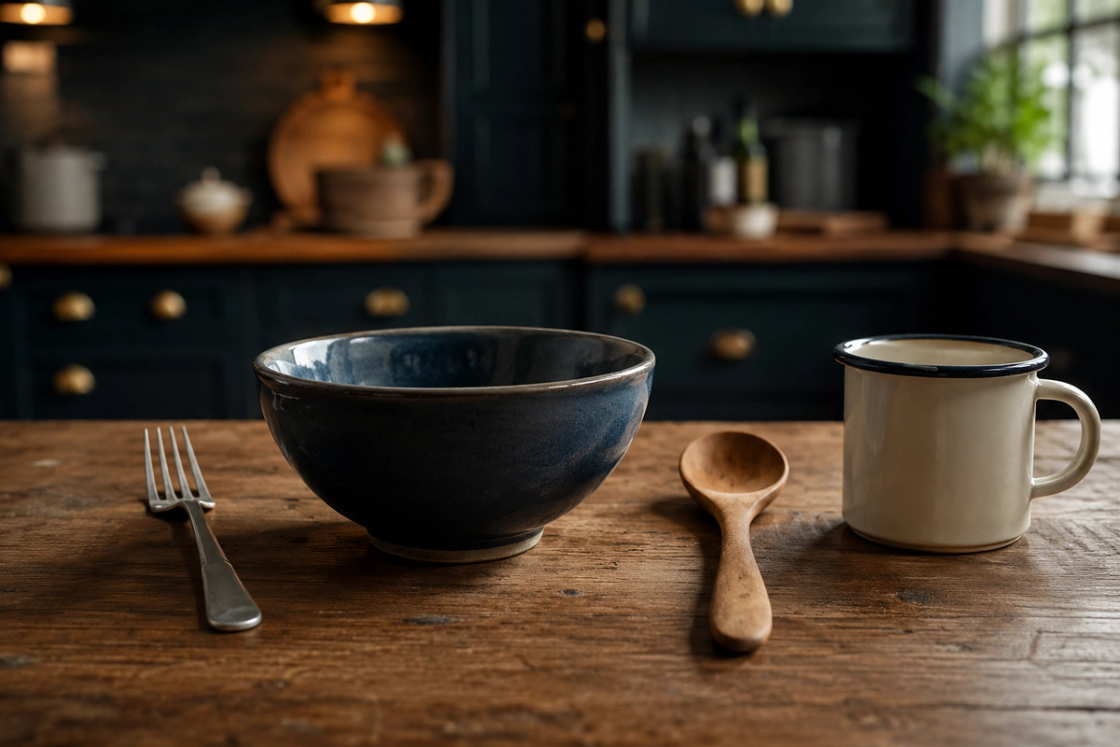
You've made the food. It's a safe meal, one you've eaten a hundred times. Then you pick up the fork and something is wrong, and within two mouthfuls you've stopped eating.
Nothing about the food changed. The problem was the contact — the metal, the weight, the shape of the rim against your mouth. It's a real barrier, and it's one almost nobody names out loud.
The meal isn't always the hard part
A lot of food advice assumes that if the meal is right, eating follows. For plenty of neurodivergent people that isn't true. Texture in the mouth includes the utensil, not only the food.
Common versions of this:
- A tinny, almost electrical taste from stainless steel cutlery.
- Cutlery that feels too light and flimsy, or too heavy and effortful.
- A cold metal spoon against the lip, especially first thing in the morning.
- A thick, blunt bowl rim that has to be navigated around every mouthful.
- The scrape of metal on ceramic — a noise problem more than a touch one.
- Fork tines that are too wide, so food arrives in an unpredictable amount.
- A shallow plate where separate foods drift into each other.
If any of those made you wince in recognition, the fix is usually cheap and quick. This is one of the few food barriers you can solve once and never think about again.
Start with the bowl
Bowls are more forgiving than plates for a few reasons at once. The walls give you something to push food against, so scooping needs less coordination. The food stays warmer. And separate items stay where you put them instead of touching.
Things that tend to help:
- A deep bowl with a thin, smooth, rounded rim rather than a thick squared one.
- Fully glazed inside — unglazed stoneware can feel chalky and drag on the spoon.
- A weight you like. Some people want heavy and grounding; some want light. Both are valid.
- Melamine or enamel if the ceramic-and-metal scrape is the issue. Both are quieter.
- If touching foods are the problem, a bowl with sections, or three small bowls, beats negotiating one plate.
Then the fork
Cutlery is where the sensory detail gets very specific, and where the cheapest experiment lives. A few directions worth trying:
- Bamboo or wooden cutlery removes the metal taste entirely. A pack is a few dollars.
- Silicone-coated spoons are soft against teeth and warmer to the touch. Sold for babies, useful at any age.
- Titanium or gold-coloured cutlery has far less of the metallic tang some people get from cheap stainless.
- Smaller cutlery — an entree fork, a teaspoon — gives smaller, more predictable mouthfuls.
- Chopsticks are worth a try if metal is the whole problem. So are hands, honestly.
- Run the spoon under warm water before a cold-morning meal. Takes five seconds and changes the first mouthful.
How to work out which one it is
You don't need to diagnose this carefully. You need one afternoon of noticing.
Next time a meal stalls, pause before you decide the food was wrong, and check three things: what was in your hand, what it touched your mouth with, and what noise it made. Then try the same meal again with different equipment.
If the meal works the second time, you've found it. If it doesn't, the barrier is somewhere else and you've ruled something out — also useful.
A meal you abandoned isn't evidence that you're fussy. It's information about what got in the way.
Make it the default, not the special option
The part that matters: once you know what works, that bowl and that fork need to be the easy ones to reach. Not the good set kept in the back of the cupboard for later.
Buy two or three of the ones that work. Put them at the front of the drawer. Wash them first when you wash up. If the utensil you can eat with is at the bottom of the sink, the barrier is back — and on a low-capacity day, that's enough to end the meal.
This is the whole idea behind less deciding, more eating. You make the choice once, in a calm moment, and then it stops being a choice at all.
A note if you're feeding someone else
If a child or partner keeps refusing meals, the cutlery is worth checking before the food is. Ask what the fork feels like, not whether they like the dinner. People often can't name it until someone asks the specific question — and "the spoon tastes funny" is a real answer, not an excuse.
Related reading: When the Smell Is the Problem — the same approach applied to cooking smells rather than contact.