The Freezer Shelf You Can Actually Use
Frozen meals go uneaten when they are unlabelled and frozen in one solid lump. A small system that makes future-you say yes instead of shutting the door.
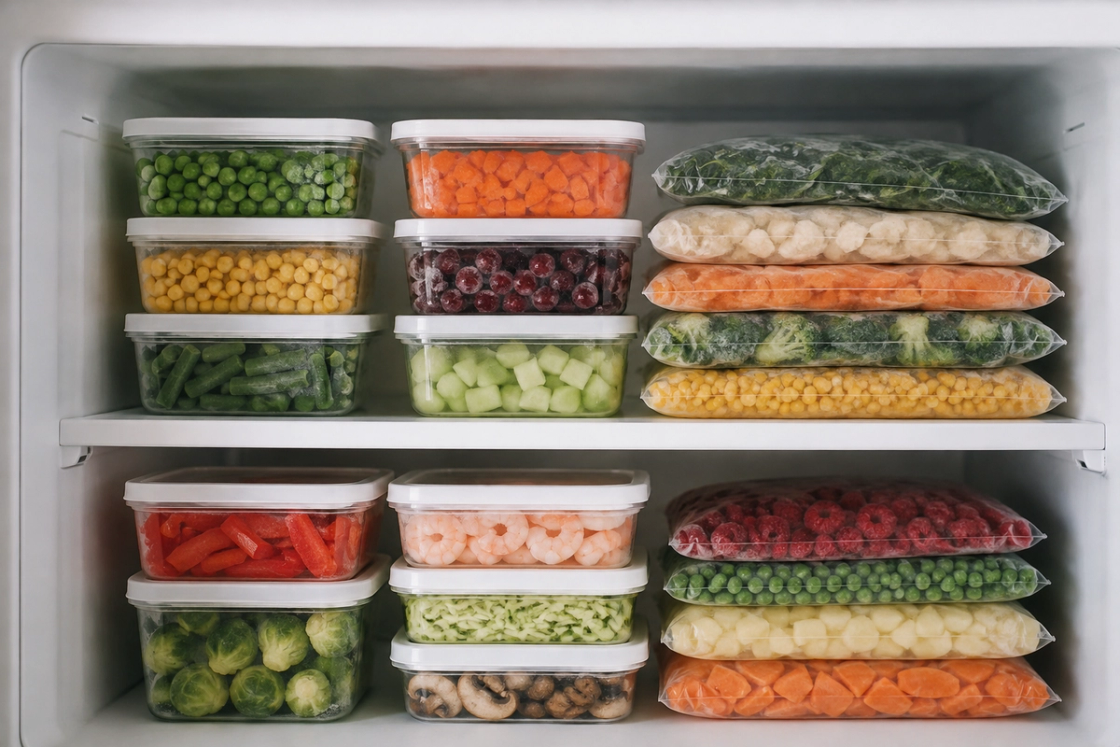
There is a particular kind of defeat in opening the freezer on a bad night, seeing it full, and closing it again.
The food is there. You cooked it. Past-you did the hard part. But everything is in identical containers, or one enormous frozen brick, or a bag with no label and something orange inside. So you eat toast.
A freezer is not storage. It is a decision you are making in advance, on behalf of someone who will have less energy than you do now.
Why full freezers still end in toast
Three things quietly block a frozen meal from being eaten.
- You cannot tell what it is. Identifying a frozen block is a puzzle, and puzzles are exactly what you do not have capacity for.
- It is the wrong size. A four-serve container means committing to defrosting far more than you want.
- It takes too long. If it needs hours of thawing, it is useless at 7pm, which is precisely when you need it.
A meal you cannot identify in three seconds is not really in the freezer.
Freeze flat, in single serves
This is the change that does the most work. Portion into single serves, put them in bags, press them flat, and freeze them lying down. Once solid, stand them upright in a box like files.
Flat portions defrost in a fraction of the time, because there is no frozen core. Many go straight from freezer to pan or microwave with no thawing at all. You also get to see every item at once instead of excavating.
Single serves matter for a second reason: you can eat one without deciding anything about the rest.
Label like you will not remember
Because you will not. Write on the bag before you fill it, with a marker kept in the same drawer. Two things only:
- What it is, in plain words. "Bolognese" beats "dinner".
- The month. Not the full date. "Aug" is enough to know whether it is ancient.
If handwriting is a barrier, a roll of stickers and a pen you like will do. If even that is too much, freeze only one or two kinds of thing so the shape tells you what it is.
Adding heating instructions to the label sounds excessive. It is not. "Bolognese — Aug — microwave 6 min" removes the last decision standing between you and dinner.
One shelf, not the whole freezer
Reorganising an entire freezer is a weekend project that mostly does not happen. Claim one shelf, or one plastic tub, and call it the meals shelf. Everything else can stay chaotic.
The rule is simple: if it is on that shelf, it is a complete meal for one person that needs no thought. Frozen peas and ice do not live there. This means that on a bad night you open one place, not five.
Freeze what you will actually want
It is tempting to freeze the virtuous meal, the one with vegetables you think you should eat. But the freezer is for your worst nights, and on your worst nights you want the safe food.
Freeze the things you reliably eat. Also be honest about texture: rice, mince dishes, soups, stews, curries and most sauces freeze well. Potato goes grainy, cream can split, and salad leaves are gone forever. If a food's texture is already a fine line for you, test one portion before committing six.
The two-portion habit
You do not need a batch-cooking day. When you cook something that freezes well, put two single serves aside before you sit down to eat. That is it. No extra shopping, no dedicated session, and the shelf fills itself over a few weeks.
Doing it before you eat matters, because afterwards the leftovers become a problem for later-you, and later-you is tired.
The short version
Single serves, frozen flat, labelled in plain words, all on one shelf. Set two portions aside whenever you happen to cook. The freezer stops being a graveyard and becomes what it should be — a decision already made. Less deciding, more eating.
Related reading: "Leftovers You'll Actually Eat" covers the fridge half of this problem, and "When You Forget to Eat Until You're Too Hungry to Cook" is worth having on hand for the nights the shelf is empty.
Also from this week: "The Day After a Big Day" — the situation this shelf is really for.