The Day After a Big Day
The morning after a big day, standing, watching and deciding are all gone at once. Here's recovery-day eating that asks for none of them.
There is a particular kind of tired that turns up the morning after. Not sleepy — flat. The big day is over: the wedding, the conference, the family visit, the shift that ran three hours long, the appointment you had been bracing for since July.
Your body did the thing. Now it wants feeding, and there is nothing left over to organise that with.
Recovery-day eating is its own category. The goal is not a good meal or a balanced one. It is getting food in with the smallest possible demand on a system that has already spent everything it had.
What has actually run out
On a recovery day, three separate things tend to be gone at the same time:
- Standing. The stove is a promise to stay upright for fifteen minutes, and that promise is beyond you today.
- Watching. Anything that needs stirring, checking or timing borrows attention you do not have to lend.
- Deciding. Even choosing between two reasonable options can feel like being asked to sit an exam.
Most easy-meal advice only solves the first one. A recipe can be genuinely simple and still ask you to watch a pan. Recovery-day food has to clear all three.
Decide it now, not then
The most useful thing you can do about a recovery day happens before it: make the decision while you still have the capacity to make one.
One line on the fridge is enough. Not a meal plan — one line, naming what tomorrow's food is. Tomorrow-you does not have to be creative or resourceful. Tomorrow-you has to be able to read.
A three-tier list
Pick a tier based on what you have that morning. If picking is already too much, take tier one.
Tier one — no standing at all
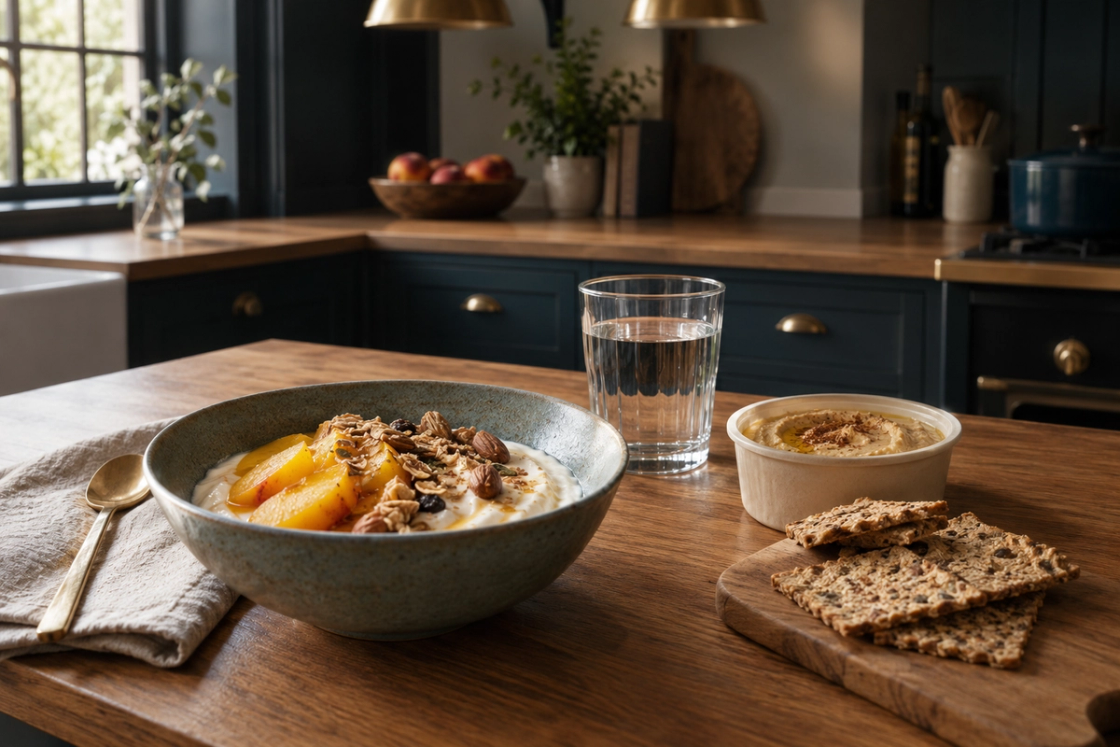
- Thick yoghurt with tinned peaches and a handful of muesli, eaten sitting down.
- Cheese, crackers and whatever fruit is already in the bowl.
- Hummus with pre-cut vegetables or bread torn by hand, so there is no knife and no board.
- A tin of baked beans, cold or ninety seconds in the microwave. Cold beans on toast is a real meal and has fed people for a century.
- Bread folded around peanut butter, standing at the bench, done in a minute.
Tier two — one appliance, nothing to watch
- A labelled portion out of your own freezer, straight into the microwave.
- Tinned soup and toast — the toaster does the timing, not you.
- A tray of frozen chips or nuggets in the oven: set the timer, walk away, come back when it beeps. No stirring, no judgement calls.
Tier three — someone else cooks
- The takeaway order you have placed before, reordered without reading the menu again.
- A supermarket roast chicken, eaten from the container with bread.
- Anything a housemate, partner or parent has already offered to bring. Recovery days are a good day to say yes.
Drink before you eat
Thirst tends to arrive late, and after a long day it arrives later still — often disguised as a headache, or as that particular flatness that feels like it needs food. A glass of water before you sort out anything else costs almost nothing and sometimes changes the whole afternoon.
Put it where you are going to be, not where the kitchen is. A bottle beside the couch gets drunk. A glass two rooms away does not.
Lower the bar deliberately
Toast for dinner is a meal on a recovery day. A plate with two items on it counts. Eating in bed counts. Eating at four in the afternoon because that is when you surfaced counts.
A meal you actually ate beats the better meal you did not.
The washing up can wait too. One bowl and one spoon is a deliberate choice, not laziness — it keeps tomorrow from starting with a sink full of yesterday.
The bit worth doing while you still can
When you know a big day is coming, the highest-value twenty minutes you will spend is not on the day itself. It is portioning something into the freezer beforehand, labelled clearly enough that a flat, foggy version of you can find it and trust it.
A recovery day is not a failure of planning. It is the predictable cost of a big day, and it deserves the same preparation the big day got.
Related reading: The Freezer Shelf You Can Actually Use — the labelling and portioning system that makes a recovery-day meal findable instead of a frozen mystery.
Less deciding, more eating — and on the day after, mostly less deciding.
Also from this week: "Father's Day Lunch Without the Overwhelm" — shaping the big day itself so the day after costs less.