Swap the Texture, Keep the Meal
When texture is the dealbreaker, the ingredient usually isn't the problem. Changing how you cut, cook or blend a food is often enough to keep it on the plate.
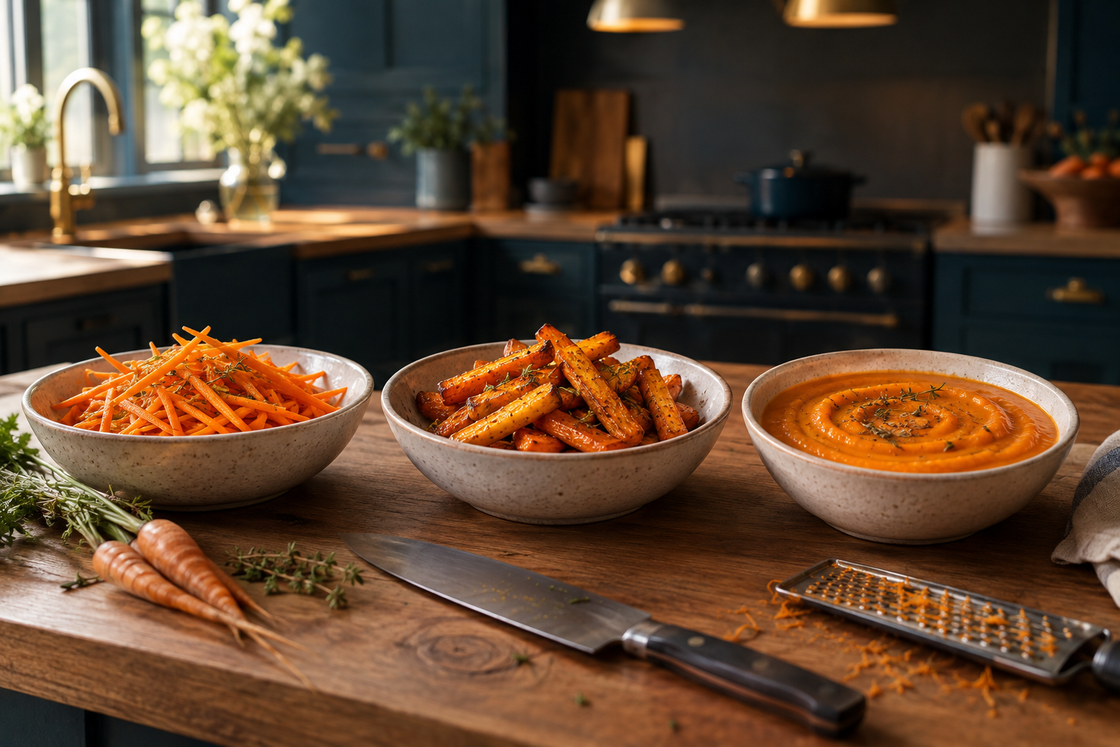
When a food feels wrong in your mouth, the easy conclusion is that you don't like it. Often that isn't true. You might like the flavour fine. It's the slime, the crunch, the stringy bits or the lumps that end the meal.
That matters, because texture is usually the most changeable thing about a food. The way you cut it, cook it or blend it can turn a dealbreaker into something you eat without thinking. You rarely have to drop the ingredient. You change its shape.
Name the texture first
Before you swap anything, it helps to know what exactly is the problem. "I hate mushrooms" is hard to fix. "Mushrooms go slippery and rubbery" gives you something to work with.
Most texture dealbreakers fall into a few groups:
- Slimy or slippery — cooked mushrooms, okra, eggplant, soft onion.
- Stringy or fibrous — celery, silverbeet stems, slow-cooked meat, mango near the stone.
- Mushy or soggy — overcooked vegetables, soft pasta, wet bread.
- Lumpy or mixed — a smooth sauce with surprise chunks, yoghurt with fruit bits.
- Too crunchy or hard — raw carrot, nuts, crusty edges.
You don't need to label yourself. Notice which group keeps coming up. That tells you which lever to pull.
Lever one: change the cut
Size and shape change how a food behaves in your mouth, with no extra cooking.
- Grate it. Grated carrot, zucchini or cheese melts into a dish instead of sitting there as a distinct lump. A box grater costs about $10 and is quieter than a food processor.
- Cut it much smaller. Finely diced onion cooks down until it all but disappears. Big slices stay slippery.
- Cut it across the fibres. Slicing celery or meat thinly across the grain shortens the strings, so there's nothing long to chew through.
- Peel it. A lot of the stringy or tough texture lives in skins — capsicum, apple, zucchini, tomato.
Lever two: change the cooking
The same vegetable can be crisp, tender or collapsed depending on heat and time. If one version fails, try the opposite end.
- Roast instead of boil. High, dry heat (around 220°C) gives edges that are firm and caramelised rather than wet. Roasted broccoli and boiled broccoli barely feel like the same food.
- Cook it less. If soggy is the problem, pull vegetables early. A quick stir-fry or a two-minute steam keeps a bit of bite.
- Cook it more. If crunch is the problem, go long and soft — slow-cooked carrots, well-stewed apple.
- Dry it out. Air fryers are good at turning soft things firm: chickpeas, tofu, mushrooms cut small.
Doneness is a real variable, not a detail. Writing down "roast 25 minutes, not 35" once can save you a lot of re-deciding later.
Lever three: blend it smooth
When the problem is lumps, stringiness or mixed textures, a smooth version can remove it completely.
- Blend cooked vegetables into a pasta sauce or soup. Pumpkin, cauliflower and capsicum all disappear well.
- Strain a sauce if you want to be sure no bits survive.
- Blend fruit into a smoothie instead of eating it whole. Frozen banana gives a thick, even texture.
- A stick blender is cheaper than a jug blender, easier to wash, and can go straight into the pot.
Some people find a smooth texture boring after a while. That's fine. Blending is one tool, not the goal.
Lever four: keep it separate
Sometimes the ingredient is fine and the mixing is the problem. A stew where everything goes soft together can be harder than the same foods served apart.
- Serve components side by side instead of stirred through.
- Put sauce on the side so the crisp things stay crisp.
- Add crunchy toppings at the table, not in the pot, so they don't go soggy.
Test one change at a time
Trying new textures costs energy, so keep the experiment small. Change one thing — the cut, the cooking time, the method — and keep everything else familiar. Try a spoonful alongside a meal you already trust, rather than betting a whole dinner on it.
If it works, write it down in a line. "Mushrooms: chopped small, air-fried, not sautéed." That note is the thing that saves you from re-auditioning the same food next month.
If it doesn't work, that's useful too. You've ruled out one version, not the whole ingredient.
You're not being fussy. You're finding the version of a food your body agrees with.
A quick swap list to start from
- Slimy mushrooms → chop small and air-fry or roast until firm.
- Stringy celery → peel, then slice thinly across the fibres, or blend into soup.
- Soggy vegetables → roast hot, or steam for less time.
- Lumpy pasta sauce → blend it smooth with a stick blender.
- Hard raw carrot → grate it, or roast into soft batons.
- Chunky yoghurt → buy plain and add a smooth jam or honey instead.
Less deciding, more eating. Keep the ingredient, change the texture, and write down what worked.
Related reading: When Your Safe Food Gets Discontinued.