Soft, Mild, and Predictable: A Texture-First Approach to Trying New Foods
If new foods usually get rejected, texture is often the reason rather than flavour. Here's a low-pressure way to widen what you eat, one small predictable change at a time.
Most advice about "expanding your palate" starts with flavour. Try a new cuisine. Add a spice. Be adventurous. If you're texture-sensitive, that advice is aimed at a problem you don't have.
The thing that makes a food unbearable is rarely how it tastes. It's the grit, the slime, the surprise crunch, the way it changes in your mouth. Flavour is something you can decide about. Texture happens to you.
So if you want to eat a slightly wider range of things — not because you should, but because a bigger list makes tired days easier — it helps to start from texture and work outwards.
Why texture is usually the real objection
A safe food is usually safe because it's predictable. You know exactly what will happen when you put it in your mouth, from the first bite to the last. Nothing changes halfway through.
Foods that get rejected tend to break that predictability. Common culprits:
- Mixed textures in one mouthful — soft with crunchy, wet with dry
- Things that release liquid when bitten, like tomatoes or grapes
- Stringy or fibrous bits that need extra chewing
- Skins, seeds, pith, gristle — small surprises hidden inside something otherwise fine
Once you can name which of these is the problem, you stop rejecting whole foods and start rejecting one property. That's a much smaller list to work around.
Start from a food you already trust
Pick one food you eat happily and often. Mashed potato, plain rice, scrambled eggs, yoghurt, white bread, whatever it actually is. This is your baseline, not a stepping stone you're supposed to leave behind.
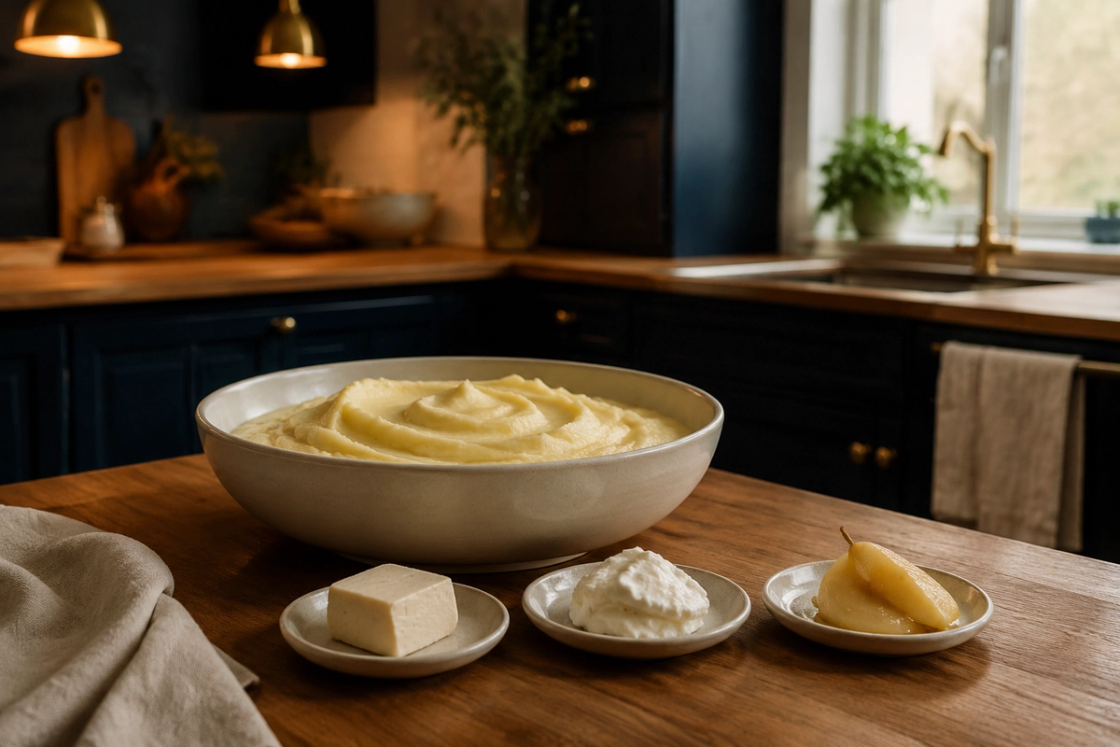
Then look for foods that share its texture profile. Mashed potato sits in the same family as pumpkin mash, polenta, and cauliflower purée. Yoghurt sits near ricotta, silken tofu, and custard. Plain rice sits near couscous, small pasta, and soft noodles.
You're not asking yourself to be braver. You're moving sideways within something your body has already approved.
Change one thing at a time
A new food usually carries several changes at once: new texture, new flavour, new smell, new temperature, new look. That's a lot to process in one bite.
Hold everything steady except one variable:
- Same texture, new flavour — swap plain mash for pumpkin mash
- Same flavour, new texture — move from apple purée to soft stewed apple
- Same food, new temperature — try a familiar soup warm instead of hot
If it doesn't work, you know precisely which change caused it. That information is worth more than the meal.
Soft and mild foods worth a look
These are cheap, widely available in Australian supermarkets, and forgiving to prepare:
- Silken tofu — very soft, close to no flavour, takes on whatever it sits in
- Ricotta — mild and smooth, works sweet or savoury
- Tinned pears or peaches in juice — soft, no skin, no surprises
- Polenta — smooth when loose, firm and sliceable when set, so it gives you two textures from one packet
- Well-cooked lentils in a soup, blended smooth if the skins bother you
A stick blender does a lot of quiet work here. Most texture problems in a vegetable disappear when it's smooth.
Keep the stakes small
A trial portion should be a teaspoon on a side plate, next to a meal you already know you'll eat. Not a full serve. Not the centre of dinner. Nothing riding on it.
Try new things when you have energy to spare, not on a day when dinner is already a stretch. A rejected food on a hard day can put you off it for a long time, and that's a worse outcome than never trying it.
One teaspoon, on a good day, beside something safe. That's the whole method.
When it's a no
Sometimes it's a no. Spit it out, drink some water, move on. There's no debt attached and nothing to push through.
It can help to note what specifically was wrong — too slimy, went grainy at the end, skin got stuck — because that tells you what to avoid next time, and sometimes tells you the food would be fine prepared another way.
And a food refused once isn't refused forever. Tolerance shifts with sleep, stress, illness, and mood. Trying again in a few months costs nothing.
The point isn't a long list
Adding two or three reliable foods a year is a good result. A safe-food list of ten is far more useful than an aspirational list of forty you never cook.
Your existing safe foods aren't a problem to be solved. They're the reason there's a baseline to build from at all.
Related reading: "Same Meal, Different Day: Why Repeating Dinners Is a Feature, Not a Failure".