Same Meal, Different Day: Why Repeating Dinners Is a Feature, Not a Failure
Eating the same dinner most nights isn't a failure of imagination. It's one less decision on days when decisions are already expensive. Here's a calm case for repeat meals.
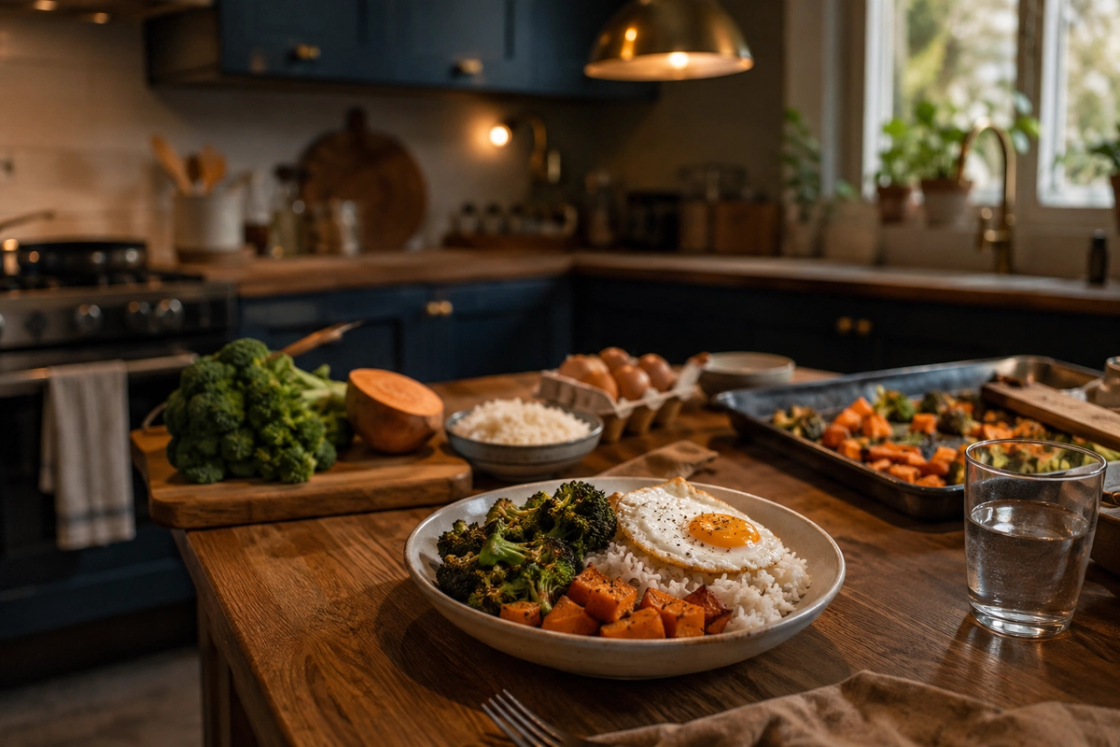
If dinner looks the same most nights, that's not a failure of imagination or effort. For a lot of people, it's the only way weeknights work at all.
There's a quiet pressure around food variety, the idea that a good cook always tries something new, that repeating meals means giving up. None of that holds up against how decision fatigue actually feels. Every choice about what to eat draws on the same limited pool of energy as everything else in a day.
The real cost of "what's for dinner?"
By the time dinner rolls around, a lot of that energy pool is already spent, on work, on sensory input, on the day's other decisions. Standing in front of the fridge trying to invent something new is expensive precisely when there's the least left to spend.
Repetition removes that cost. A meal made a dozen times before doesn't need deciding, the ingredients, the steps, and the fact that it will turn out fine are already known.
What repeating dinners actually gives you
- One less decision on days when decisions are already expensive
- A grocery list that barely changes, which makes shopping faster too
- Predictable flavour and texture, useful when new food is a gamble on tricky days
- No risk of a failed experiment landing on a night with no energy left to fix it
Making repetition feel less flat, without adding more deciding
Repetition doesn't have to mean identical. A small, low-effort lever can shift a meal without turning it back into a decision.
Change one thing, not everything
Swap a single ingredient, the vegetable, the sauce, the protein, while keeping the rest exactly the same. It's still close enough to the original that it doesn't need new decisions, just a slightly different plate.
Let a handful of meals do the work
Three or four dinners on high rotation cover more nights than it seems. Once they're familiar, planning stops being a task and becomes remembering which one sounds right today.
If and when something new feels right
None of this rules out trying new food. New food doesn't have to be a decision either. It can be introduced the same way, on the same schedule, alongside a meal that's already familiar, texture-first rather than all at once. There's no need to overhaul dinner to prove flexibility.
Same meal, different day, isn't settling. It's one less thing to decide on a day when there was already plenty to get through.
Related reading: if you're after a dinner worth putting on repeat, "One-Pot Lemon Pea Pasta for Low-Spoon Days" is built for exactly this, five ingredients, one pot, and almost nothing to get wrong.
Also worth a look: "One Big Batch, Five Small Decisions: A Gentle Intro to Batch Cooking" — cooking once and eating it more than once is the same idea, applied a little earlier in the week.