Recipes With Twelve Steps, and What to Cut
A twelve-step recipe is twelve chances to stop. Sorting the steps into load-bearing, flavour-adding and decorative — before the pan is hot — turns it into four steps you can finish.
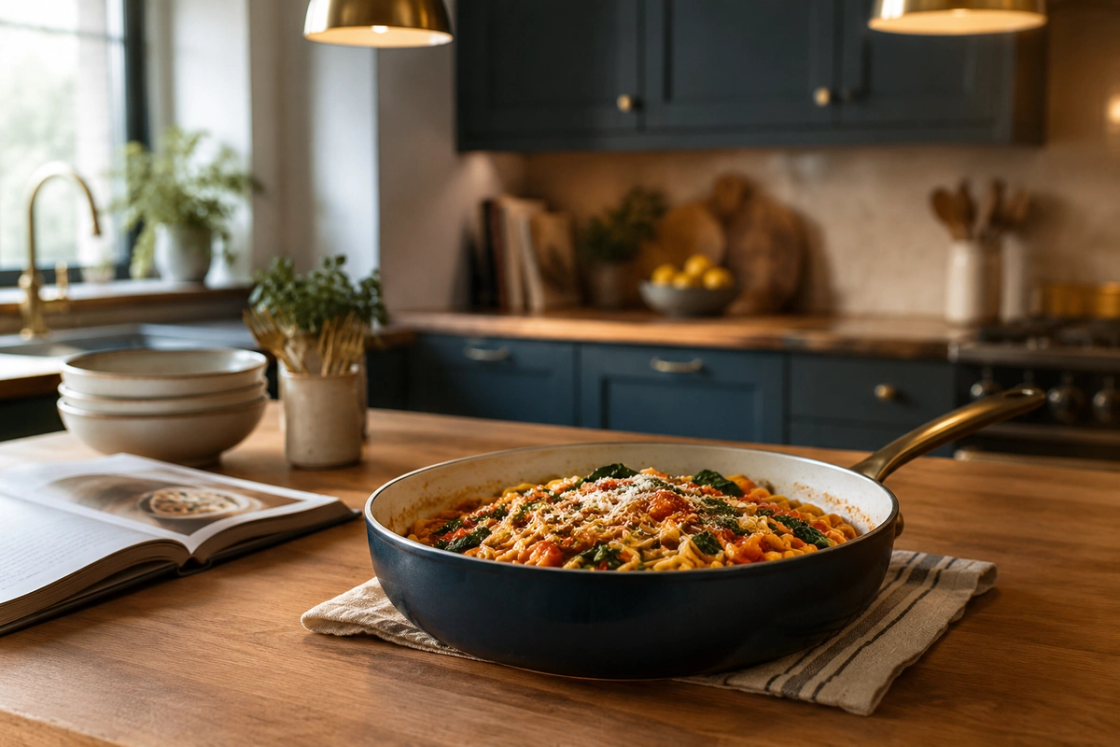
There is a particular moment where a recipe stops being a plan and becomes a wall. You are at step four of twelve, a pan is already going, and the next line asks you to finely dice something you have not taken out of the fridge yet. The energy to keep going is not there. Dinner becomes toast.
That moment usually gets blamed on the cook. It is more useful to blame the recipe — or more precisely, the fact that nobody edited it for you before you started.
Recipes are written for the best version of the dish
A recipe writer is aiming at the best possible result. You, on a Thursday, are aiming at a fed person. Those two goals produce very different instructions.
Most recipes carry steps that lift the ceiling a little: browning in batches, resting, reducing, a second pan for one component, a garnish. Each of those is a real improvement. Each is also a separate decision, a separate thing to watch, and often a separate thing to wash. Twelve steps is not twelve times the work — it is twelve chances to stop.
Do the editing before the pan is hot
The pre-cook pass takes about two minutes and it is the whole trick. Read the recipe all the way through once, before anything is heating, and mark it up. Pen on a printout, a note on your phone, whatever is nearest.
You are sorting every step into one of three piles.
- Load-bearing — remove it and the dish does not happen. The heat, the main ingredient, the liquid, the time.
- Flavour-adding — makes it better, does not make it work. Toasting spices, browning in stages, herbs stirred through at the end.
- Presentation — plating, garnish, anything that says "arrange attractively".
Cook the first pile. Take the second if you have it in you. Skip the third entirely — unless plating is something you enjoy, in which case it is not costing you anything.
The cuts that are almost always safe
- Browning in batches. One crowded pan gives slightly less colour and the same dinner.
- Separate pans for things that end up in the same bowl anyway.
- Fine dicing. A rough chop cooks a few minutes longer and tastes the same.
- Reducing "until thickened". Stop when it looks close enough.
- Anything the recipe already calls optional. The writer made that cut for you.
- Homemade stock, homemade paste, homemade anything with its own sub-recipe. Buy the jar.
The cuts that will actually cost you
Some steps look like padding and are not. These ones earn their place:
- Cooking onion and garlic properly before the liquid goes in. Undercooked allium is harsh, and you will taste it in every mouthful.
- Anything about cooking or cooling meat, eggs and rice safely. That is food safety, not polish.
- Drying something off before it hits hot oil, if you would prefer not to be splattered.
- Rising, setting and chilling times in baking. Those are chemistry, and skipping them fails loudly.
Write the short version down
Once you have cut, rewrite the recipe as four or five lines in your own words. Not the original with crossings-out — a fresh, short list, because a marked-up page still asks you to read the parts you removed.
Something like: boil water, pasta in. Onion and garlic in oil. Tin of tomatoes, simmer. Combine, cheese on top.
That version is the one you cook from next time, and the time after. You have not lowered your standards. You have made a recipe that fits your kitchen, your equipment and your energy — which is what a recipe was supposed to be.
On the nights you cannot even edit
Some nights the two-minute pass is itself too much. That is information about the meal, not about you. A twelve-step recipe on a low night is the wrong tool, in the same way a chainsaw is the wrong tool for a butter knife job.
Keep three or four already-shortened recipes written somewhere you can find them — a note pinned in the kitchen, a card on the fridge. The editing is done. You read four lines and start.
The point of cutting steps is not to cook worse. It is to get to the end.
Related reading: "The Washing Up Is the Real Reason You Didn't Cook" — the same edit, applied to the other half of the job.
Related reading: "In Defence of the Microwave" — one more way to delete steps rather than power through them.