Ordering Takeaway Without the Twenty-Minute Scroll
Takeaway is a tool, not a failure. The real cost is the choosing, so pre-decide two orders for two different moods and skip the scroll entirely.
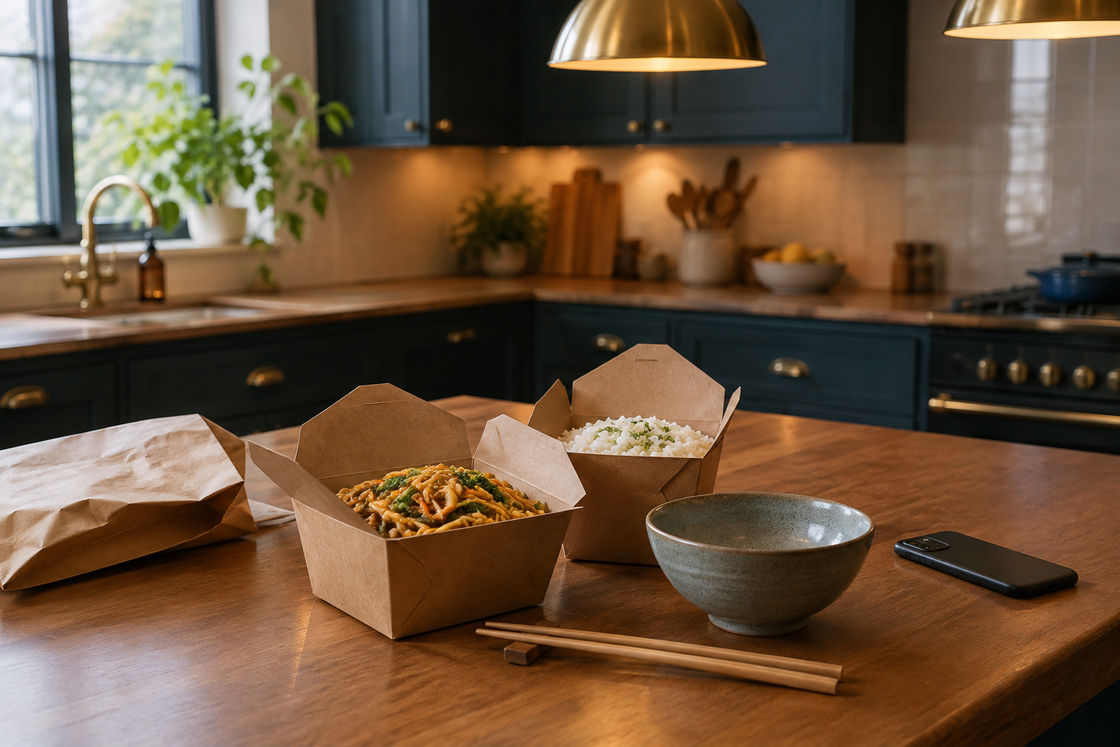
Takeaway is not a failure state. It is dinner, and dinner is dinner. What actually wears you out is not the food you end up eating. It is the twenty minutes before it: three apps open, menus you have already read, trying to answer “what am I in the mood for” when that question does not have an answer waiting for it tonight.
The scroll is the real cost
Ordering food should be quick. For a lot of people it is not, because the decision has too many open ends at once: which app, which restaurant, which dish, whether it is worth the delivery fee, whether you will regret it in an hour. Each one is small. Together they are a lot of small decisions stacked on top of a day that has probably already used most of yours up.
None of that is about the food being wrong. It is about choosing under load, with a brain that is already running on the smell, texture and noise of everything else that happened today. The fix is not willpower. It is having fewer decisions left to make by the time you are hungry enough to need this sorted quickly.
Decide the orders, not the dinner
Pick two go-to orders for two different moods, before you are in either of them. Something like:
- Flat and simple: the order you can say yes to on autopilot. One dish, one place, always the same. No menu-reading required.
- Something with texture options: a second go-to for when flat and simple will not cut it — somewhere you already know has a version that works for your sensory needs, cooked the way you like.
That is the whole decision, made once, while you have the energy to make it. On the night, you are not choosing a meal. You are matching a mood to an order you have already approved.
Narrow the field before you are hungry
Three restaurants is a shortlist. Twelve apps’ worth of options is not. Pick two or three places that reliably work — texture, portion, how they handle spice or sauce on the side — and stop there. Save them. Screenshot the order if your app does not keep favourites well. The goal is to never open a fourth option out of habit.
If cost is part of the decision fatigue too, it helps to know the actual price difference ahead of time rather than working it out fresh each time. A quick once-off comparison of what delivery, pickup or a walk-in order costs you in dollars and in effort means that trade-off is also already made.
A few plain rules for the scroll itself
- Set a timer for two minutes. When it goes off, order whatever you have already looked at. New options after that point rarely change the outcome, they just extend the scroll.
- Default to what you ordered there last time. “The usual” is not a lack of imagination on a low-energy night. It is one less thing to decide.
- Swap “what am I in the mood for” for “what do I definitely not want.” Ruling things out is often faster than choosing from scratch, and it still gets you to an answer.
- If you catch yourself re-reading a menu you have already read tonight, that is the signal to stop and pick from the two pre-decided orders instead.
When cooking wins anyway
None of this is an argument for takeaway over cooking. Some nights, the ten minutes it takes to make the meal you always make is genuinely less effort than the ten minutes of deciding what to order. The point is not to pick a side. It is to notice which cost you are actually paying on a given night, decision or preparation, and to have both options ready to go so you are choosing between two known quantities instead of staring down a blank one.
Related reading: “Delivery, Click-and-Collect or Walking In” looks at the same kind of trade-off from the grocery side.
Less deciding, more eating.
Also this week: "Food That Forgives Time Blindness" covers home-cooked meals that don't need you watching the clock.