Ordering Takeaway Without the Decision Spiral
Takeaway is a legitimate tool on a no-cooking day. The expensive part often isn't the food — it's the forty minutes of scrolling before it. Here's how to shorten that.
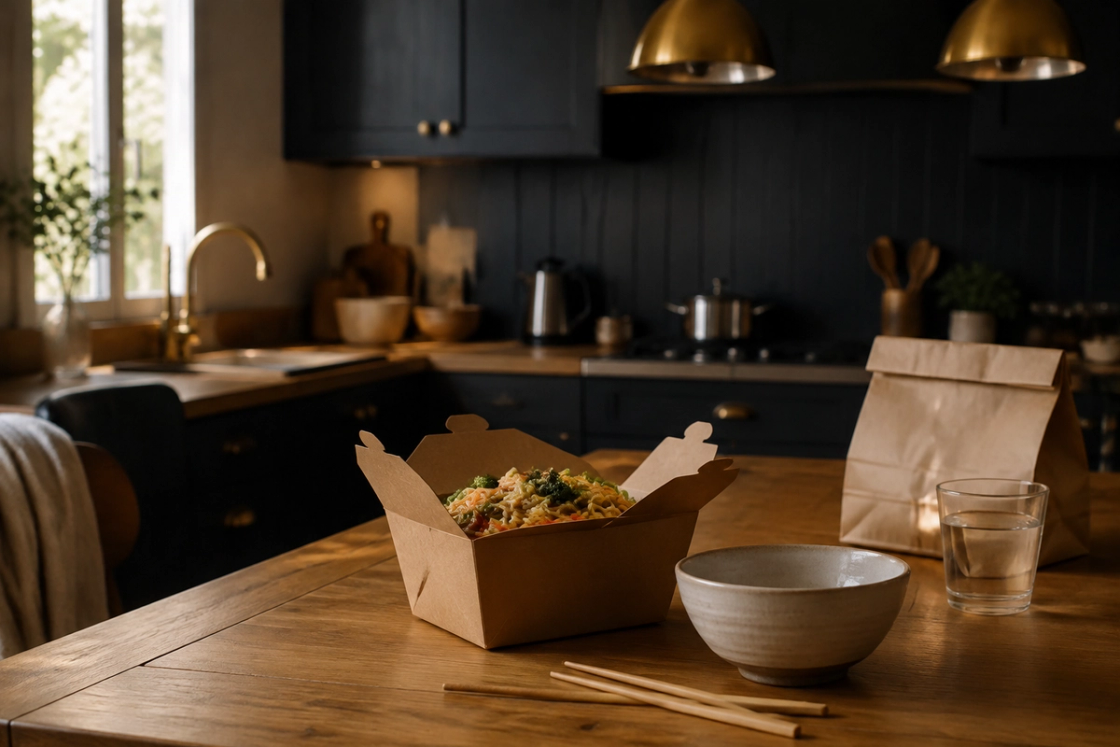
There is a particular kind of tired where cooking is not going to happen. You usually know it before you open the fridge. The pan is clean, the ingredients are technically there, and none of it is going to turn into dinner.
Ordering in is the obvious answer. And then the app opens, and forty minutes disappear.
Takeaway is a tool, not a failure
Somewhere along the way, ordering food picked up a moral weight it doesn't deserve. On a day when the realistic alternative is not eating at all, a meal that someone else cooked is a good outcome. Being fed is the point. How the food arrived matters much less than whether you ate it.
It does cost more than cooking, and budget is a real constraint. But so is a skipped meal, and so is the two days of low capacity that often follow one. Takeaway sits alongside toast, frozen dumplings and a tin of soup: one option among several for the days when the stove is not happening.
The spiral is a decision problem, not a hunger problem
The hard part is rarely the ordering. It's the choosing.
A delivery app opens onto hundreds of options with no natural stopping point. Every listing quietly asks you to weigh price, delivery time, ratings, whether the food will suit your dietary restrictions, and whether the texture will be tolerable tonight specifically. That's dozens of small evaluations stacked at the exact moment you have the least left to spend on them.
Scrolling feels like progress. It usually isn't. Each new listing restarts the decision rather than narrowing it.
Make the shortlist when you're not hungry
The decision goes much better on a calm afternoon than at 7pm on an empty stomach. Once, when you have some capacity, write down:
- Three to five places that have worked before — not the best places, the reliable ones.
- One specific dish per place. Naming the dish removes a whole second round of deciding.
- Where to find it later: a pinned note, a fridge magnet, a photo on your phone. Somewhere you'll actually look.
A list of three isn't limiting. It's the difference between making a decision and running a search.
Sort your dietary restrictions once, not every time
If you have allergies, intolerances or anything else you need to check for, every unfamiliar menu turns into a small research project. That's the part of ordering that costs the most, and it's the part most worth doing in advance.
- When a place handles your restrictions well, note that next to it and stop re-verifying it every time.
- Save your standard order note as text you can paste — "no onion, sauce on the side, no coriander" — instead of composing it fresh while hungry.
- If you need to ring and ask, ring in a quiet hour like 3pm rather than during the dinner rush. You'll get a better answer and a calmer call.
Check once, reuse many times.
Rules that end the scroll
Pick one or two of these and let them make the call for you.
- Order what you had last time from that place. Repetition is a feature here, not a rut.
- Set a two-minute timer. If nothing is decided when it goes off, order the first thing on your list.
- Choose the place first, the dish second. Two small decisions in order beat one big one.
- If delivery fees are the sticking point and a short walk is manageable, pickup is often faster and cheaper — and moving can be easier than waiting.
- Order a size up if the food reheats well. Tomorrow's lunch for a few extra dollars is decent value on a hard week.
Make it easier once it arrives
Takeaway comes with its own sensory load: a strong smell in a closed room, hot food in cardboard, sauces pooling into things that were meant to stay separate. Small adjustments help.
- Tip the food onto your own plate or bowl. Familiar crockery does a surprising amount of work.
- Open a window before it arrives if strong cooking smells are a barrier for you.
- Ask for sauces and dressings on the side so you control what touches what.
- Put the containers straight in the bin while you're still standing up. Future you won't have to.
The point isn't the food
A saved shortlist doesn't make the takeaway taste better. What it does is remove the part of the evening where you scroll, get overwhelmed, close the app and end up eating nothing.
Less deciding, more eating.
Related reading: When You Forget to Eat Until You're Too Hungry to Cook.