One Pan, Every Night This Week
Fewer dishes means cleanup actually happens. Repeating one pan all week is an energy strategy, not deprivation, and it takes a decision off your plate.
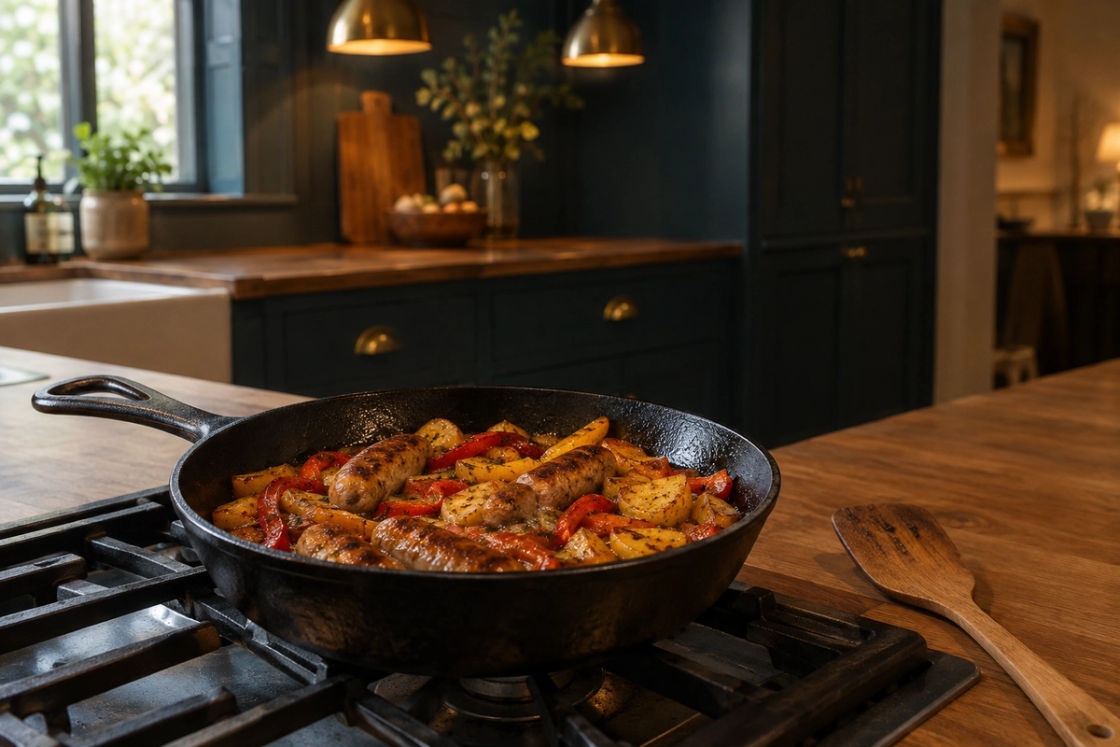
The cooking is rarely what stops you. It is the pile waiting afterwards. A bench of pots, a tray, a colander and a chopping board can turn a ten-minute meal into a forty-minute job, and on a low-energy day that cost decides whether you cook at all.
So this week, try picking one pan and using it every night. Not as a punishment, and not as a diet. As a rule that removes a decision and shrinks the cleanup.
Why one vessel works
Every extra dish is another small job you have to start, finish and put away. Those jobs are the ones that get skipped. Then the sink is full, and tomorrow begins with a debt before you have even thought about dinner.
- One thing to wash. One pan means one thing to wash, dry and put back.
- Always in reach. It lives on the stove or the bench, so you never hunt for it.
- Fewer choices at 6pm. You already know where dinner happens, so the only question is what goes in.
This is not about eating the same food every night. It is about repeating the container and letting the contents change.
Pick your pan
Choose the one you reach for without thinking. A large, deep frypan with a lid suits most people. A wide pot works just as well if soup and pasta are your safe foods.
- Big enough that nothing needs a second batch.
- A lid, so you can walk away while it cooks.
- Easy to clean: non-stick, or something you are happy to leave to soak.
If you have a dishwasher, check the pan fits. If you don't, pick one that sits comfortably in your sink.
Five nights, one pan
Nothing here is fancy. Treat each as a starting point, not a recipe to follow exactly.
- Monday: leftover rice fried with eggs, frozen peas and soy sauce.
- Tuesday: pasta cooked right in the pan with a jar of sauce and a handful of spinach.
- Wednesday: tinned chickpeas and tomatoes simmered with spices until thick, eaten with bread.
- Thursday: sausages or tofu browned first, then frozen veg tipped in and steamed under the lid.
- Friday: toasted sandwiches pressed in the pan. Yes, that counts.
Swap any of it for a food you trust. If a texture or smell is a problem, change the ingredient and keep the pan. The pan is the part that stays the same.
Make the cleanup small
The point of one pan is that cleaning it is easy, so lower the bar even further.
- Fill the pan with hot water the moment you serve. Eat while it soaks.
- Eat straight from the pan if a plate is one step too many. Nobody is marking it.
- Wipe rather than scrub. A few minutes of soaking does most of the work.
- Put it back where you will reach for it tomorrow, not in the back of a cupboard.
Leftovers are a bonus, not a chore
If you cook a little extra, tip it into a container straight from the pan. That container is tomorrow's lunch, and it asks nothing of you except opening the lid. You do not need to plan this. If there is some left, it gets a lid. If there isn't, that is fine too.
If the week goes sideways
Some nights even one pan is too much. That is okay. Toast, cereal or a bowl of something cold is still dinner. The rule is there to help you, so you can drop it for a night without having to start over. Pick the pan up again the next evening and carry on.
A small place to start
Tonight, choose your pan and put it where you can see it. That is the whole task. Tomorrow, use it again.
Related reading: Feeding Someone Else When You've Got Nothing Left.