One Big Batch, Five Small Decisions: A Gentle Intro to Batch Cooking
Batch cooking isn't about filling a freezer. It's about making one decision now so future you has fewer to make later. Here's the small version.
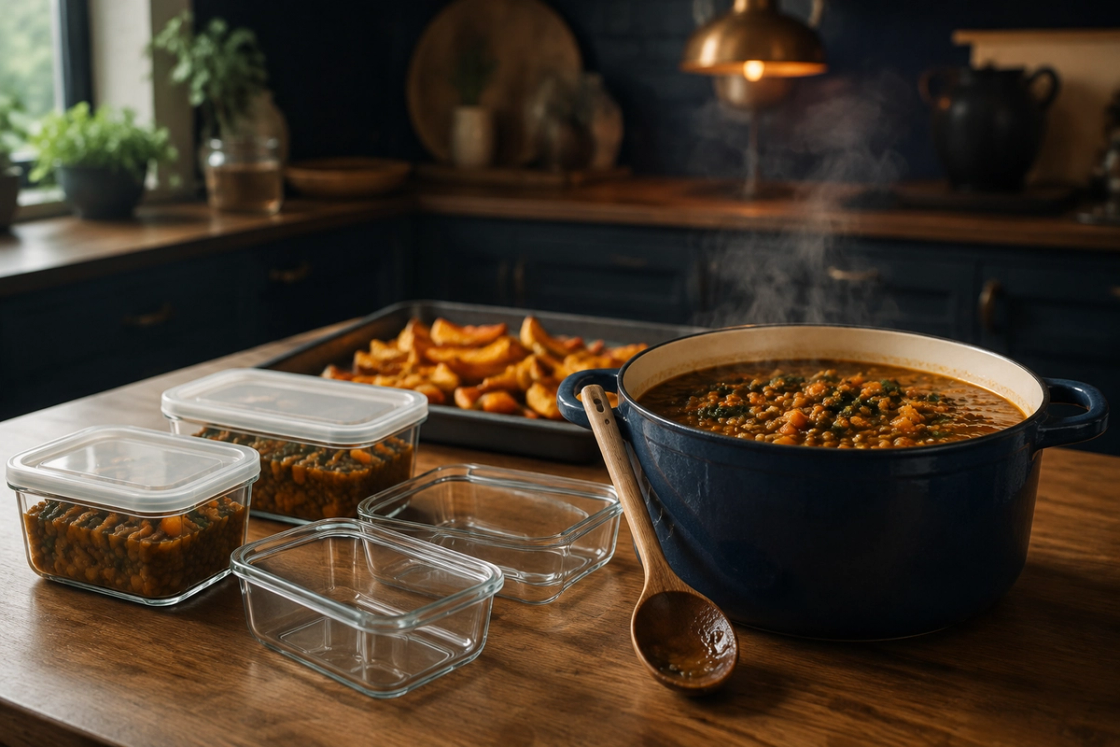
Batch cooking has a reputation problem. It gets sold as a Sunday ritual: matching containers, a whiteboard, a fortnight of dinners stacked in the freezer by lunchtime. If that sounds like an enormous amount of effort, that's because it is.
There is a much smaller version. And the smaller version is the one that actually works, because the point of batch cooking was never volume. The point is that you make one decision while you have the capacity for it, so you don't have to make five when you don't.
What you're actually saving
Most batch cooking advice talks about saving time. That framing doesn't help much if time isn't your bottleneck. For a lot of us the bottleneck is the starting — the gap between being hungry and having food, which is filled with a queue of small questions you have to answer before anything happens.
A batch in the fridge doesn't save you an hour. It deletes the queue.
The five decisions you're removing
On a low day, dinner is rarely one decision. It's usually these five, in order:
- What do I want to eat?
- Do I have the ingredients for that?
- Do I have the energy to stand up and start?
- What order do the steps go in?
- How much washing up am I signing up for?
Any one of those can stall the whole thing. A batch answers all five at once, days in advance, while you were already standing in the kitchen anyway.
Start with one component, not one meal
This is the shift that makes batch cooking survivable: don't batch a finished dinner. Batch one part of dinner.
A finished meal made five times becomes boring by Wednesday and then it's a fridge full of guilt. A component stays flexible. Good candidates:
- A pot of rice, couscous or pasta — the base under anything
- A tray of roasted vegetables — pumpkin, carrot and capsicum are forgiving and cheap
- A protein — a tray of chicken thighs, a pot of lentils, six boiled eggs
- A sauce — something jarred and improved, or a yoghurt-and-lemon stir-together
One component means dinner is now assembly, not cooking. Assembly is a much lower bar.
A first batch that's hard to get wrong
If you want a specific starting point: roast 1 kg of pumpkin and carrot. Chop into rough chunks, no precision required. Toss with a couple of tablespoons of oil and salt on a lined tray. 200°C for about 35 minutes. Stir once if you remember; it's fine if you don't.
That single tray becomes: a bowl with rice and yoghurt, a filling for a wrap, something to stir through pasta, a side next to eggs on toast, or soup if you blend it with stock. One decision, five dinners that don't feel identical.
Cost is roughly $6-8 of vegetables, which is worth knowing if groceries are tight.
Store it so future you actually finds it
A batch that gets forgotten at the back of the fridge is worse than no batch, because it comes with a side of feeling bad. Two small things help more than they should:
- Use clear containers, and put them at eye level, at the front. Out of sight is genuinely out of mind.
- Portion it while it's still on the bench. Dividing food is a task; doing it once beats doing it nightly.
Roasted vegetables keep about four days in the fridge. Cooked grains, three. If a batch looks like it won't get eaten in time, freeze half on day one rather than deciding about it on day four.
If the batch doesn't get eaten
Sometimes you'll cook a batch and then not want it. Texture shifts, appetite shifts, the week turns out differently. That isn't a failed system and it isn't a character flaw.
It's useful information. If roasted vegetables go untouched twice, batch something else — rice, eggs, a pot of soup. The right batch is whatever you'll actually reach for tired, not whatever a meal-prep video recommends.
The smallest possible start
You don't need a system, a schedule, or new containers. Next time you cook something you like, make roughly twice as much of one part of it. That's the entire method.
One pot, one tray, one afternoon where the deciding was easier than usual. Less deciding, more eating.
Related reading: "Same Meal, Different Day: Why Repeating Dinners Is a Feature, Not a Failure" and "Budget Groceries That Don't Ask You to Meal Plan".