Make room for different sound preferences at dinner
A shared dinner does not need one sound rule for everyone. Agree where to sit, whether any audio is welcome and what happens if you would rather eat separately.
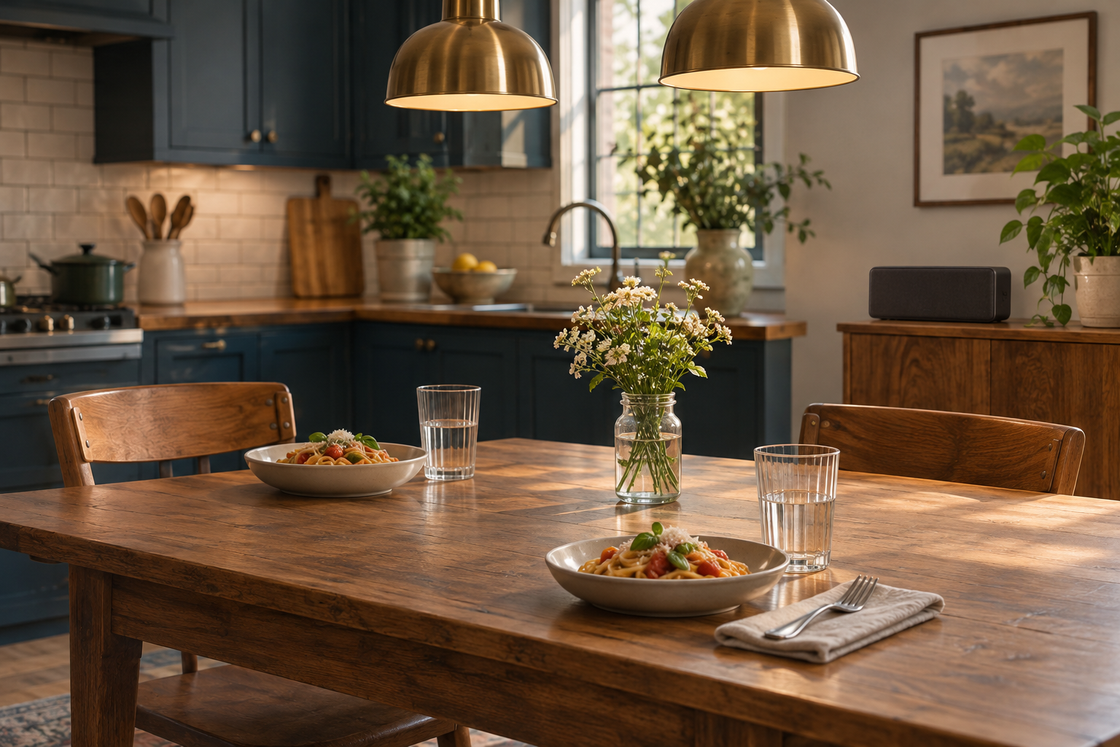
One person wants music with dinner. Another wants the speaker off. Someone else would prefer more space between seats. Instead of changing the food or asking anyone to monitor their chewing, agree a sound arrangement for this meal: where people sit, whether background audio is welcome and an alternative if it is not.
The aim is not a perfectly quiet table or a test of what anyone can tolerate. It is an ordinary dinner with room for different preferences. You can make a small agreement without explaining a diagnosis or buying equipment.
Ask about the arrangement, not the person
Have the conversation before serving, if possible. Try: ‘What would make the sound here more workable tonight?’ Keep the answer practical: a different chair, no television, a familiar piece of music or a separate eating spot. A message beforehand is also an option if talking at the table feels like another task.
Avoid making someone demonstrate an unwanted sound or defend why it bothers them. Equally, do not turn another person's eating into a performance review. ‘Could we sit further apart?’ offers something to arrange; ‘You need to eat more quietly’ leaves someone policing each mouthful.
Offer a seat change before a room overhaul
Look at the places already available. An end seat, a chair further from the television or two places with more space between them are options to consider, not guaranteed fixes. Ask before swapping places rather than assigning the person who finds sound difficult the least comfortable chair.
- Keep the meal, drink and anything needed for eating within comfortable reach.
- Choose a usable seat and surface; nobody needs to balance dinner somewhere awkward.
- Leave a clear way to get up without asking everyone else to move.
If another seat creates a different problem, leave that option. A small table or shared room may offer little choice. You do not need to move furniture or rearrange the house to prove you have tried hard enough.
Make background audio an agreement
Music is optional, not the default answer to unwanted eating sounds. Ask everyone sharing the space whether any background audio is welcome. If the answer is yes, choose something familiar and agree a volume everyone accepts before the meal starts.
Include how to stop it: ‘If this is not working, say “speaker off” and we will turn it off.’ Nobody needs to wait until a track ends or explain their preference again. Do not keep increasing the volume to cover a sound; return to the seating or separate-space options instead.
If one person wants audio and another does not, choosing separate eating spaces may be more workable than searching through playlists. Use what is already available. There is no requirement to find a shared soundtrack, buy a speaker or subscribe to anything.
Let separate spaces be an ordinary option
Eating separately does not have to be a punishment or a dramatic exit. Agree it as an available arrangement from the start: ‘We can eat in different spots tonight and catch up afterwards if we feel like it.’ Keep everyone's chosen food unchanged.
Check the practical detail before plates are carried away. Who wants which suitable spot? Does anyone want help carrying their meal? If someone needs support while eating, include that support in the arrangement rather than assuming they can be alone.
Where separate rooms are unavailable, you might use different suitable places in the same room. Do not promise this will solve the sound difference. It is one available option, and anyone can say it is not enough without being blamed for spoiling dinner.
Keep the agreement small enough to use
For a tired evening, the whole plan can be: ‘These seats, no speaker, and the other eating spot is available.’ Another evening might include music everyone wants. Neither arrangement needs to become a permanent household rule.
If the discussion turns into remarks about someone's food, setting a boundary around plate comments is a separate next step. You do not need to solve both conversations over this meal.
These are choices about sharing space, not treatment for sound sensitivity. Stop negotiating once you have an arrangement people can use, and leave room to change it. Dinner can remain familiar even when the seating is different.