Leftovers You'll Actually Eat
Leftovers turn into fridge guilt when the second meal was never really planned. The fix happens while you're still standing in the kitchen, not three days later.
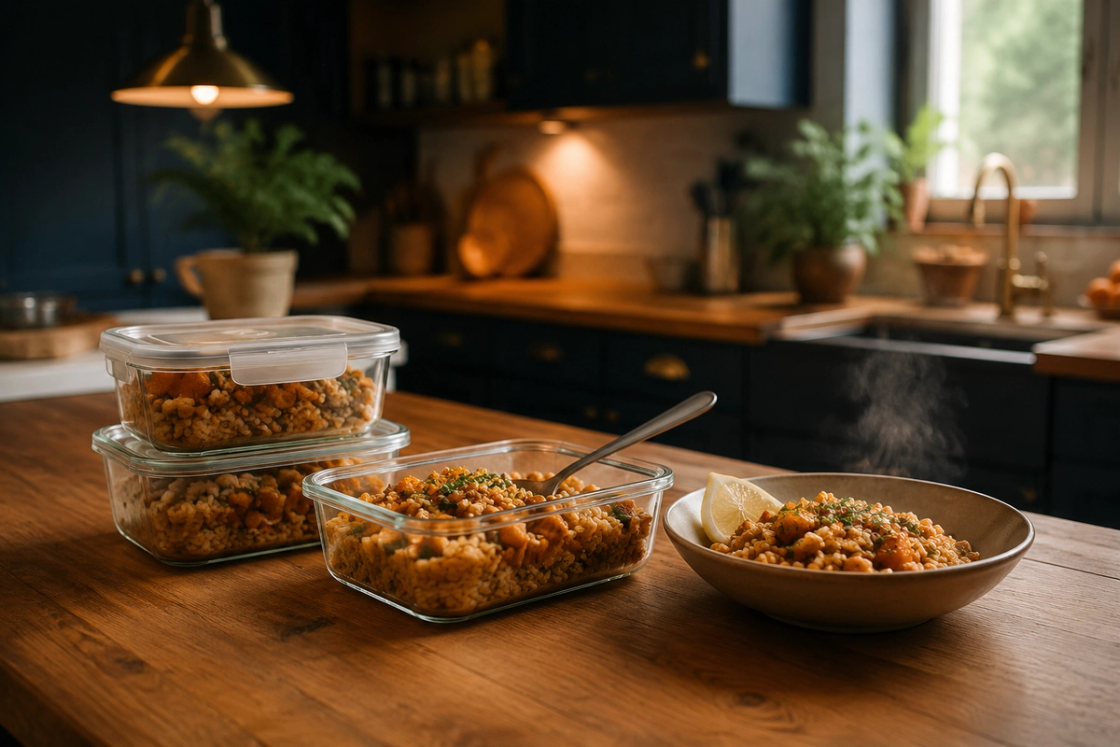
Leftovers have a reputation problem. In theory they are free food you already cooked. In practice they are a container at the back of the fridge that you keep meaning to deal with, until the day you tip it out and feel bad about it.
That gap — between the leftovers you meant to eat and the ones you actually ate — is rarely about willpower. It is about what happened at the moment you cooked, and what the fridge asks of you three days later.
Why leftovers stop being food
By day three, the container has stopped being dinner and started being a decision. A few things are usually going on:
- Sameness fatigue. Eating identical food twice in two days is fine for some people and genuinely unpleasant for others, especially when the texture has shifted overnight.
- Opacity. You cannot remember what it is or when you made it, so the safe answer becomes not eating it.
- Portion mismatch. Half a serve is not a meal, and topping it up is a whole second task.
- Reheating cost. If it needs a pan, a hob and your attention, it is not much cheaper than cooking.
Cook with the second meal in mind
The useful shift is to decide about the second meal while you are already standing in the kitchen with your sleeves up. Future you, opening the fridge on a flat Tuesday, has far less capacity than present you who is already cooking.
Two things make that easier. First, cook the base rather than the finished dish — plain rice, plain roast veg, plain mince — and season each plate as you serve it. A seasoned base commits you to eating the same flavour twice. Second, overshoot on the things that survive the fridge, not the things that don't.
What reheats well
- Roasted root vegetables, pumpkin, potato
- Rice, cooked and cooled quickly, then kept covered
- Curries, braises, soups, bolognese and other saucy things — often better on day two
- Cooked mince, shredded chicken, tinned-legume stews
What doesn't
- Anything crumbed or crisped — it comes back soft
- Pasta already mixed through sauce, which goes claggy
- Leafy salad, avocado, fried eggs
If a meal has a crisp element, cook double of the soft part and keep the crisp part for the night you make it.
Let the container do the deciding
Most leftover failures happen in the ten minutes after dinner, when everything gets tipped into one big container. That container asks you a question every time you open the fridge. A portioned one answers it.
- Split into single serves before it goes in, while the kitchen is already messy
- Label with masking tape and a texta: what it is, and the day you made it. This removes the "is this still okay" question entirely
- Put it at the front, at eye level. Out of sight is genuinely out of mind
- Freeze the third serve on day one, not day three, when you are already unsure about it
A set of matching containers is worth the outlay if you can manage it — a stack of six around $15 to $25 in most Australian supermarkets. Matching lids mean one less small obstacle at the exact moment you have none left.
Change one thing, not the whole meal
If sameness is the barrier, you do not need a new recipe. You need one different note on top of the same base.
- Add acid: lemon, vinegar, pickles, a spoon of chutney
- Add crunch: tinned fried onions, toasted nuts, crushed crisps
- Change the vehicle: last night's bowl becomes today's wrap, toastie or topping for a baked potato
- Change the temperature: cold roast vegetables with yoghurt are a different meal from hot roast vegetables
An egg cracked on top counts as a new meal, and it costs about ninety seconds.
The reheat that costs almost nothing
- Microwave covered, with a splash of water for anything starchy
- Medium power for longer beats full power for less time — the texture holds together better
- A sandwich press handles anything you can wrap, and washes up with one wipe
Eat it out of the container if that is what makes it happen. Plating is optional.
When it doesn't work out
Sometimes the container goes off and you tip it out. That is a few dollars of food, not a character flaw. The useful response is to cook a smaller batch next time, or to freeze earlier, rather than to add another rule you will not follow.
Fridge guilt costs more than the food does. Bin it, note what to change, move on.
The whole point of leftovers is that they buy you a meal you do not have to decide about. When they get labelled, portioned and put where you can see them, that is exactly what they do. Less deciding, more eating.
Related reading: "The Lunch You Never Get Around To" — a portioned leftover in the fridge is one of the few things that reliably solves the midday meal.