In Defence of the Microwave
The microwave is quiet, it holds the smell behind a door, and it stops on its own. On a sensory basis it beats the stove at most of what makes cooking hard.
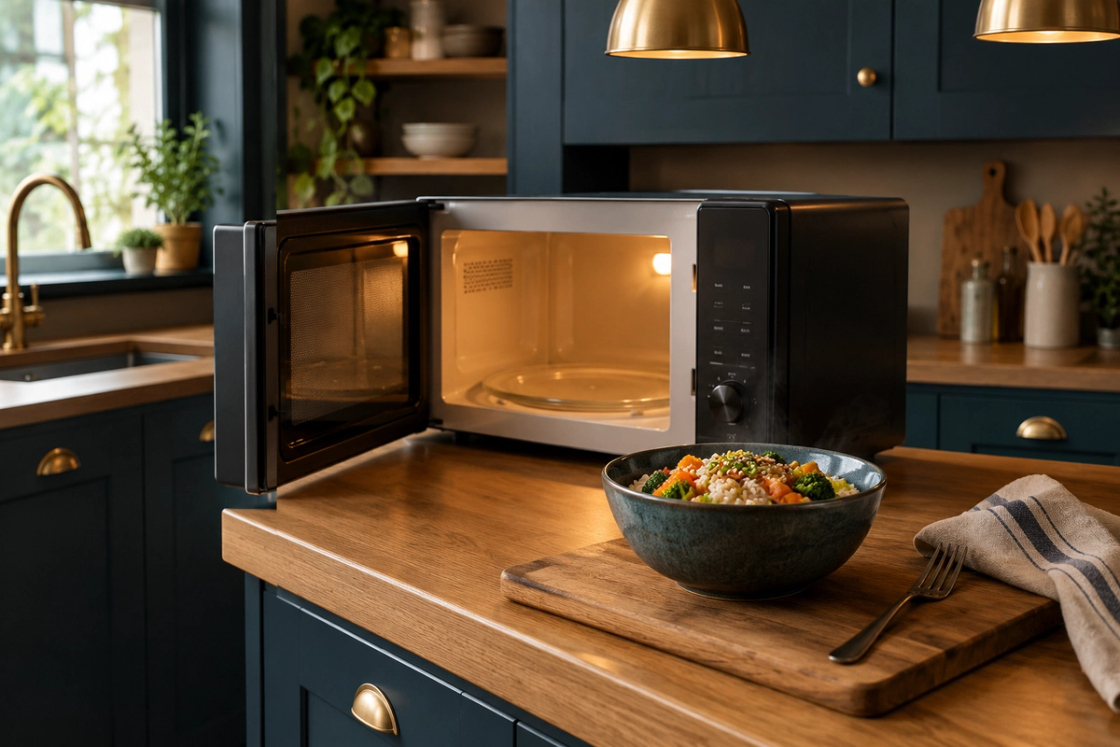
The microwave is the appliance people apologise for. Real cooking happens on the stove, the thinking goes, and the microwave is where you reheat something you should have made properly.
That ranking is about status. It has very little to do with how food actually gets eaten on a Tuesday night.
Looked at through sensory load and energy cost rather than prestige, the microwave wins on nearly everything that makes cooking hard.
What it takes off your plate
Stove cooking asks for several things at the same time:
- Standing in one spot for a set stretch of time
- Watching — is it catching, is it about to boil over
- Noise: the extractor fan, the sizzle, a spoon scraping a pan
- Smell that fills the whole flat and stays there
- A pan, a spoon, a board, and the washing up that follows
The microwave asks for a bowl and a number. Food in, door shut, walk away. Every other item on that list disappears.
The smell stays behind the door
Cooking smell is one of the quietest reasons people stop cooking. Frying puts smell into every room and it lingers for hours, sometimes into the next day. If you are smell-sensitive, that is not a minor annoyance — it can switch appetite off before the food reaches the table.
A microwave holds most of it behind a closed door. There is a burst of steam when you open it, and then it is over.
It is quiet, and it stops on its own
A low hum for a few minutes, then a beep. No fan, no spitting oil, no clatter.
The stopping matters more than it looks. The stove asks you to remember. The microwave tells you. If time slips away from you, that is the whole difference between dinner and a ruined pan — and it means you can leave the kitchen while it runs.
An appliance that ends by itself is an appliance you can safely stop paying attention to.
Things it does better than it gets credit for
- Vegetables. Frozen veg, a splash of water, a plate over the bowl, three to four minutes. Better colour and firmer texture than boiling.
- Potatoes and sweet potatoes. Pierced with a fork, six to nine minutes instead of an hour in the oven.
- Eggs. Beaten in a bowl, thirty-second bursts, stir between each. Soft scrambled eggs and no pan to soak.
- Rice and grains. The 90-second pouches are about $2 and remove an entire cooking step.
- Porridge. One bowl, one spoon, nothing welded to a saucepan afterwards.
- Temperature repair. Fridge-cold food is a different texture to warm food. Twenty seconds can be the difference between something you can eat and something you cannot.
Where it is honestly not as good
A microwave steams. It does not brown, so there is no crust and no caramelised edge. A microwaved sausage is a sad object and no setting will fix that.
Two other real limits, both manageable:
- Heat lands unevenly. Stir halfway through, or let it rest a minute so the heat spreads.
- Chicken and eggs turn rubbery when overdone. Shorter bursts and a check in between solve most of it.
Covering the bowl is the single change that improves the most meals. It keeps steam in, so the heat spreads evenly and the food does not dry at the edges. A plate on top counts as a lid.
A bowl, a plate, a number
A few small bits of setup make it easier to reach for:
- Keep two or three microwave-safe bowls you like the feel of at the front of the cupboard
- Keep a plate that fits over them in the same spot, so covering costs no thought
- Write your three regular times on a note stuck to the door, so you stop re-deciding them
None of this is an argument that microwaved food is better food. It is an argument that it is food, on the evenings when the honest alternative was nothing at all.
Less deciding, more eating.
Related reading: When You Lose Track of Time in the Kitchen.
Related reading: "Eating When You're Unwell" — where reheating stops being a compromise and starts being the plan.