Hay Fever Season and Food You Can't Taste
A blocked nose flattens flavour and can make safe foods feel wrong. Lean on temperature, texture and acid instead of chasing taste.
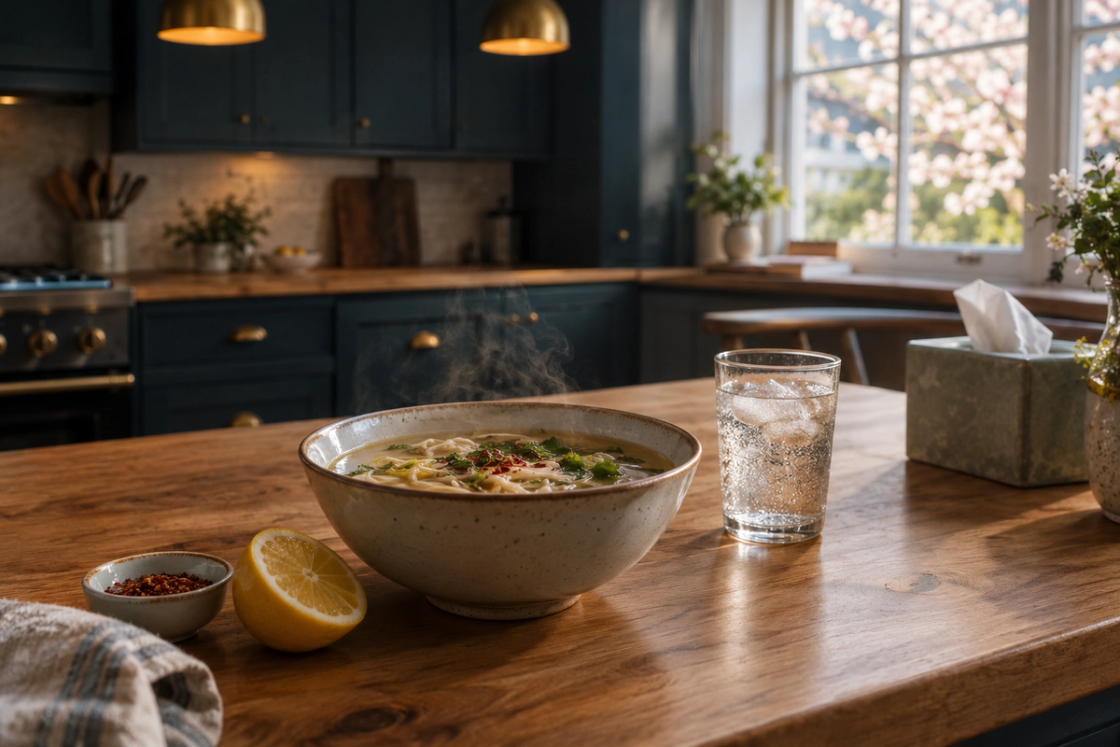
Spring in Australia brings blossom, longer evenings and, for a lot of us, a nose that stops working. When your sinuses are blocked, food can taste like cardboard. That isn't in your head. Most of what we call flavour is actually smell.
For neurodivergent people this can hit harder. If you rely on a small set of safe foods, a sudden change in how they taste can make them feel wrong, even unsafe. If you have ADHD and already forget to eat, bland food gives you one less reason to stop and have a meal.
The good news: taste isn't the only thing food has going for it. Temperature, texture and acid all still work when your nose doesn't. This is sensory friendly cooking for the weeks when one of your senses has clocked off.
Why food goes flat
Your tongue picks up five basic tastes: sweet, salty, sour, bitter and umami. Everything else, like the "strawberry" in a strawberry or the "garlic" in garlic bread, comes from smell travelling up the back of your throat. Block that path and you're left with the basics.
That tells you what to lean on. Piling on more herbs and spices mostly won't land, because those work through smell. Building meals around the five basic tastes, plus how food feels, will.
Antihistamines can add to it. Some cause a dry mouth, which dulls taste further, and many leave you foggy and tired. So expect lower energy as well as lower flavour, and plan for both.
Lean on temperature
Temperature is something you can feel even when you can taste very little.
- Hot broths and soups. Steam can loosen a blocked nose for a few minutes, which briefly brings some flavour back. A mug of stock counts.
- Cold and icy things. Frozen grapes, chilled yoghurt, ice blocks, a glass of iced water with lemon. Cold is a clear, predictable sensation.
- Contrast. Warm rice with cold cucumber, hot toast with cold butter. The difference gives your mouth something to notice.
If strong contrasts are a sensory no for you, pick one temperature and stay with it. Predictable is fine.
Lean on texture
When taste drops out, texture becomes most of the experience. That can go either way. A texture you normally tolerate can suddenly feel slimy or pointless without flavour to carry it.
- Crunch is usually the easiest win. Crackers, toast, rice cakes, raw carrot, apple slices, roasted chickpeas from a tin.
- Smooth and uniform textures like congee, porridge, mashed potato or blended soup are gentle on a scratchy throat and need little chewing on low-energy days.
- If a safe food suddenly feels wrong, change its texture before you drop it. Toast the bread, blend the soup, freeze the fruit.
Lean on acid, salt and umami
Sour and salty are basic tastes, so your tongue still picks them up clearly. Umami adds a sense of depth that doesn't depend on smell.
- A squeeze of lemon or lime over rice, eggs, avocado or soup.
- A splash of vinegar through noodles or on hot chips.
- Pickles, olives or kimchi on the side, if they're already on your safe list.
- Soy sauce, miso, stock cubes, parmesan, or Vegemite on toast.
A teaspoon of miso stirred into a mug of hot water is close to zero effort and tastes of something even on a bad day.
A note on chilli: heat is a feeling, not a taste, so it still comes through. It can also make your nose run. Some people welcome that; others really don't. Your call.
Keep the decisions small
A blocked nose often comes with poor sleep and antihistamine fog. This isn't the week for new recipes. A short rotation of three or four meals you already know takes the deciding out of it.
A simple hay fever rotation:
- Instant noodles with an egg, sliced spring onion and a squeeze of lime.
- Congee or rice porridge with soy sauce and a few drops of sesame oil.
- Toast with Vegemite or peanut butter, plus a cold glass of juice.
- Frozen berries or grapes with plain yoghurt.
Write the list on a sticky note and put it on the fridge. Less deciding, more eating.
If eating stops feeling worth it
Food can feel pointless when it tastes of nothing. It's still fuel, and your body still needs it to get through the season. Set a gentle reminder, eat something small at regular times, and count a mug of soup as a meal.
If your sense of smell doesn't come back once the pollen settles, or you notice you're eating much less than usual, check in with your GP or pharmacist.
Related reading: "Swap the Texture, Keep the Meal" has more ways to change a food's texture without losing the meal, and "When Your Safe Food Gets Discontinued" covers rebuilding when a safe food stops working.