Father's Day Lunch Without the Overwhelm
Family food events ask a lot: noise, timing, small talk and a table you didn't choose. Here's how to show up for Father's Day lunch on terms that leave you with something in the tank.
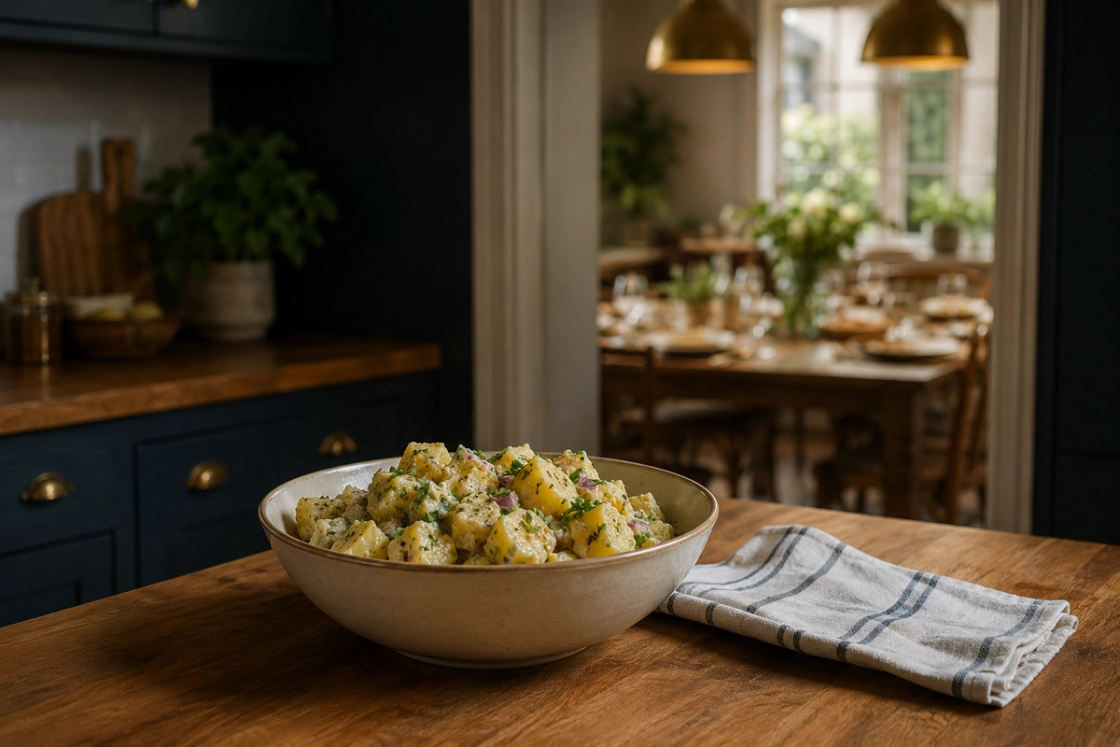
Father's Day lunch is rarely about the food. It's about a room, a time you didn't set, a table you didn't choose, and several conversations running at once. The meal is the easy part.
If family food events tend to flatten you, that isn't a character flaw. It's a load problem. Noise, unpredictable timing and other people's expectations all draw from the same battery. The good news is that most of the load is negotiable — quietly, without an announcement.
Bring one component, not a whole course
Offering to bring something is often easier than declining to. It gives you a job, a reason to arrive with your hands full, and a small patch of the table that behaves the way you expect.
Keep the component small and unglamorous:
- A potato salad made the night before — better cold, no timing pressure on the day.
- A bag of good bread rolls and a block of butter. Genuinely enough.
- A tray of cut fruit, which doubles as something safe you can eat if the mains don't work for you.
- Two bottles of something cold. Zero preparation, universally welcomed.
One component you can make the day before is worth more than three you have to assemble in someone else's kitchen while being talked to.
Pick the quiet hour
Most family lunches have a loud middle and quiet edges. The half hour before people arrive and the stretch after the plates are cleared are usually the calmest parts of the day.
If you can choose, arrive early. You get a quieter greeting, a bench to put your food down on, and time with the person the day is actually for — before the room fills up. Early arrival also means the loud middle happens later in your visit, closer to when you might leave anyway.
If early isn't possible, arriving after the main rush works too. You skip the peak noise and land in the slower second half.
Eat something before you go
Arriving hungry at an event where the food arrives on someone else's schedule, in textures you can't preview, is a hard setup. A bowl of cereal or toast an hour before takes the urgency out of it.
Then the lunch becomes optional rather than necessary. You can eat what suits you, leave what doesn't, and nobody is tracking your plate as closely as you think.
Choose your seat on purpose
Seats are usually decided by who sits down first. That means you can decide, if you get there early enough to.
Worth considering:
- An end seat, so there's someone on one side rather than both.
- Away from the kitchen doorway and the speaker, which are the two loudest points in most rooms.
- Near someone easy. One low-effort conversation partner is better than a good view.
Keep an exit
An exit doesn't have to be dramatic, and having one doesn't mean you'll use it. It means the day has an edge you can see, which makes the middle far easier to sit through.
Practical versions: drive yourself. Mention a soft second commitment when you arrive. Take the dog. Offer to do a shop run partway through, which buys you fifteen minutes of quiet and reads as helpful.
A short visit you attended is worth more to everyone than a long one you endured. Two calm hours beat five depleted ones.
If you're the one hosting
Hosting swaps social load for logistical load, which some people find easier — you get your own kitchen, your own volume, and a legitimate reason to step out of the room.
Keep it to one hot thing and several cold things. A tray bake or a slow-cooked cut that needs no attention in the final hour, plus salads, bread and fruit that can sit out. Let people bring components. Serve from the bench rather than plating up, so nobody is waiting on you and everyone takes what they can eat.
The day is about a person, not a performance
Nobody remembers whose potato salad it was. They remember that you turned up. Bring one thing, pick your hour, sit where you can breathe, and leave while you still have something left.
Less deciding, more eating.
Related reading: "Cafes, Menus and the Bit Before You Order" and "The Day After a Big Day".