Eating When You're Unwell
Being sick narrows your capacity and your smell and texture tolerance at the same time. A short list decided in advance means you read four options instead of searching a whole kitchen.
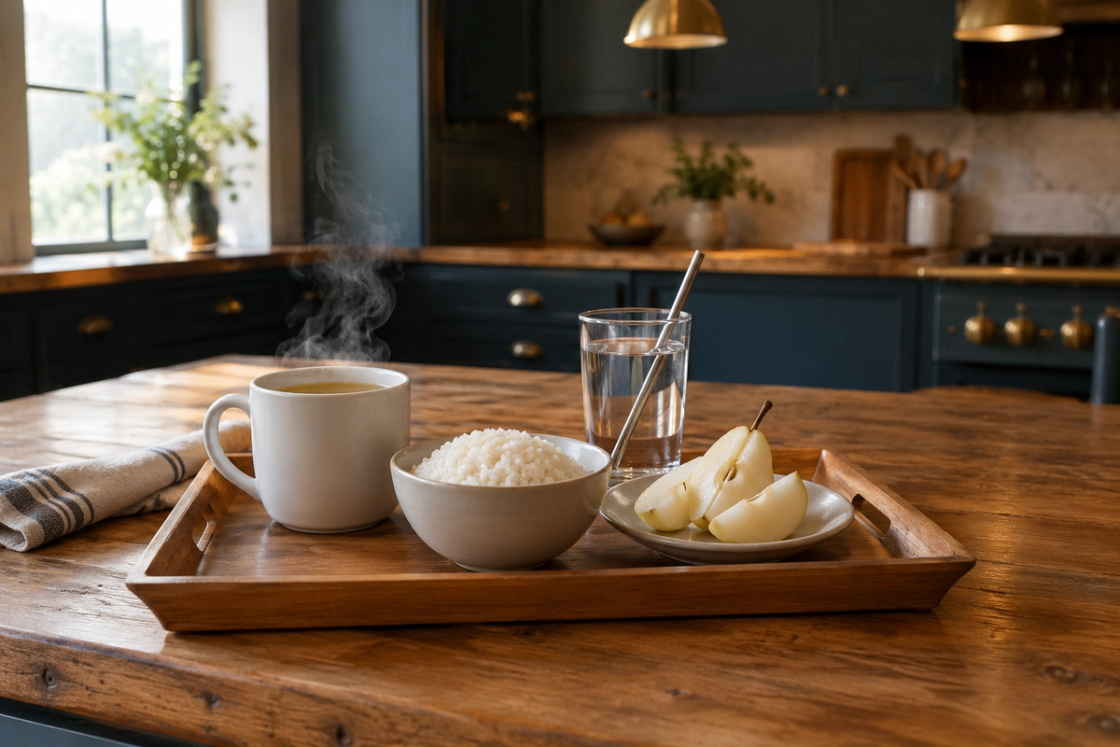
Being unwell narrows two things at the same time. Capacity drops, so cooking is off the table. And smell and texture tolerance narrow, so a good half of your usual safe foods stop being safe.
That combination is why sick days so often end with nothing eaten. The decision gets harder at the exact moment you have the least to spend on making it.
Decide the list before you need it
The useful move is to write a short sick-day list while you are well, and put it somewhere you will actually find it — inside a cupboard door, or pinned to the top of your notes app.
A list made in advance does the deciding for you. On the day, you read four options instead of standing in front of a whole kitchen.
Keep it short. Four to six things. A long list is another decision.
What tends to work
Cold and low-smell
- Tinned peaches or pears, eaten straight from the tin
- Plain yoghurt, or a yoghurt pouch if holding a spoon feels like too much
- White bread and butter, cut into quarters
- Cheese and plain crackers
- A banana, or apple cut into slices
Warm and plain
- Clear broth from a carton or a stock cube, in a mug
- Plain white rice from a microwave pouch
- Two-minute noodles with half the flavour sachet
- Buttered toast
- Tinned soup, thinned with water if the flavour is too strong
Things that still count as eating
On a bad day, a drink with something in it counts.
- Milk, or a milk drink like Milo
- An electrolyte drink, or cordial diluted more than usual
- A smoothie, if the blender noise is bearable that day
- Icy poles, which help when swallowing hurts
When smell is the problem
Smell is usually the first thing to turn. Heat carries smell, so most of the fix is lowering the heat or removing it.
- Eat things cold or at room temperature
- Use the microwave rather than the stove — the smell stays mostly inside the appliance
- Open a window before you heat anything, not after
- If someone else is home, ask them to bring the plate in and take the packaging straight out
When texture is the problem
Texture tolerance narrows in both directions when you're sick. Some people can only manage soft. Others find soft unbearable and need something with a crunch to it.
Both are fine. Worth noting which way yours goes, because it tends to be consistent from one illness to the next, and it makes the next sick day much easier to stock for.
- Soft side: rice, yoghurt, mashed potato, custard, soup
- Crunch side: dry crackers, toast, plain chips, apple
Eating less than usual is fine for a few days
A short illness is not the moment to hold a normal eating pattern. Small amounts, more often, is a reasonable target — a few crackers, half a mug of broth, three spoons of yoghurt.
Across a couple of days, fluids matter more than food. If you can only manage one thing, drink.
If you're unwell for more than a few days, or you can't keep fluids down at all, that's a call to your GP or Healthdirect on 1800 022 222 rather than a food problem to solve.
Keep a shelf for it
Sick-day food works best when it is bought in advance and kept apart from everything else. One shelf, or one crate on the floor of the pantry.
- Tinned fruit, tinned soup, stock cubes
- Microwave rice, plain crackers, long-life milk
- Electrolyte sachets, and icy poles in the freezer
Restock it in the week after you recover, while you still remember what you wanted and didn't have.
The list is the work. Doing it while you're well is what makes the sick day survivable.
Related reading: The Day After a Big Day, which covers a similar kind of eating on days when standing and deciding are both gone.
Related reading: "In Defence of the Microwave" — the appliance that does most of the work on days like this.