Eating Around Your Medication
ADHD medication can flatten appetite for most of the day, then hand it back all at once come evening. Here's how to eat around that shape of a day instead of fighting it.
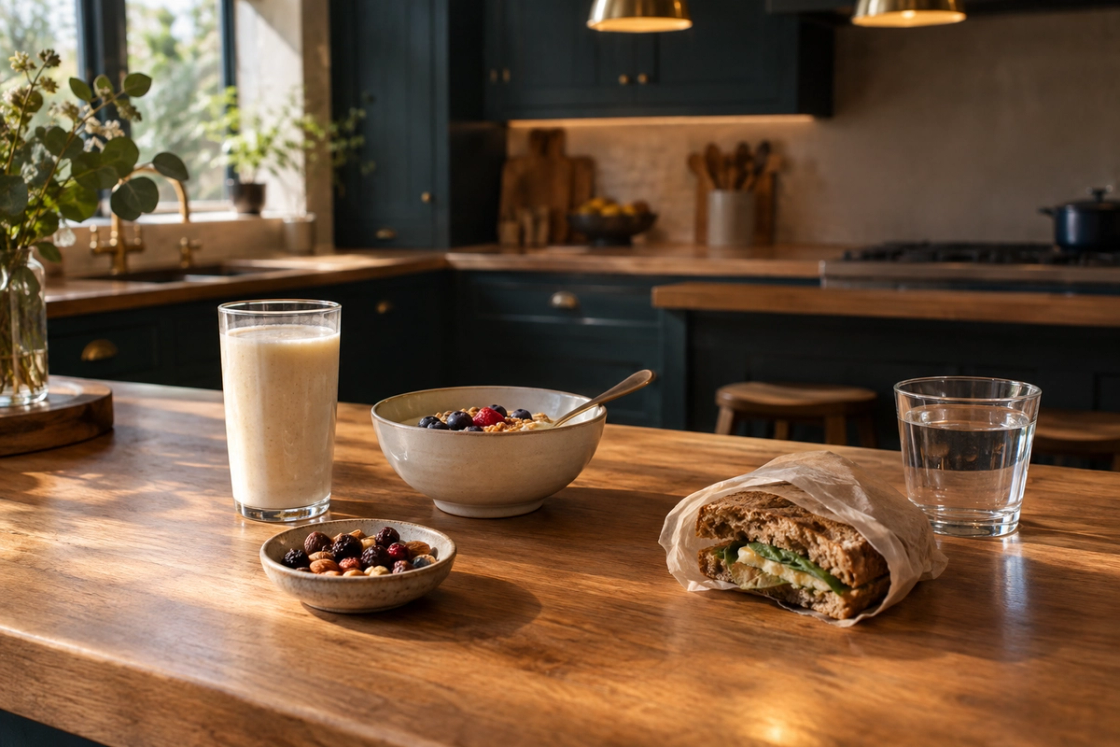
Stimulant medication doesn't take appetite away evenly across the day. Mornings can feel like there's no room for food at all, the middle of the day can pass without a single hunger cue, and then early evening arrives and hunger shows up all at once, often right as the medication wears off. Fighting that shape of a day rarely works — trying to eat a normal breakfast, lunch and dinner on top of it usually just adds guilt to an already flat stretch. Eating around the curve works better than eating against it.
What the day actually tends to look like
Not everyone's curve is identical, and dose, timing and the specific medication all shift it, but a common pattern looks like this:
- Morning — little to no appetite, medication at its strongest
- Midday — appetite still mostly absent, easy to forget to eat at all
- Late afternoon — the edges start to soften
- Evening — hunger returns hard, sometimes arriving as irritability or a flat mood before it registers as hunger
Knowing the shape in advance means each stage stops feeling like a failure and starts being something you can plan around, the same way you'd plan around any other predictable dip in the day.
The flat morning
Forcing a full breakfast when there's genuinely no appetite tends to fail, and it adds a layer of “I should be hungry and I'm not” that doesn't help anyone. Small and easy beats complete and balanced here.
- Drinkable calories: milk, a protein shake, a smoothie. Swallowing doesn't need appetite the way chewing does
- Something eaten in two bites and abandoned without guilt: yoghurt, a boiled egg, a piece of fruit
- If your prescriber is fine with the timing, a small bit of food before or with the dose can soften the appetite drop that follows — worth raising at your next check-in if you haven't already
The midday gap
This is the part of the day most likely to disappear entirely, because there's no hunger cue to interrupt anything. A cue that isn't hunger works better here: an alarm, a habit stacked onto something you already do at that time, or food that's already open and in view rather than put away in a cupboard.
- Pre-portioned, so no decision is required in the moment: a bag of nuts and dried fruit, cut vegetables with hummus, a sandwich made in the morning while there's more capacity for it
- Something that survives being ignored for an hour without spoiling or going soggy
- Water within reach too — thirst gets flattened along with appetite, and dehydration makes the afternoon harder than it needs to be
None of this needs to be decided fresh each day. Picking two or three midday options once, buying for them on the same shopping trip each week, and rotating between them removes a decision that's hardest to make on exactly the day you have the least appetite to make it.
The evening rebound
Hunger tends to return full-strength around the time the medication wears off, often early evening. Arriving hungry and short-tempered at the same moment is a rough time to start deciding what to cook from scratch. The food that helps most here already exists before you need it.
- Something made earlier in the day, or the night before, that only needs reheating
- A stocked “rebound shelf”: frozen meals, tinned soup, anything assembled rather than cooked to order
- Enough of it that stopping doesn't feel like rationing. A flattened appetite earlier in the day is often paid back with real hunger later — that's the day catching up with itself, not overeating
One way this can look
- 7am — dose taken with a few spoonfuls of yoghurt
- 9am — a smoothie, drunk slowly over an hour rather than sat down to
- 1pm — half a pre-made sandwich, eaten at the desk because an alarm went off, not because of hunger
- 4pm — the other half of the sandwich, or a small handful of nuts
- 7pm — a proper meal from the freezer or the fridge, already portioned generously
This isn't about eating more or eating less across the day overall. It's about matching the food to the appetite that's actually there at each point, rather than the appetite a clock says you should have. A day built this way takes fewer decisions, not more — which is the point.
Related reading: Eating Around a Day of Appointments covers the same idea from a different disruption — packing around a schedule instead of around a medication curve.