Drinking Enough Without Thinking About It
Thirst often turns up late, well after the headache. The fix isn't remembering harder — it's putting drinks where you already are, so the decision is already made.
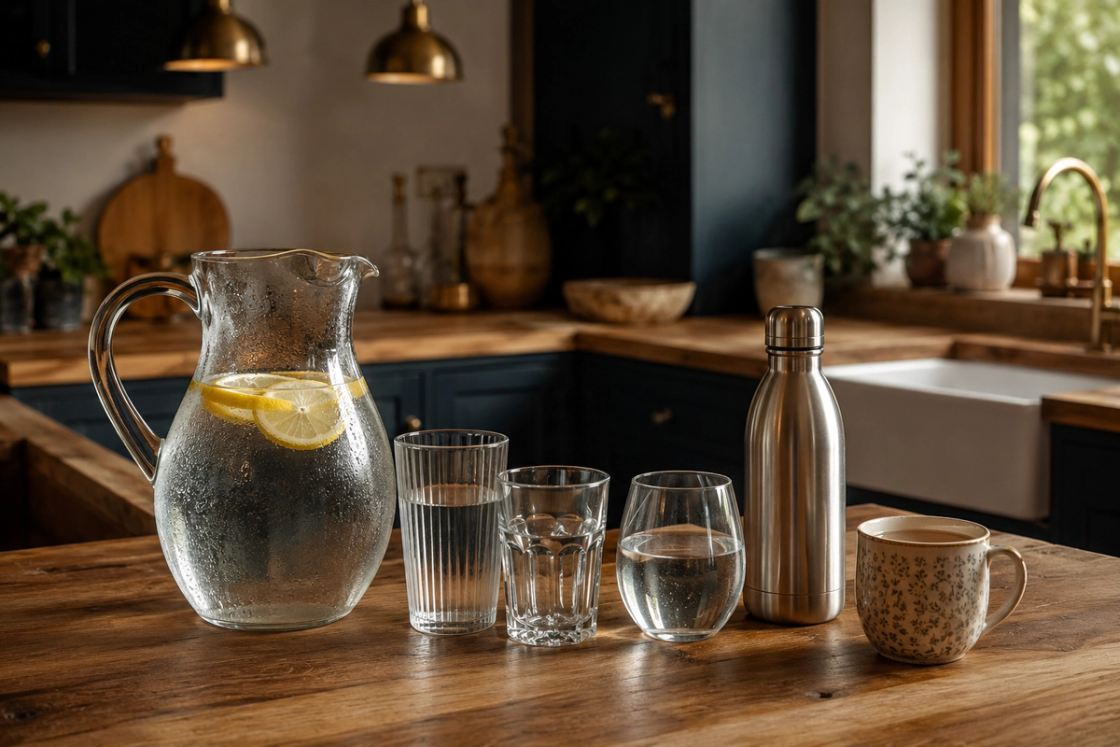
Most people who struggle to drink enough are not ignoring thirst. They are not getting the message in the first place.
Interoception is the sense that reads the inside of your body — hunger, temperature, needing the loo, thirst. For a lot of neurodivergent people that signal is quiet, delayed, or arrives already loud. You don't feel a bit thirsty at 11am. You feel a headache at 4pm.
That means the usual advice — drink when you're thirsty — is built on a signal you may not reliably get. So stop relying on it.
Why "remember to drink more" doesn't work
Remembering is a task. Getting up is a task. Choosing a cup, filling it, and walking back is three more. On a low-capacity day that stack is genuinely more than a glass of water is worth.
The aim is not more willpower. It is fewer steps between you and a drink.
Put the drink where you already are
This is the whole strategy, and it works because it removes the decision entirely. If a full glass is within arm's reach, you will drink from it without ever deciding to.
- Fill three or four glasses at once and put one in each room you actually use — desk, couch, bedside, bathroom shelf.
- A 1 litre bottle beside you beats a 250ml glass you have to keep refilling. Fewer trips, less interruption.
- Keep a jug in the fridge so pouring is one movement, not a wait at the tap.
- Refill on the way past, not on purpose. Passing the kitchen with an empty glass is the cue.
Yes, this means washing up more glasses. That is a real cost. A lid and a bottle you rinse once a day is a fair trade if the washing up is what stops you.
The cup matters more than you'd think
If drinking feels vaguely unpleasant and you can't say why, the vessel is often the culprit rather than the water.
- Straws change everything for some people — no smell, no lip contact with the rim, faster.
- Metal, plastic and glass all taste different. If your bottle tastes off, it might be the bottle.
- Weight and temperature count. Some people won't drink anything that isn't very cold; others find cold water unbearable.
Find the one cup you like and own several. Consistency beats variety here.
Attach it to something you already do
A new habit on its own needs remembering. A drink bolted onto an existing habit does not.
- A glass while the kettle boils.
- A glass with every medication dose.
- A glass each time you come back from the bathroom.
- A full bottle poured before you sit down to work, not after.
Pick one. Not four. One that sticks is worth more than a system you abandon on Thursday.
Food counts, and so does everything else
Plain water is not the only way in, and treating it as the only valid option makes the whole thing harder than it needs to be.
- Soup, stewed fruit, yoghurt, custard — all largely water, and all easy on a low day.
- Cucumber, watermelon, oranges, tinned peaches. Cold, wet, no cooking.
- Tea, squash, milk, cordial. They all hydrate you. A cup of tea is not a wasted cup.
- If plain water tastes boring or wrong, add something. A slice of lemon, a splash of cordial, ice. Flavour is not cheating.
What "enough" actually looks like
Skip the litre targets. They turn a body thing into homework, and homework gets dropped.
A rough, low-effort check: pale urine, and no late-afternoon headache you can't explain. If both are true, you are probably fine. If your urine is consistently dark or you feel dizzy, that is worth mentioning to a GP rather than solving with a bigger bottle.
The goal is not to think about water more. It is to think about it less, and drink more anyway.
Fill a glass now, while you're reading this and already standing somewhere near a tap. That is the entire first step.
Related reading: "The Right Bowl, the Wrong Fork: When the Utensils Are the Barrier" — on how much the vessel shapes whether you finish something.
Also from this week: "The Day After a Big Day" — water is one of the few things worth getting right on a flat recovery day.