Delivery, Click-and-Collect or Walking In
Every way of getting groceries has a price in dollars and a separate price in energy. Here is what each one actually costs, so you can pick on purpose rather than by default.
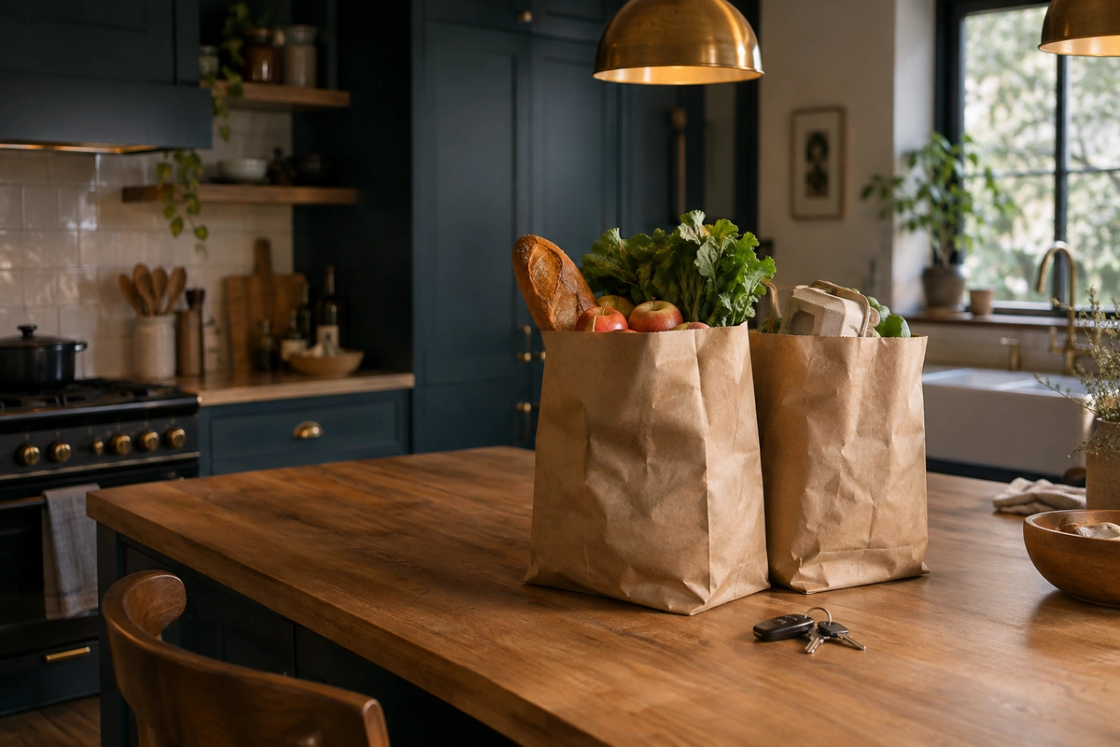
There are three ways to get groceries into your kitchen. Someone brings them to you, you collect an order someone else has packed, or you walk the aisles yourself. Most of us pick the same one every week without really choosing it — usually whichever one we picked last week.
Each one has two prices. One is in dollars. The other is in energy: decisions made, noise absorbed, time spent standing up. The dollar price is printed on the receipt. The energy price is not, which is why it tends to be the one that catches people out.
Here is both, so you can pick on purpose.
Delivery
Dollars: roughly $11 to $15 a delivery, depending on the retailer and the time slot. Some chains waive it above a spend threshold, and the subscription plans run about $15 to $19 a month, which pays for itself at roughly two deliveries.
Energy: the lowest of the three for your body. You do not leave the house, queue, stand under fluorescent lighting, or carry anything further than the front door.
The catch is timing. You order days ahead, which means deciding on behalf of a future version of yourself whose energy you cannot predict. Substitutions also arrive unannounced, and if brand or texture matters to you, opening a bag of the wrong thing on a low day is its own small problem.
Worth it when: your energy is low and likely to stay low, you are unwell, you do not drive, or the shop itself is the part you cannot face.
Click-and-collect
Dollars: often free above about $50, or a $2 to $5 fee below that. Cheaper than delivery, close to walking in.
Energy: the middle option, and the most underrated one. You choose online, at your own pace, in a quiet room, with last week's list in front of you. Then the trip is short — park, boot, home. No aisles, no checkout, no queue.
The cost is that you still have to leave the house, at a time you booked earlier. A booked slot is a small deadline, and deadlines carry weight of their own.
Worth it when: you can drive but cannot face the shop floor.
Walking in
Dollars: cheapest per item. No fees, you catch the markdowns, and you can buy one onion instead of a pre-packed bag of six.
Energy: the highest, and the hardest to predict. Lighting, noise, other people, and several hundred small decisions — at the end of which you carry it all home.
What you get for that is sight of the actual food. Substitutions do not happen to you; you make them. If how something looks or feels decides whether you will eat it, this is the only method where you get to check before you buy.
Worth it when: your energy is reasonable, you want to choose by eye, or the shop is already on a route you are walking anyway.
The cost nobody prints
Shopping online saves your body but not your brain. A cart is still hundreds of decisions, in a room with nothing to end them. Some people find that harder rather than easier, because a physical shop at least closes.
Two things shrink the deciding, whichever method you pick:
- Use a saved or repeat order. Last week's list as this week's starting point removes most of the choosing before it begins.
- Shop for the meals you already eat, rather than the meals you keep meaning to start eating. The second list is more expensive and gets thrown out more often.
Choosing without making a whole new decision
A rough rule, so this does not become another thing to weigh up each week:
- Energy low, and likely to stay low: delivery.
- Energy low today but you can drive: click-and-collect.
- Energy okay and you would like to see the food: walk in.
None of these is the correct one. The dearest option is the trip that does not happen, because that is the week the food does not arrive. Pick the one that gets groceries into the house, and let the others be there for the weeks when that one will not work.
Less deciding, more eating.
Related reading: "Cold Plates for the First Warm Week" and "Reading Labels Without the Rabbit Hole".