Cooking Sitting Down
Most kitchens assume you will be upright from the first step to the last. Standing is a separate cost from cooking, and you can usually drop most of it without dropping the meal.
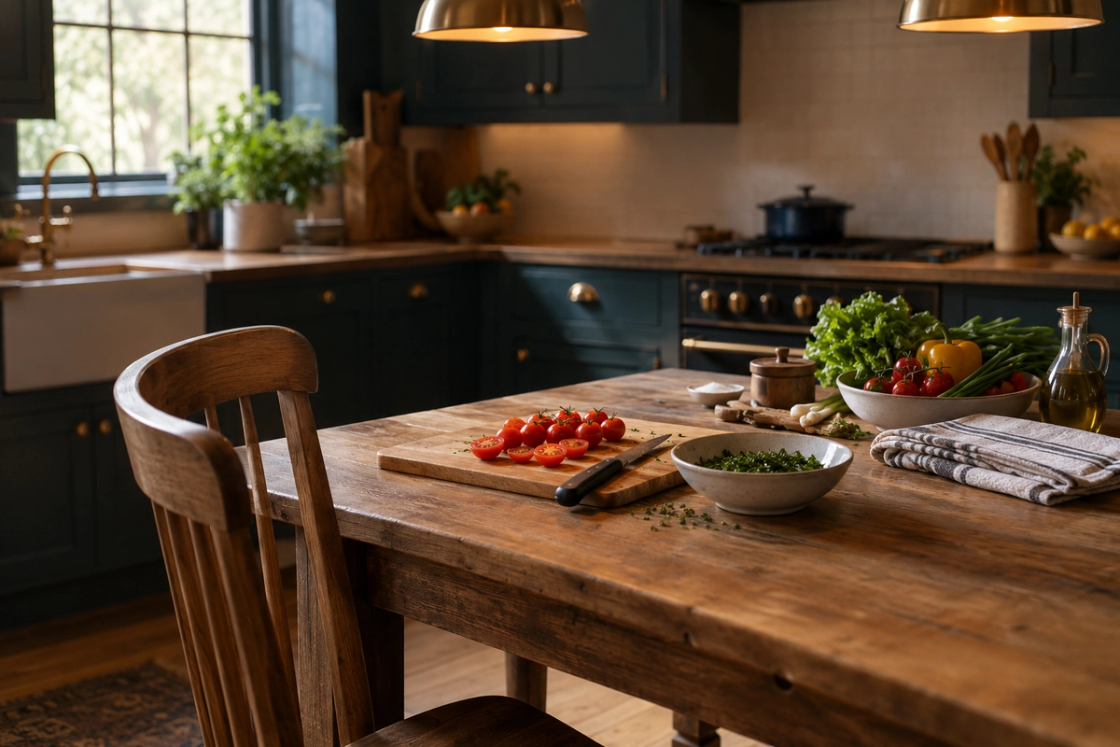
Most kitchens are built for someone standing up. The bench is at standing height, the good knife lives above the bench, and nearly every recipe quietly assumes you will be upright from the first step to the last.
That assumption does a lot of work. On a day when standing is the expensive part - pain, fatigue, dizziness, a body that runs out before the meal does - the cooking is not what stops you. The standing is.
So it helps to treat them as two separate costs. You can usually keep the cooking and drop most of the standing.
Standing is its own job
Count it the way you would count washing up. A simple pasta might be five minutes of real work spread across twenty-five minutes on your feet - waiting for water, watching a pan, reaching for one thing at a time.
The work is small. The upright time is not. Once you can see the two apart from each other, you can start cutting the second one without cutting the meal.
Move the job to the table
A dining table, a desk, or a tray on your lap is a working surface. A table is usually lower than a kitchen bench, which makes chopping easier from a chair rather than harder - your shoulders are over the board instead of under it.
Set it up once, before you start:
- A chopping board and the one knife you actually use
- A bowl for what you have cut, and a second bowl for scraps, so you are not walking to the bin
- A damp tea towel under the board so it stays put
- Everything for the whole meal, carried over in one trip
That one trip is the part worth protecting. Four separate walks to the fridge cost more than the chopping does.
Bring the appliance to you
Most things with a plug can sit on the table for the length of a meal:
- Kettle
- Sandwich press
- Rice cooker
- Air fryer
- Electric frypan or slow cooker
These share a useful trait: they stop on their own. You are not standing over them working out whether it is done yet. Set it, sit down, wait.
What still needs the bench
Some steps genuinely need the stove or the sink. Shorten that time rather than trying to remove it.
- Fill the pot at the sink once, at the start, while you are already up
- Boil water in the kettle instead of waiting on a pot
- Put a stool or a chair at the bench if the layout allows it - even perching changes the cost
- Set the colander in the sink before you start, so draining is one movement instead of three
What to skip standing for entirely
- Washing up. Soak the pan and leave it. It is a separate job with its own price, and it does not have to happen tonight.
- Preheating. Sit down while the oven comes up to temperature. It does not need supervision.
- Chopping neatly. Rough is fine. Kitchen scissors held over a bowl will cut herbs, spring onions and bacon while you stay seated.
- Peeling. Most vegetables do not need it.
A meal built for a chair
Start rice in the rice cooker, on the table. While it runs: scissors through a bag of baby spinach, a tin of tuna or chickpeas opened into a bowl, half a lemon squeezed by hand, a spoon of yoghurt or mayonnaise stirred through.
When the cooker clicks off, tip it all together. One appliance that stops itself, one bowl, no timing and no pan to watch.
On the days a chair is not enough
Sometimes seated cooking is still too much, and the answer is toast, cereal, something from the freezer, or food that someone else made. That is a real answer, not a failed attempt at this one.
The point of moving the work to a chair is to widen the range of days you can eat properly. It is not one more thing to manage well.
None of this changes what you cook. It changes where your body is while you cook it, which on some days is the only variable that matters.
Related reading: The Washing Up Is the Real Reason You Didn't Cook.