Cooking for Two When You Eat Differently
Shared dinners don't have to mean one person's texture needs overriding the other's. Cook in components, keep the parts apart, and build both plates at the table.
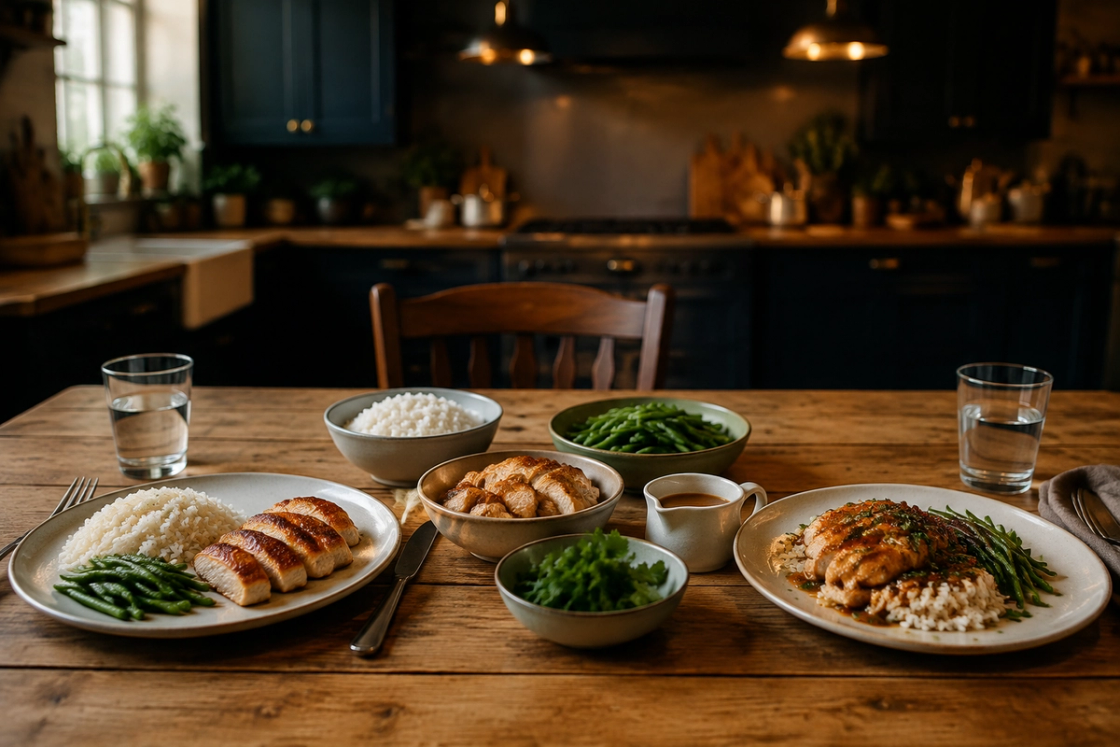
Two people, one kitchen, one dinner, and two quite different sets of needs. One of you wants the sauce over everything. The other needs the sauce in a separate bowl, or not at all.
This comes up constantly in households where one person is autistic, or sensory-sensitive, or working from a short list of foods that feel safe. The usual advice is that someone should compromise. In practice, compromise tends to mean the more flexible eater wins and the other person eats less.
There is a third option, and it costs less energy than cooking two separate meals.
Cook components, not dishes
A dish is already finished. A casserole has decided that the onion touches the potato and the sauce coats everything. Once it is assembled, it cannot be un-assembled.
A component meal stops one step earlier. You cook the same food in the same pans, but you keep the parts apart and let each person build their own plate.
A component dinner is usually four things:
- A starch. Rice, pasta, potatoes, bread, couscous.
- A protein. Chicken pieces, tinned tuna, eggs, tofu, mince.
- A vegetable or two, cooked plainly. Steamed, roasted, or raw.
- The strong flavours, kept aside. Sauce, dressing, herbs, chilli, lemon, cheese, all in small bowls added at the table.
Same shopping list. Same washing up. One fewer decision made on someone else's behalf.
What this looks like on a Tuesday
- Tray night. Chicken thighs and potato chunks on one tray with salt and oil only. Beans steamed separately. Gravy in a jug for one plate, nothing added to the other.
- Rice bowl night. Plain rice, mince browned with salt, cucumber cut into batons. On the table: soy sauce, spring onion, chilli oil. The spice goes on at the last second, per plate.
- Pasta night. Plain pasta drained and left dry. Sauce in a jug. Butter and grated cheese for the person who wants it beige and mild.
None of these are two meals. They are one meal that has not been pre-mixed.
The separations that actually matter
Not every ingredient needs its own bowl. A few rules of thumb save most of the trouble:
- Wet away from dry until the last moment. Sauce on the side is the single highest-value change. It fixes texture, smell and appearance in one move.
- Salt travels well, everything else does not. Garlic, vinegar, chilli and strong herbs are the ones that make a whole pan unusable for someone. Add them late, or per serve.
- Cook the plain version first. Take out the plain portion, then add the flavourings to what is left in the pan. Reversing this order means starting again.
- Build the more restricted plate first. Serving spoons pick up traces. Going plain-to-flavoured avoids a plate that technically has the right food on it but no longer looks right.
Cooking plainly is not cooking badly
There is a quiet worry sitting under a lot of this: that putting plain rice and plain chicken in front of someone you love is a failure of care. It is not.
The person eating plainly is not getting less care. They are getting a version of dinner they can actually finish.
Effort is easy to see in a complicated dish. It is harder to see in a meal that was deliberately left simple so that two people could eat at the same table. That second one is often the harder cook.
When one of you does all the cooking
Component cooking can quietly turn into more work if the same person also assembles every plate. Two things stop that:
- Serve from the middle. Bowls go on the table, everyone builds their own. The cook stops being a short-order kitchen.
- Agree the components before you shop. A five-minute conversation about which four things are on the list beats a nightly negotiation at the stove.
It also helps to name the pattern out loud. Once a household knows that Thursday is a build-your-own rice bowl, nobody has to relitigate it each week.
Some nights it will still be two meals
On low-energy nights, or when the safe list has narrowed, the overlap between two people's food gets very thin. That is not a failure of the system.
On those nights, look for one shared component rather than a shared meal. Same rice, different everything else, is still one pot instead of two.
Related reading: Soft, Mild, and Predictable: A Texture-First Approach to Trying New Foods.
Less deciding, more eating.