A Plate of Snacks Is a Dinner
A plate of snacks can be dinner on purpose, not a fallback. Here's what makes one hold up, and a few combinations worth keeping ready.
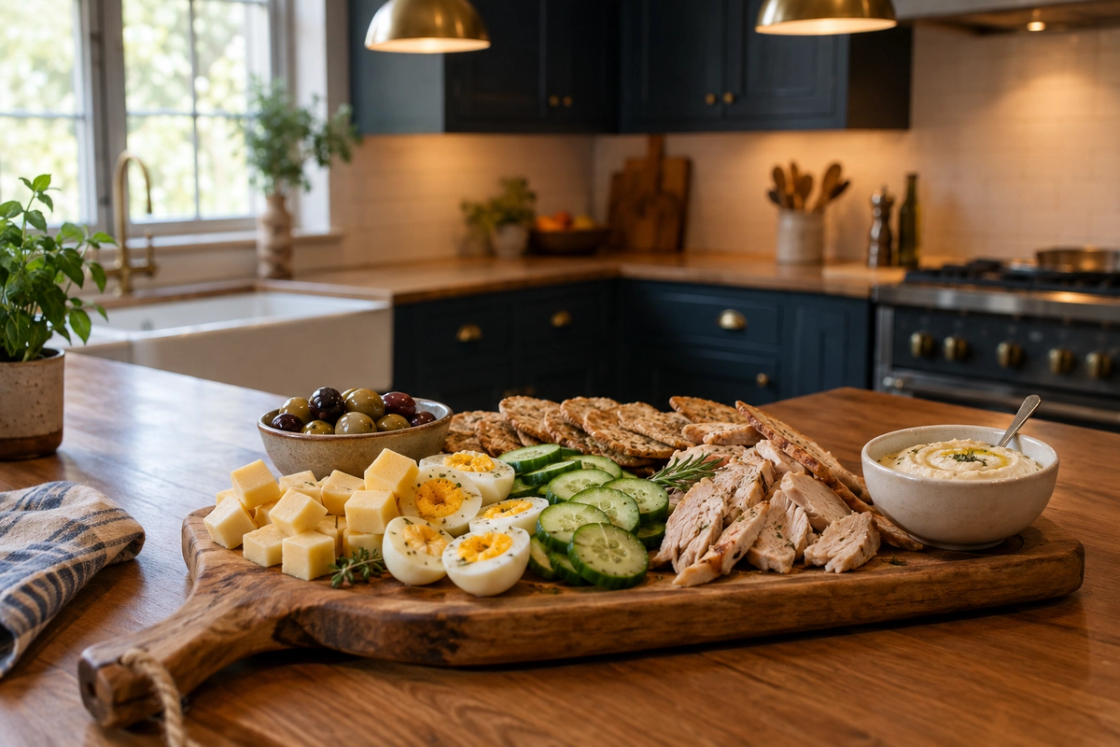
Dinner doesn't have to be a dish
Some nights cooking is off the table before it starts. The stove feels loud, the smell of frying feels like too much, or there simply isn't the energy left for a start-to-finish recipe. A plate of crackers, cheese, some cut fruit and last night's leftover chicken can look like giving up on dinner. It isn't. It's a different shape of the same meal.
Grazing plates fail the “what's for dinner” test because they don't have a name. They pass every other test that matters. They get eaten. They don't need a stove or a timer. They can be assembled in about the time it takes to stand at the fridge deciding.
What makes a plate of snacks count as dinner
A grazing plate stops being “just snacks” once it has enough on it to actually fill you up and carry you through to morning. Four things do most of that work.
- Something with protein or fat — cheese, boiled eggs, hummus, tinned fish, cold meat. This is the part that turns a plate into a meal instead of a top-up.
- Something with texture contrast — crackers or bread next to something soft, so the plate isn't the same bite over and over.
- Something familiar and safe — one item that needs no decision at all, because you already know you'll eat it without thinking.
- Something that isn't dry — cut fruit, a pickle, a dip, a bit of sauce. A plate that's dry all the way through tends to get abandoned half-eaten.
Hit those four and the plate holds up as a proper meal, not a stall until you're hungry again in an hour.
Building it without deciding much
The easiest grazing plates come from a short list of things you already buy, kept where you can see them rather than buried behind last week's shopping. Decision fatigue is the real cost of a weeknight meal, not the cooking, so the aim is a plate you can build on autopilot.
A rotating kit worth keeping stocked:
- One protein that needs no prep — boiled eggs done in a batch, tinned tuna or salmon, sliced deli meat, a tub of hummus.
- One thing with crunch — crackers, rice cakes, carrot or cucumber sticks, plain chips.
- One safe food you never have to think about, whatever that is for you.
- One wet or saucy thing — a dip, a pickle, cut fruit, a spoon of mayo or chutney.
Buy these on the same trip, every time, and the plate stops needing a decision at all. It becomes a routine you assemble, not a meal you plan.
A few plates worth keeping in rotation
- The fridge-door plate: cheese, crackers, a boiled egg, cucumber, a few olives.
- The tin-opener plate: tinned tuna, crackers, a spoon of mayonnaise, cherry tomatoes.
- The leftovers plate: cold roast chicken or last night's protein, bread or chips, whatever vegetable is left, and the sauce that came with it.
- The no-cook protein plate: hummus, frozen falafel warmed in the microwave rather than fried, carrot sticks, flatbread.
None of these need the stove on, a recipe open, or more than a few minutes of standing up. That's the whole point.
A grazing plate isn't a smaller version of dinner or an apology for not cooking. It's a meal built from parts instead of a method, and on a low-energy or sensory-loud day, parts are easier to manage than a method. Put four things on a plate that meet the fill-you-up test, and dinner is done.
Related reading: “Cold Plates for the First Warm Week” looks at the same idea from the other direction — assembly instead of cooking when it's the weather working against you rather than the day itself. Less deciding, more eating.