A Kitchen Setup for Noise-Sensitive Cooking
Some kitchens are loud in a way that has nothing to do with volume. If noise is what ends your cooking sessions early, the fix is usually a setup change rather than more willpower.
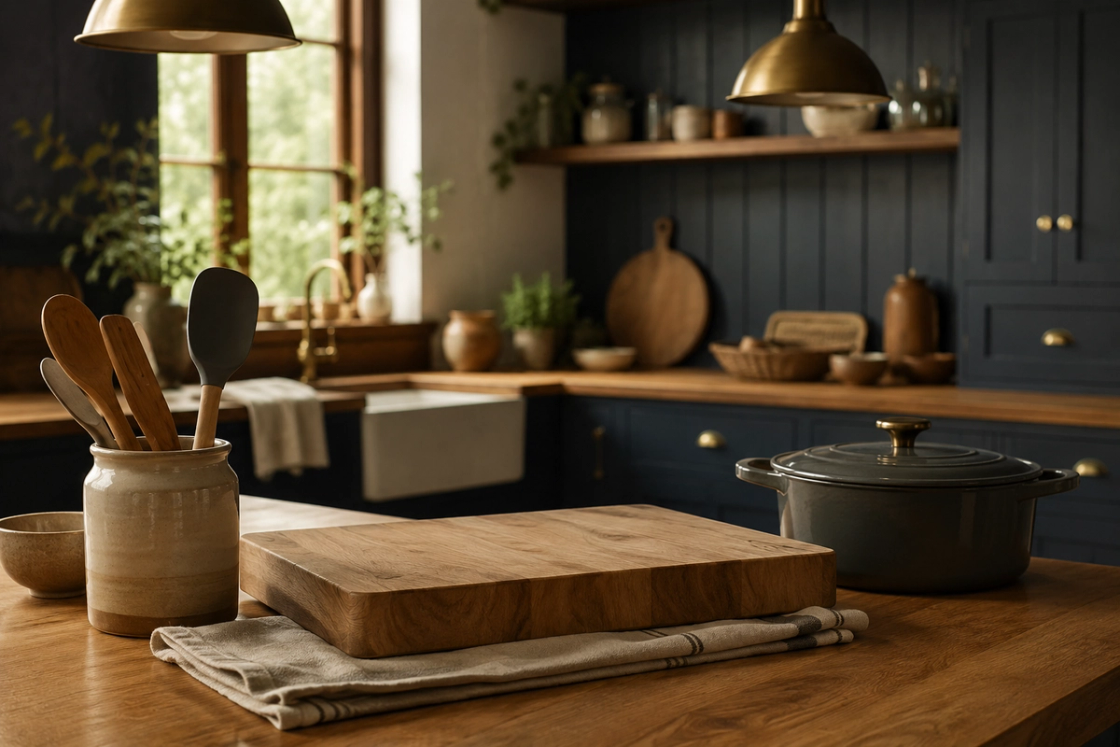
Some kitchens are loud in a way that has nothing to do with volume.
The extractor fan. A lid rattling on a pot. The scrape of a metal spoon against a metal pan. The cutlery drawer opening. Each one is small on its own. Stacked together, they can end a cooking session before dinner exists.
If kitchen noise wears you down, the answer is rarely more tolerance. It is usually a setup change — swapping a few loud objects for quieter ones, and moving where things live. Below are the changes that tend to buy the most quiet for the least money and effort.
Start with what is underneath things
Hard object on hard surface is where most kitchen noise comes from. Softening the layer underneath is the cheapest fix in the room.
- Fold a tea towel under your chopping board. It kills most of the knock from chopping and stops the board sliding.
- Put a folded towel or a cork trivet on the bench as a landing spot for hot pots and lids.
- Line the cutlery drawer with a thin tea towel or a cut-to-size cork mat. The rattle when you open it drops noticeably.
Swap the three loudest objects
You do not need a new kitchen. Three swaps cover most of it.
- Metal utensils to wooden or silicone ones. Metal on metal is the sharpest sound in the kitchen and the easiest to remove.
- A rattling lid to a heavier one, or set the lid slightly off-centre so steam escapes without the drumming.
- A thin, light pan to a heavier-based one. Thicker metal is quieter and it also stops the sudden hiss-and-spit that a thin pan makes when food hits it.
Op shops and the back of your own cupboards are fine sources for all three. This is not a shopping list you need to buy in one go.
The extractor fan question
For a lot of people the fan is the single worst noise in the kitchen: constant, droning, and impossible to ignore once noticed.
You are allowed to leave it off. Open a window instead, and cook things that do not smoke — simmering, steaming and boiling produce far less than searing or frying. If smell is also a sensory problem for you, a window plus a lower heat usually beats the fan on both counts.
If you do need the fan, run it on the lowest setting that works. The jump from setting one to setting two is often much bigger in noise than in airflow.
Quieter ways to do the same job
Some tasks have a loud version and a quiet version that produce nearly the same result.
- Instead of a stick blender, mash with a fork or the back of a spoon. Soup does not have to be smooth.
- Instead of a food processor, buy pre-chopped or frozen vegetables. Frozen diced onion exists and it is quiet.
- Instead of the oven fan, use the conventional setting and add a few minutes.
- Instead of the kettle boiling dry and clicking, fill it to the line you need. Less water, shorter noise.
Where things live matters as much as what they are
A quiet tool is still loud if you have to move four other things to reach it.
Keep the five tools you actually use standing in a jar on the bench. Stack pots with a tea towel between them rather than nested metal on metal. Give the lids their own spot instead of a pile.
The goal is that a normal dinner needs one drawer, not five.
Protect your ears on purpose
If the room is still too much, wearing something is a reasonable tool and not a failure. Filtered earplugs take the edge off without muffling everything. Over-ear defenders do more. Headphones with your own music or a familiar podcast work for some people and are worse for others, because it is one more input.
Try one, cook one meal, and notice whether you finished it. That is the only measure that matters here.
Where to start tonight
Pick the one noise you already know you hate. Change only that. A folded tea towel under the board, or a wooden spoon in place of the metal one, is a complete change and it costs nothing.
A quieter kitchen is not a tidier or more expensive one. It is a kitchen where fewer things surprise you, so there is less to brace against and more left over for eating.
Related reading: if the stove itself is the part that costs too much on a heavy day, see "Cold, No-Cook Dinners That Still Feel Like a Meal".